
Opinion Answers to the question of who gets to speak for the marginalised cannot be delinked from privileges enjoyed by dominant groups
Better academic networking allows them to be protagonists of academic success stories and tell stories of the marginalised that qualify as “valid knowledge”.
 There are several writings on the limit of lived experiences and claims of different identity groups to represent them authentically.

“Who gets to represent the marginalised?” is a question that academicians, writers, and artists often encounter. Disha Nawani’s opinion piece ‘The Insider-outsider Dilemma (IE, February 13)’ is an intervention that attempts to answer the question of the representation of the different marginalised communities. The article highlights that the able human body is transient and that disability is not a frozen and fixed category. As an academician who suffers from disability due to infantile hemiparesis, I would like to offer my viewpoint on the lived experience of the disabled and its representation question. This question needs to be situated within the hierarchical nature of our knowledge system.
It is true that the “difference between abled and disabled is only a question of degree and not type” and also, one may become disabled at any point in time. However, this fact alone does not sufficiently answer the question of ingrained ableism in our knowledge mechanisms and within ourselves. The ingrained ableism within the institutions and us sees the disabled embodiment as inferior, diminished, and deviant. It makes our experiences marginal and knowledge emanating from our lived experiences as naïve. The profound marginalisation of our experiences and knowledge generates fear of misappropriation and epistemic Darwinism when members of dominant groups attempt to speak for our experiences.

There are several writings on the limit of lived experiences and claims of different identity groups to represent them authentically. However, it would be instructive if we also probed the limit of empathy. As a law teacher, I encountered an example in my discipline that went unnoticed. Former CJI D Y Chandrachud was empathetic towards disability. There is an overwhelming consensus that his disability jurisprudence was progressive. While inaugurating a new “Lady Justice”, Justice Chandrachud quipped, “The law is not blind; it sees everyone equally.”
This is an instructive case where an empathic judge takes away a disability-affirming justice symbol and casts blindness as a “diminished state of being human” as if a visually impaired cannot understand the complex question of society, polity, and justice. Ableism simply monopolises “reality” and the disabled are inadvertently labelled as “defective knowers” who cannot comprehend reality. The philosopher Miranda Fricker calls this phenomenon “hermeneutical injustice” in which the dominant groups misappropriate the experiences of the marginalised and block them from “meaning-making and meaning-sharing” their experiences. Similarly, the coinage of “divyang” by the Prime Minister for the disabled community results in the marginalisation of the disabled community of India. These examples show that empathy is not enough to overcome the “compulsory-able-bodiedness” of our system and thinking.
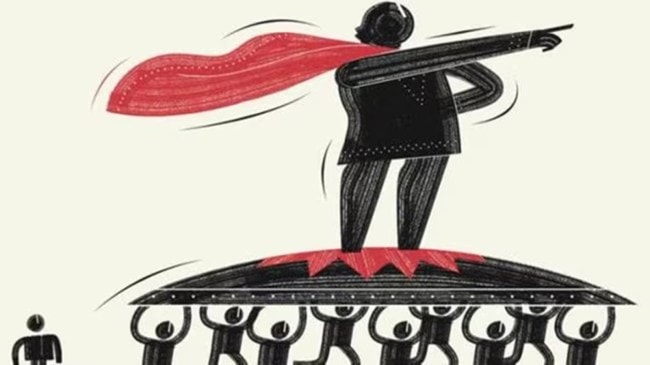
The question, “Who gets to represent the reality of the marginalised?”, is also linked with the question of cognitive justice. The dominant groups enjoy the epistemic privileges that ensure academic prestige, publications, and citations in academia. Better academic networking allows them to be protagonists of academic success stories and tell stories of the marginalised that qualify as “valid knowledge”. The political theorist Gopal Guru has lamented the asymmetrical nature of Indian academia and its knowledge hierarchy by suggesting that social sciences in India are divided between “theoretical Brahmins” and “empirical Shudras”. Feminist disability scholar, the late Anita Ghai, in the backdrop of ableism in academia, asked: “Whether the Subaltern (read disabled) can speak or be taken as academic?” These scholars have voiced the violent vulnerabilities of the marginalised that come in the form of social experiences, rejections, and humiliations. If we locate the rage of the marginalised within these contexts, the radical necessity to question hierarchical knowledge formation can be understood, and the rage, too, can be accepted.
Disability is a humbling experience. It is a fascinating spectrum, too. Today’s abled can be tomorrow’s disabled. But it does not necessarily result in unlearning ableism. Ingrained ableism may result in pity or suppression of our experience. For me, it took time and training to unlearn ableism so that I would not see my body as unruly. The writings of many non-disabled scholars helped me in this. I am indebted to them. However, I want my agency to speak for myself, my experiences, and my humiliations. The rage of the marginalised from the historical exclusion imposed on them warrants our attention and understanding.
Tiwari is an assistant professor (Law) at the West Bengal National University of Juridical Sciences, Kolkata. He is an academician with disability.

 Share
Share


