
Opinion IndiGo is Indian aviation’s big success story. Don’t kill it
IndiGo is symbolic of India's rise as an aviation power. Resentment against its size and dominance is unjustified
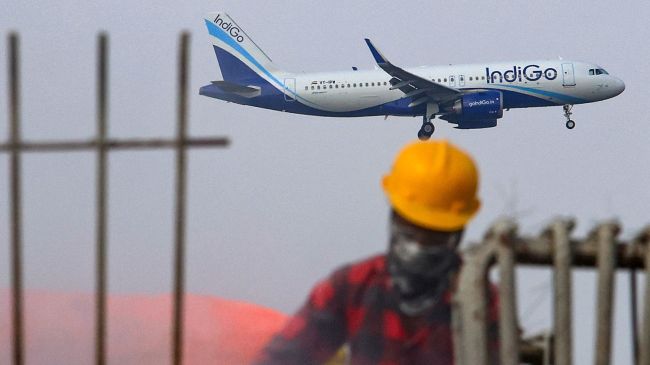 An IndiGo aircraft prepares to land at Kempegowda International Airport as construction work in progress on the Namma Metro bridge, in Bengaluru, Karnataka, Tuesday, Dec. 9, 2025. (PTI Photo)


Aviation is a very fragile sector. Beyond the glamour and allure, it is one of the most challenging businesses to run. No wonder that both globally and in India, we have seen many airlines biting the dust even as new ones took off. Very few airlines across the world have been able to develop a model that is both sustainable and profitable.
Europe is currently witnessing record closures of airlines, one after another — almost one every month. India has been no exception to this fragility. In the past two decades, we have seen many national and regional airlines go under. And when everything appears to be under control, something unexpected crops up, disrupting the entire process. From volcanic disruptions thousands of miles away to flash strikes by disgruntled air traffic control staff in Europe, anything can trigger global waves of disruptions.

This brings us to the latest and one of the worst disruptions in India’s aviation sector. It was sparked on December 2 by IndiGo, an airline that controls over 60 per cent of the domestic market share. A never-before-seen mayhem was unleashed among millions of travellers, denting India’s image as a credible aviation economy. A lot has been said and written already about the ongoing crisis, and a lot of blame has been exchanged, but it may help us to deconstruct the episode dispassionately.
While India’s aviation sector has grown — and quite phenomenally — in the past 25 years, it has not really matured as an accountable and ethical aviation economy. With every crisis, whether the grounding of major airlines like Kingfisher or Jet Airways or smaller regional airlines, in hindsight, we have discovered that it was not only the airlines that were defaulting, but the watchdogs as well. The Directorate General of Civil Aviation (DGCA), the Ministry of Civil Aviation (MoCA), and financial institutions were caught either napping or conniving. Against the backdrop of the current disruption, questions should be asked about the DGCA and the MoCA. “Who will regulate the regulators?” becomes a burning question. Does the MoCA have any committee, comprising not only palatable sahibs but also industry veterans, to review the DGCA’s decisions? It’s time to wake up.
The most important issue is this: Can India, at this juncture, afford a sacrificial goat — and that too its biggest success story in aviation?
IndiGo is not only India’s biggest and most profitable airline, but also one of the most remarkable aviation stories globally in the past three decades. It is symbolic of India’s rise as an aviation superpower. Its dominant domestic market share is not the result of manipulations or unethical wheeling-dealing but largely of sound commercial decisions, helped by some good fortune. More importantly, it happened to be in the right place at the right time and was best prepared to leverage the gap and opportunity created by grounded airlines. IndiGo had the mind, machine and money to fill the vacant slots and catapult itself to the top. Without wishing to sound like an unsolicited solicitor of IndiGo, resentment against its current size and dominance is unjustified.
But is this good enough to let IndiGo go off the hook? Not at all. IndiGo must realise that the weight of its success and size creates its own gravity that can pull it down. You can’t be a leader only in numbers; you have to lead by example, too. Growth at any cost cannot be the only mantra of success, and profit at any cost cannot be the only motivation.
IndiGo needs to remember that the world is watching its conduct and practices. While admired for its amazing growth and financial successes, the world is also observing what lies in between — ethical conduct, corporate governance, and treatment of employees and flyers — something that will really make or mar IndiGo’s credibility and reputation. Finally, this crisis must be converted into an opportunity to make the entire aviation sector more accountable, ethical and service-oriented.
Vishwajeet is the author of The IndiGo Story and an independent business journalist

 Share
Share


