
Opinion View From The Neighbourhood: Pak policy 101
A weekly look at the public conversations shaping ideas beyond borders — in the Subcontinent.
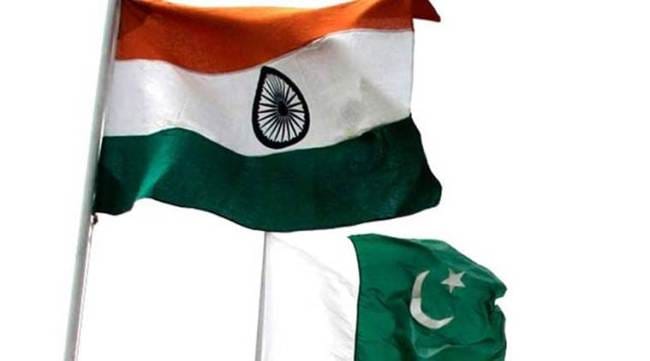


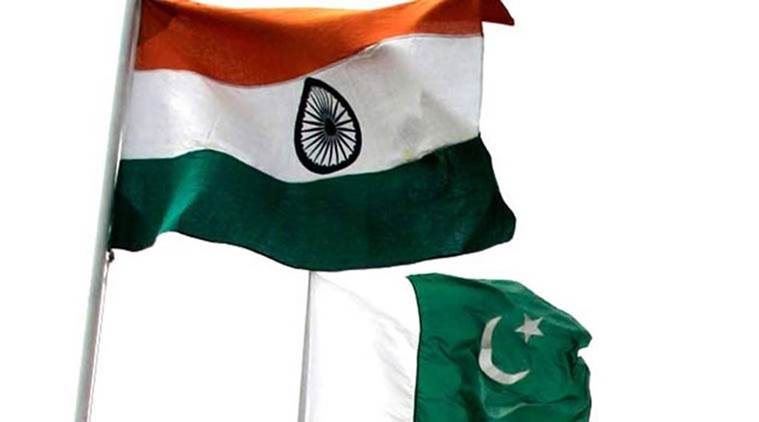 In an article in Dawn on January 26, Ashraf Jehangir Qazi defends the Pakistan foreign office, arguing that weak governments are risk averse and as a result, make poor policy, including with respect to foreign affairs. (Source: File)
“When national policy is substandard,” writes Ashraf Jehangir Qazi, a former Pakistan ambassador to the US, China and India, “it puts a ceiling on the success of foreign policy no matter how good it is”. In an article in Dawn on January 26, Qazi defends the Pakistan foreign office, arguing that weak governments are risk averse and as a result, make poor policy, including with respect to foreign affairs. Qazi describes this as “the soft state” syndrome, which is often a prelude to “a failing state”.
India, Qazi states, wants Pakistan to “end the use of terrorist proxies” while Pakistan desires the“progress towards a Kashmir settlement acceptable to opinion in the Valley and radically improving the horrendous human rights situation there”. While this deadlock remains, Islamabad ought to continue with an attempt to keep the conversation going: “Pakistan should continue to extend its hand of cooperation irrespective of a lack of response from India. It should keep the LoC quiet as best it can. It should build on the Kartarpur initiative. It should extend normal trading or MFN rights as promised. This is arguably a WTO obligation also.”

He also asks that Pakistan be the more magnanimous party in its relationship with India, not least because it makes strategic sense: “India is justly regarded as a large neighbour with a small heart. Many Afghans see Pakistan similarly despite the massive Afghan goodwill accumulated during the Soviet occupation. Why? Pakistan need not create a two-front situation for itself. Being large-hearted towards a smaller neighbour is actually good strategy. Specific issues are more easily resolved when the fundamentals are okay.”
Big brother
Despite criticism from multiple quarters, including and especially sections of the media, the Pakistan government has approved the creation of the Pakistan Media Regulatory Authority. This new body will be able to “enable the government to ‘regulate’ all media in the country from one platform,” according to the January 26 editorial in Dawn.
The editorial does acknowledge that there may be need for regulation, it must not be imposed by the government: “Indeed, democratic societies, while they may see the necessity to have regulations for the 24/7 electronic media, allow news publications to check their own content through a code of ethics — in keeping with the principle of freedom of expression. Unfortunately, the PTI’s move to bring all media under state control, smacks of an authoritarian streak that should have no place in a democratically elected setup. Remarks such as those uttered by Information Minister Fawad Chaudhry on Thursday that all bodies representing journalist bodies would be taken ‘on board’ in formulating rules for the PMRA gloss over the fact that these very bodies i.e., CPNE, the Press Council, APNS and PFUJ, had already opposed the creation of the new regulator.” The editorial argues that the current PTI government has nurtured an adversarial relationship with the media, and party cadres have often “hurled invective” at journalists.
Myanmar’s impunity
The January 25 editorial in The Dhaka Tribune reiterates a familiar lament, one that large sections of the government and media in Bangladesh have been making for about two years.
The thrust of the editorial is that Bangladesh has borne the brunt of the Rohingya refugee crisis, “been extraordinarily generous”, while others have not done their part: “The international community’s role is of utmost importance: Not only can they ease the burden on Bangladesh by providing the necessary support, they can also play a part in coming up with a long-term solution to the problem. Unfortunately, this has not always been the case. The fact that, over the last few months, more than 1,300 Rohingya refugees have come into Bangladesh from various places around the world goes to show that the pressure on Bangladesh is constantly increasing.”
The editorial also believes that Myanmar has escaped the consequences of its actions: “The initial delay in recognizing the atrocities notwithstanding, the international community must do more to meet the needs of the Rohingya people and ensure that Myanmar does the right thing. Myanmar has continuously evaded their responsibilities and denied the Myanmar army’s involvement in the heinous crimes carried out against the Rohingya people. This is where the world must act.”
 Share
Share


