

The RBI team led by Governor Shaktikanta Das must be complimented for raising the repo rate by 40 basis points (bps) and the cash reserve ratio (CRR) by 50 bps with a view to tame inflation. High inflation is always an implicit tax on the poor and those who keep their savings in banks. The real value of their savings gets depreciated with every round of inflation as interest on deposits is often far below the inflation rate. So, controlling inflation is an important mandate of the RBI. The question that arises is: Will the increases in the repo rate and CRR control inflation, especially food inflation? The short answer is, “not yet”. Our assessment of the situation is that the RBI has been behind the curve by at least by 4-to 5 months, and its optimism in controlling inflation in the earlier meetings of the Monetary Policy Committee was somewhat misplaced. If the RBI has to make up for lost time, it will have to repeat this feat of raising repo rates and CRR by at least three more times in this fiscal year (FY23) to mop up excess liquidity in the system. Even then, it may be difficult to rein in food inflation, which is surging faster than the overall consumer price index (CPI).
The reason for this is simple. Food prices globally are scaling new peaks as per the FAO’s food price index. The disruptions caused by the pandemic and now the Russia-Ukraine war are contributing to this escalation in food prices. India cannot remain insulated from this phenomenon. While on the one hand, it has opened opportunities for Indian farm exports, on the other hand, it has posed challenges as import prices of edible oils and fertilisers surge.


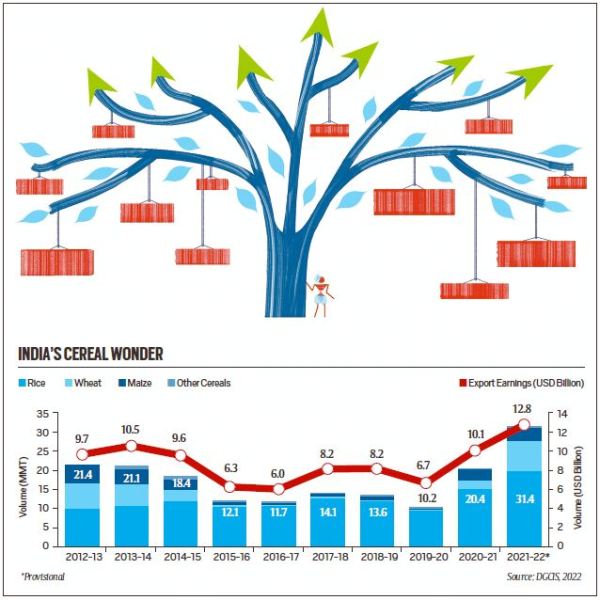
Some of the concerns on the wheat front are genuine, and we need to realise that climate change is already knocking on our doors. With every one degree Celsius rise in temperatures, wheat yields are likely to suffer by about 5 MMT, as per earlier IPCC reports. This calls for massive investments in agri-R&D to find heat-resistant varieties of wheat and also create models for “climate-smart” agriculture. We are way behind the curve on this. But we are way ahead of the curve in distributing free food to 800 million Indians, with a food subsidy bill that is likely to cross Rs 2.8 lakh crore this fiscal out of the Centre’s net tax revenue of about Rs 20 lakh crore in FY23. Can Goyal, who is rightly upbeat on agri-exports also rationalise the public distribution system and PMGKAY, as food minister, targeting only those below the poverty line for free or subsidised food and charging a reasonable price, say 90 per cent of MSP, from those who are above the poverty line. The bottom line is: He has to effectively target the massive food subsidy and save resources for the higher import bill on edible oils and fertilisers. Inflation in edible oils has been running amok — to double digits — for a long time, and there has been no relief for consumers on that front.
In the wake of likely lower production and procurement of wheat this year, Goyal has done well to substitute more rice in the PMGKAY, and may also do so in NFSA allocations. We would suggest giving an option to beneficiaries to receive cash in their Jan Dhan accounts (equivalent to MSP plus 20 per cent) in lieu of grains. This is permitted under NFSA and by doing so, he can save on the burgeoning food subsidy bill.
Goyal also needs to ward off any fear-mongering over wheat that can push him towards an export ban. That would be the worst thing he could do. It would be an anti-farmer move. The problem with our earlier policymaking has been that it is heavily biased towards protecting the consumers in the name of the poor by suppressing prices for farmers through choking markets — through imposing stock limits on traders, putting minimum export prices or outright bans on exports. He must avoid that route, and let agri-exports flourish. Indian farmers need access to global markets to augment their incomes, and the government must facilitate Indian farmers to develop more efficient export value chains by minimising marketing costs and investing in efficient logistics for exports.
This column first appeared in the print edition on May 9, 2022, under the title ‘The cereal wonder’. Gulati is Infosys Chair Professor and Juneja is consultant at ICRIER


