
By: Charles M. Blow
The reaction to the failure of the grand jury to indict in the shooting of an unarmed black teenager, Michael Brown, by a white police officer, Darren Wilson, touched something deep and ancient and anguished in the black community. Yes, on one level, the reaction was about the particulars of this case. It was about whether Wilson’s use of force was appropriate or excessive that summer day when he fired a shot through Brown’s head and ended his life. It was about whether police officers’ attitudes towards the people they serve are tainted. It was about whether the prosecutor performed his role well or woefully inadequately in pursuit of an indictment. Why didn’t he aggressively question Wilson when Wilson presented testimony before the grand jury? Why did he sound eerily like a defence attorney when announcing the results?


No, they are not. An October analysis by ProPublica of police shootings from 2010 to 2012 found that young black males are 21 times more likely to be shot dead by police officers than their white counterparts. And yet, people like the former New York City mayor Rudy Giuliani want to blame the victims. On “Meet the Press”, he dodged the issue of white police forces policing black populations, and raised another: intra-racial murder statistics in the black community. After proclaiming that “93 per cent of blacks are killed by other blacks,” he asked a fellow panellist, Michael Eric Dyson, a black Georgetown University professor, “why don’t you cut it down so so many white police officers don’t have to be in black areas?”
Classic blame-the-victims deflection and context-free spouting of facts. What Giuliani failed to mention, what most people who pay attention to murder statistics understand, is that murder is for the most part a crime of intimacy. People kill people close to them. Most blacks are killed by other blacks, and most whites are killed by other whites.
If we are serious about fighting crime, we must seriously consider the reason — on both an individual and systemic level — these pockets of concentrated poverty developed, are maintained, and have in fact grown and spread.
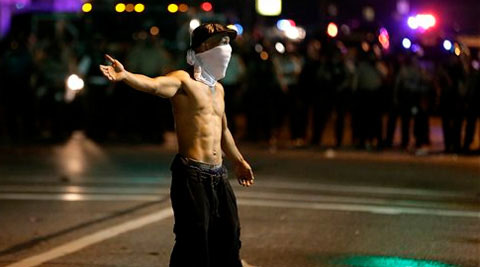
But this is not about Giuliani and the police aggression apologists. This is about whether black boys and men, as well as the people who love them, must fear both the criminal and the cop. Sadly, for many, the Ferguson case reaffirmed a most unsettling sense that they are under siege from all sides. So people took to the streets. Who could really blame them?


