
Opinion Delimitation without winners and losers: A middle path
We propose a creative solution for delimitation that furthers democracy and acknowledges performance.
 Suhas Palshikar has recommended following the 2026 census with an increase in the total number of Lok Sabha seats. (Express archive photo/ Partha Paul)

Written by Ajit Phadnis
The delimitation debate has recently regained prominence with a variety of political actors and scholars offering their opinion on the exercise. At one end of the spectrum, scholars such as Yogendra Yadav have suggested permanent freezing of Lok Sabha seats in accordance with the 1971 Census. At the other end, Suhas Palshikar has recommended following the 2026 census with an increase in the total number of Lok Sabha seats. An alternate suggestion implied by Milan Vaishnav and Jamie Hintson is to consider voter population rather than total population to determine seat allocation.

In this article, we problematise the delimitation issue around four key principles. First, there is the democratic principle which enshrines advocacy for “one vote one value”. Second, is the principle of “performance” being a guiding light for apportionment. States which have historically undergone the social transformation to low fertility rates often express concerns regarding the fairness of delimitation, given the perverse benefit for states to continue populating. Third, any “drastic” change in seat allocation is avoidable and undesirable from a negotiation lens. A discrepancy that has its origin in a constitutional amendment passed four decades ago should not be set right suddenly. Finally, there’s the principle that not only the current but the “future” also matters. Those that may lose today should not fear perpetual disadvantage.
Additionally, we argue against two inaccuracies present in the current delimitation debate. First, it revolves around the number of seats and not the fairness of the allocation. However, all numbers currently discussed are estimates that have been projected after making substantial assumptions on population growth. Second, there is a tendency to reduce the delimitation debate to a battle of North vs South. This is a fallacy because there is wide variation even within the North and the South on the effects of delimitation, as will be later demonstrated
Our analysis corrected for the two inaccuracies. First, we redirect the focus from the number of seats to the representation of states, which is measured by the Ratio of Percentage of Lok Sabha Seats allocated to States divided by the Percentage of India’s Population living in the state. States with a ratio of less than 1 are underrepresented while states with greater than one are overrepresented (as seen in Table 1).
|
S.No. |
State |
% Seat to % Population Ratio (2011 Census) |
|
1 |
Kerala |
1.33 |
|
2 |
Himachal Pradesh |
1.30 |
|
3 |
1.21 |
|
|
4 |
Odisha |
1.12 |
|
5 |
Andhra Pradesh (merged) |
1.11 |
|
6 |
Uttarakhand |
1.11 |
|
7 |
Jammu & Kashmir (earlier state) |
1.07 |
|
8 |
Punjab |
1.04 |
|
9 |
West Bengal |
1.03 |
|
10 |
Karnataka |
1.02 |
|
11 |
Assam |
1.00 |
|
12 |
Chhattisgarh |
0.96 |
|
13 |
Gujarat |
0.96 |
|
14 |
Maharashtra |
0.95 |
|
15 |
Jharkhand |
0.95 |
|
16 |
NCT of Delhi |
0.93 |
|
17 |
Uttar Pradesh |
0.89 |
|
18 |
Madhya Pradesh |
0.89 |
|
19 |
Haryana |
0.88 |
|
20 |
Bihar |
0.86 |
|
21 |
Rajasthan |
0.81 Advertisement |
Table 1: Ratio of Percentage Seats to Percentage Population in States with more than 50 lakh population
We find that underrepresentation can be seen in Northern states such as Haryana, Bihar and Rajasthan. However, it is interesting to note some underrepresentation for states such as Gujarat and Maharashtra, which are on the higher end of the economic spectrum. Similarly, overrepresentation, is seen for Southern states such as Tamil Nadu and Kerala but is equally high for Himachal Pradesh. Interestingly, Uttarakhand, which was part of Uttar Pradesh before 2000, is also overrepresented. Additionally, states such as Karnataka and Assam are represented proportionately.
Second, we analysed the performance of underrepresented states on population control using the Total Fertility Rate (TFR) data as reported by National Family Health Survey (NFHS).
|
State |
2005-06 |
2015-16 |
2019-21 |
|
Chhattisgarh |
2.62 |
2.23 |
1.82 |
|
Gujarat |
2.42 |
2.03 |
1.86 |
|
Maharashtra |
2.11 |
1.87 |
1.71 |
|
Jharkhand |
3.31 |
2.55 |
2.62 |
|
Delhi |
2.13 |
1.78 |
1.62 |
|
Uttar Pradesh |
3.82 |
2.74 |
2.35 |
|
Madhya Pradesh |
3.12 |
2.31 |
1.99 |
|
Haryana |
2.69 |
2.05 |
1.91 |
|
Bihar |
4 |
3.41 |
2.98 |
|
Rajasthan |
3.21 |
2.4 |
2.01 |
Table 2: Total Fertility Rates in the Underrepresented States
Table 2 demonstrates that these states have made substantial progress in population control, although TFR as per NFHS 2019-21 remained higher than the replacement TFR of 2.1 for three states (Bihar, Jharkhand and Uttar Pradesh).
Our solution acknowledges the underrepresentation of some states in Lok Sabha. However, to give weight to performance, we propose that states can only receive “proportionate” representation after they achieve the desired TFR of 2.1. This implies that underrepresented states with a TFR of above 2.1 would not receive full representation during the 2026 delimitation. Rather, allocation would proceed in a staggered fashion with full representation mandating that the state reduces TFR to below or equal to 2.1.
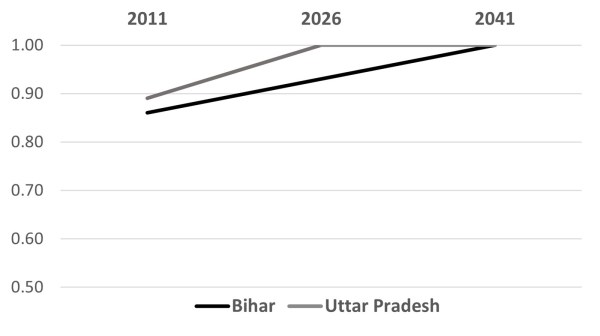 Figure 1: Projected Representation Growth conditioned on Performance.
Figure 1 illustrates how this solution may pan out for Bihar and Uttar Pradesh based on projections of TFR in 2026 from past trends.
We find that Uttar Pradesh may receive near full representation in 2026 while Bihar would witness some enhancement in seats. However, full representation in Bihar would be achieved only after the next Census exercise (probably in 2041).
This solution has several advantages from the standpoint of the four principles earlier outlined. First, it demonstrates a clear roadmap for the country to achieve the democratic principle of “one vote one value”. Second, performance is a core part of the delimitation solution. For overrepresented states to attain full representation they are incentivised to reduce their TFR to replacement levels. Alongside this, states such as Kerala and Tamil Nadu, who have TFR levels below 2, are incentivised to increase the TFR to 2.1, which would increase their representation in subsequent delimitation rounds. Third, the staggered seat increase, conditioned on performance, balances the prospect of drastic changes in representation. Finally, full representation of all states would be achieved when all states achieve the replacement level TFR. Thereafter, since all states would have near-identical TFR there is a level playing field for the future.
This solution is a simple yet powerful way to address disagreements in the delimitation debate. The solution can undergo necessary refinement following more scholarly discussion. Some other suggestions for incorporating development parameters in determining seat allocation may also be considered. The central point we wish to convey is that it is possible to achieve both the democratic principle of “one vote, one value” and to acknowledge the performance of states. Creative solutions could transform the delimitation exercise from a divisive issue into a vehicle for strengthening national unity.
Phadnis teaches Public Policy at the Indian Institute of Management Indore. He was assisted by Anindya Chatterjee, who is a student of the Integrated Programme in Management at IIM Indore. 2026 census

 Share
Share


