
Opinion We need data-driven policymaking to counter human trafficking and bonded labour
Without a victim-centric justice system response, including protection from intimidation by perpetrators and their associates, laudable policy initiatives will remain a paper tiger
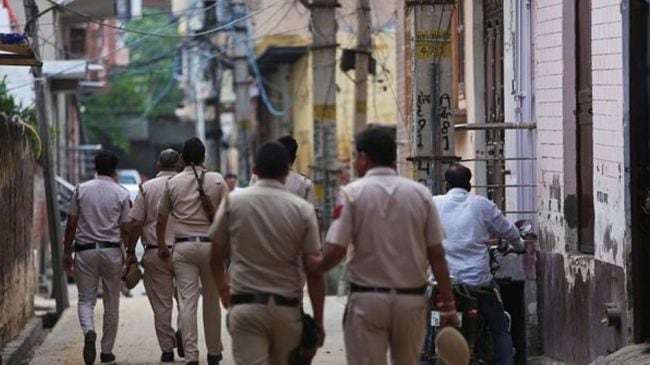 A Delhi court has pulled up the Delhi Police for making a “complete mess in the matter”. (File Photo)
By Tina Kuriakose Jacob
Acknowledgement of a problem can lead to solutions. This is the approach that the Supreme Court took in Surendra Manji & Anr vs Union of India & Ors (2024), highlighting the significant delays in the rehabilitation of victims of bonded labour, including children rescued from inter-state trafficking. The Ministry of Labour and Employment (MoLE) was directed to convene a meeting with all States and UTs to come out with a proposal that addresses inter-state trafficking and the grant of release certificates to bonded labourers.

As part of MoLE’s follow-up action, reports suggest that consultations were held, but “not much progress seems to have been made.” In its recent directions to States and UTs in September 2025, the Ministry encouraged them to undertake surveys, evaluatory studies and awareness-generation programmes focused on capacity-building to identify cases, and to create mechanisms for the review and monitoring of cases and the rehabilitation of bonded labourers. These are welcome suggestions that need to be informed by data-led interventions against the crime of inter-state trafficking.
The National Crime Records Bureau’s (NCRB) reports are crucial data sources for evidence-based policymaking. Though by their very nature the data are not a comprehensive representation of the extent of a crime, as not everyone wants to take the legal route, they can help develop a sensible policy framework.
Noteworthy improvements have been made by the NCRB in reporting various forms and purposes of human trafficking, including forced labour, domestic servitude, forced marriage, beggary, pornography and the illegal removal of human organs. Periodic reporting of the crime of human trafficking has evolved to show the nature of victims involved and the extent of the spread of the crime. Disaggregation of state-wise data and the response of the criminal justice system — including the role of the police and courts in dealing with criminal elements — is important to inform various facets.
Cumulative data on human trafficking crimes recorded across India in the last eight years of NCRB reporting, including the 2023 report, under Sections 370 and 370A of the Indian Penal Code, show that victims of forced labour (23,520) form the largest percentage of human trafficking crimes, followed by human trafficking for sexual exploitation or prostitution (17,944).
NCRB’s Crime in India 2023 reports 2,183 cases of human trafficking (HT), a three per cent decline from the 2022 HT cases. In 2023, the highest number of human trafficking cases was registered in Maharashtra (388), followed by Telangana (336), Odisha (162), Uttar Pradesh (155) and Bihar (132). Odisha reported the largest number of victims trafficked (1,305), followed by Maharashtra (935), Delhi (842), Telangana (626) and Bihar (510).
Across India, a total of 6,288 victims were reported to have been trafficked in 2023. The number of victims of human trafficking includes both adult and minor victims, with those below 18 years of age accounting for nearly 43 per cent. More females (3,787) than males (2,501) were reported to have been trafficked in 2023. However, more minor boys were trafficked (1,674) than minor girls (1,013) across India. Delhi (605), Rajasthan (343), Bihar (261) and Odisha (167) reported the highest number of minor boys trafficked.
The NCRB also reports the purpose for which victims were trafficked, providing further insights into the nature of the crime prevalent in the country. Of the 6,043 victims rescued from trafficking, 36 per cent were trafficked for sexual exploitation and 28 per cent were forced labour victims. The largest number of forced labour victims rescued were from Delhi (758), followed by Rajasthan (321), Odisha (315), Bihar (93) and Jharkhand (62).
Between 2022 and 2023, MoLE reports that three States rehabilitated 654 persons with immediate cash assistance under its Scheme for Rehabilitation of Bonded Labourers, 2021. However, the extent of rehabilitation done in States and the scope of extending rehabilitation to victims of bonded labour are both low compared to the NCRB’s data. This discrepancy needs to be addressed, and the time has come for data management on the issue of forced labour trafficking to be maintained holistically, consistently and periodically from the perspective of victim protection. This is crucial to understand the performance of MoLE’s Rehabilitation Scheme for Bonded Labourers, given the linkage of substantial rehabilitation assistance to conviction. Some policy attention is also required on the dynamics of the States from which victims are found to be trafficked, and the necessary inter-state coordination mechanisms required to ensure victims are not only repatriated safely but also empowered through access to local livelihood options and the government’s social welfare benefits.
In 2023, 6,024 persons were arrested for trafficking. Out of the 683 cases where trials were completed, only 10.5 per cent resulted in conviction. Therefore, the linking of full cash rehabilitation payments to victims upon conviction of offenders requires review. Without a victim-centric justice system response — including protection from intimidation by perpetrators and their associates — laudable policy initiatives will remain a paper tiger. Inputs from survivors and field-level organisations are also important to ensure that policies are shaped by the people and for the people they are meant to serve.
The writer is a Consultant and Senior Research Fellow, The International Institute for Migration and Development (IIMAD), Thiruvananthapuram.

 Share
Share


