
Opinion Banning caste rallies won’t create a casteless society
The ideal of a casteless society is noble. But we cannot legislate caste away by merely banning its symbols; we must dismantle the structures of inequity that give it power
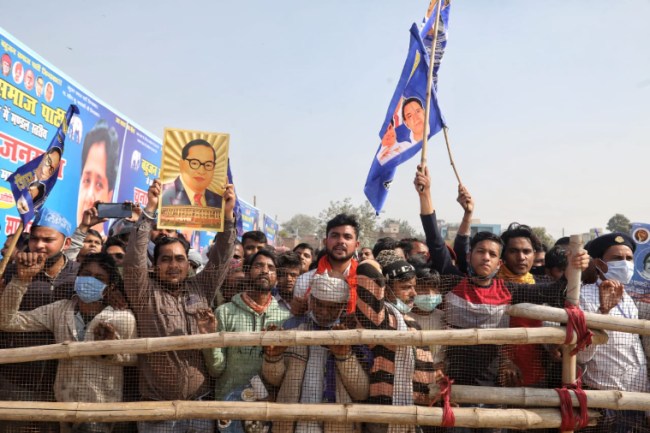 Uttar Pradesh’s ban could curb the most toxic expressions of caste pride. But without nuance, it may become a tool to preserve an unjust status quo, mistaking the silence of the marginalised for progress

The Uttar Pradesh government has issued a directive prohibiting caste-based political rallies and the public display of caste signs, calling them a threat to “public order” and “national unity.” On the surface, this move of the Yogi Adityanath government, inspired by an Allahabad High Court order, appears to be a bold and progressive step toward realising the constitutional ideal of a casteless India — one where the accident of birth does not predetermine one’s social or political destiny. It aims at the most visible symbols of caste assertion: Divisive rallies, biased police records, and vehicles plastered with caste stickers that turn public spaces into proclamations of identity.
While there may be broad agreement on every other measure, the proposal to ban caste-based political rallies is bound to spark the sharpest debate. The intent behind the ban is, to an extent, laudable. Electoral politics reduced to crude caste arithmetic devalues democracy and fuels social tension.

Political outfits, particularly regional satraps that rely on caste mobilisation, have often become dynastic family enterprises, reducing citizens to mere vote banks and identities to political slogans.
Yet, to hail this ban as an unambiguous victory would be misguided. The policy, implemented on the High Court’s directive, is a double-edged sword. Its real-world impact will depend not on its wording, but on its implementation. The state must ensure that the enforcement of “order” does not stifle the legitimate struggles for social justice waged by oppressed castes.
At the heart of this debate lies a crucial distinction that is frequently, and sometimes strategically, muddled. Caste can be deployed for political mobilisation in two diametrically opposed ways. One seeks to reinforce social hierarchy, where privileged groups use caste identity to cement their existing dominance. The other, born from necessity and struggle, is a vehicle for social emancipation. For marginalised communities — Dalits, Adivasis, and OBCs — this is not about gaining power but about claiming a voice, rectifying historical injustices, and accessing the rights guaranteed to them by the constitution.
The great peril of this broad-brush order is its potential to conflate these two, treating both the pride of the oppressor and the protest of the oppressed as mere “public nuisance.” This is not a theoretical concern. The timing of this order — two years before state elections — adds another layer of complexity. While the government presents it as a measure for social harmony, its political implications cannot be ignored. Identity politics took deep root in India’s complex polity post-Mandal, with parties emerging to demand rights and representation for OBCs, SCs, and STs based on the principle of “jitni abadi, utna haq” (rights proportional to population). These demands, recently adopted by Congress, pressured the central government to include caste in the national Census.
Caste is an inescapable social reality in Uttar Pradesh, and its use for political mobilisation is a universal strategy. This spans the spectrum from parties built explicitly on caste identity — like the Samajwadi Party (SP) for OBCs and minorities, the Bahujan Samaj Party (BSP) for Dalits, or single-caste parties like the Suheldev Bharatiya Samaj Party (SBSP), NISHAD party and Apna Dal (S) — to national parties like the Bharatiya Janata Party (BJP) and Congress, which meticulously organise caste-specific sammelans (Brahmin, Rajput, Bania) and OBC outreach meetings to engineer electoral victories.
The order’s sole exception — for cases under the SC/ST (Prevention of Atrocities) Act — is necessary but insufficient. While it acknowledges that caste must remain legible in the legal system to remedy injustice, the realm of social justice extends far beyond the courtroom. For decades, the political rallies and sammelans have been one of the few platforms available to marginalised communities to gather, assert visibility, and hold power to account. To remove this platform without creating alternative channels for advocacy risks disarming the vulnerable, while the powerful simply find new, coded ways to signal identity.
A critical test will be impartial enforcement. Will the state apply the ban equally to a dominant caste flaunting its strength and a Dalit group protesting atrocities? History suggests this is unlikely.
Moreover, the move to erase caste from most police records — while well-intentioned — may inadvertently render discrimination invisible. Without anonymised data on the caste of victims and accused (except in SC/ST PoA cases), how can we empirically track patterns of caste violence or systemic bias? Data is not a tool for division but a diagnostic one to cure the disease of casteism. Anonymity in the system often benefits the perpetrator, not the victim.
Therefore, the true measure of this policy will not be a superficially quiet election cycle devoid of caste rhetoric. True success will be determined by whether the state complements this ban with a vigorous commitment to substantive justice: Accelerating the economic and educational upliftment of backward castes, enforcing the SC/ST PoA Act stringently, creating new forums for grievance redressal, and compelling political parties to compete on governance — employment, health, education — rather than identity.
The ideal of a casteless society is noble. But we cannot legislate caste away by merely banning its symbols; we must dismantle the structures of inequity that give it power. UP’s ban could curb the most toxic expressions of caste pride. But without nuance, it may become a tool to preserve an unjust status quo, mistaking the silence of the marginalised for progress.
The writer teaches Political Science at DDU Gorakhpur University

 Share
Share


