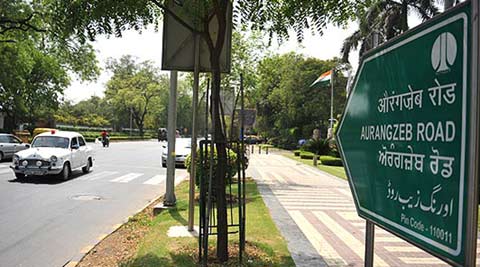

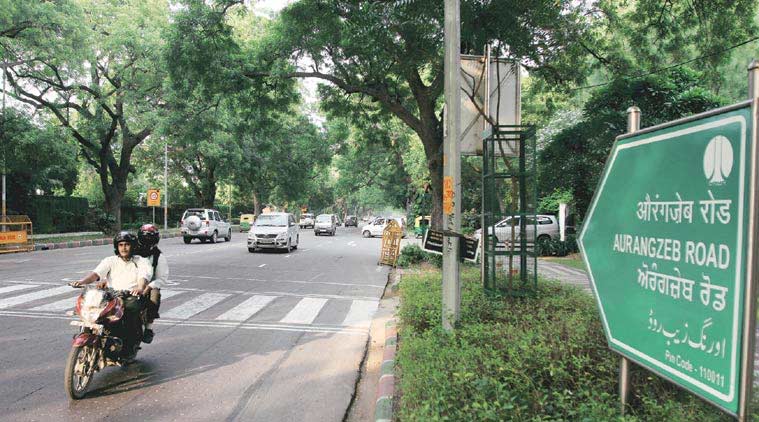
The renaming of Aurangzeb Road to A.P.J. Abdul Kalam Road has left apolitical liberals shocked and political parties dumbfounded. Without being saddled with the baggage of ideology, Delhi Chief Minister Arvind Kejriwal jumped to take credit for the renaming by tweeting the news first. He was present at the NDMC Council meeting that took the decision based on a petition by BJP’s east Delhi MP, Maheish Girri.
The naming of streets in Delhi is governed by home ministry guidelines of September 27, 1975. These guidelines clearly state that names of existing streets should not be changed and only new or unnamed roads should be given names after eminent personalities. In the 15 years that I spent as political secretary to former Delhi Chief Minister Sheila Dikshit, we often received demands to rename/ name streets in various parts of the city. In many cases, these demands were accepted, but never to rename a street. From K.K. Birla Marg to Rajesh Pilot Marg to Shrimant Madhav Rao Scindia Marg, names were either allotted to new streets or to streets that had yet to be named.


Aurangzeb banned the consumption of alcohol, gambling, music, nautch girls, narcotics, castration, etc. If we are to judge him by the bans he imposed, how should we judge the present ruling party, which has banned beef in some parts, come dangerously close to banning porn sites, is in the process of banning some NGOs, banned a film on the December 16 gangrape case, banned the word “lesbian” from films (among 28 other “swear words”)?
Without an approximate understanding of the historical and political context of that era, are we to judge at all? History will judge us by the way we judge history. And if in judging history, we were to include the good, the bad, the ugly, the black, the white and the grey, our heart will neither bleed for Aurangzeb nor throb for Kalam.
Ironically, the BJP’s office is on a road named after a king who converted millions of Hindus and Jains to Buddhism. If Aurangzeb must be exorcised, what about Ashoka? Did he not indulge in largescale killings of Hindu Ajivikas and Jain Nirgranthas, especially after converting to Buddhism?
Having failed to take corrective action against then Gujarat Chief Minister Narendra Modi for his controversial role in the post-Godhra riots in 2002, Prime Minister Atal Bihari Vajpayee was losing his sheen as the secular mascot of the BJP. Vajpayee’s troubleshooters advised him to nominate Kalam as the NDA’s presidential candidate. By accepting to become president, and thus whitewashing the taint of the ruling establishment, Kalam weakened the losing cause of pluralism in India. He failed the countless victims of communal violence in the country. A brilliant scientist and a fine human being, as the 11th president of India, Kalam willingly became a shield for a government desperately seeking cover after the shameful role played by its party in Gujarat.
It may not have electorally benefited the NDA in 2004, but in terms of a political strategy, appointing Kalam as president was perhaps the best perception-management option that the NDA’s street-smart managers had.
The renaming of Aurangzeb Road to A.P.J. Abdul Kalam Road is part of the same strategic messaging: you are a good Muslim if you further our agenda or shield our real face. The rest are bad Muslims, and for them, the messaging shall come from Pravin Togadia, Giriraj Singh and Sadhvi Pragya.
The writer, a former political secretary to Sheila Dikshit, is with the Congress party


