


Tags:


Kalpish Ratna
Book: THE LUMINARIES

Author: Eleanor Catton
Publisher: Penguin
Pages: 832
Price: Rs 799
I like thick books. I revel in garrulity,and have nothing at all against hot air if it can loft me stratospheric with pleasure. The Luminaries permits no such caper. It is a nice book,with all 832 pages of unrelenting niceness securely mired in middle ground. It can be read without the mildest tremor of either pleasure or unease. The story is tragic and devious,but the telling is too decorous for curiosity and too mundane for irony.
For all its weighty prose a kilo in paperback,the books impact is gentle,and the brain recovers almost instantaneously.
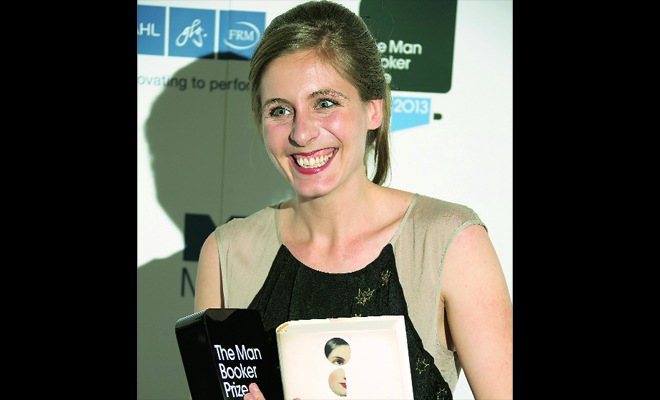
Everybody knows by now that this book is the longest ever,and its author,Eleanor Catton,the youngest ever,to win the ManBooker Prize.
The central device of this novel is an ancient one. A stranger enters an inn and intrudes on a group gathered there for a secret purpose. There will now be an exchange of stories,and the company will journey through each others lives to arrive at a common truth. Add also the Victorian staple of storm and shipwreck and the stage is set for a long,ineluctably
delicious read. I was seduced by a description that condensed the map of New Zealand into one poetic paragraph beginning,In Hokitika it had been raining for two weeks without reprieve
Hokitika! This,then,was about the Gold Rush on the West Coast of New Zealands South Island. Between 1865 and 67,alluvial gold was panned from the black sands at the mouth of the Hokitika river. The Maori called it the place of return,for the prized nephrite jade found there. The novel,set in this straggling town,would be febrile with greed and adventure. Only it isnt.
Yes,The Luminaries is a historical novel,but this is history in aspic,its status indisputably quo. Why?
It is amazing how many plums can be pulled off the internet,all within the time it takes to savour a really good cup of coffee. The facts are all out there for free,the sources authentic and madly peppered with rabbit holes for the adventurous novelist. The information explosion has given fiction more freedom,but also more responsibilities. Writers can now spend less time on legwork,but are expected to think deeper. While adhering to historicity,the novelist may do many things the historian cannot.
For instance,there are three facts about that gold rush even a casual surfer will find intriguing. One: the strong resentment of the Maori against the white mans appropriation of sacred ground. Two: all mining towns had women as camp followers; what were their lives like? Three: how did Chinese miners,invited by the government and resented by white men,survive the hostility? Predictably,these three are the principal threads of the novel,but the writing does not,in any way,advance or even analyse the information in the public domain.
The private domain of characters,too,is catatonic. The people in the story remain prisoners of the authors notes on the minutiae of wardrobe and body language. Before a character is allowed to act or speak,several antecedent paragraphs analyse cause,intent and action to forewarn the reader. When eventually pushed
onstage,the characters are constrained by a sameness of speech and attitude. The auctorial voice takes over immediately again,haranguing,persuading,prophesying,thick-tongued with synonyms that neither enhance nor diminish the scale.
Cattons voice is that of a mannered observer,wellsuited to essayists of the early 1800s,who wrote elegantly about the consistencies of human frailties. The genuine poetry of Cattons language pleases when it is allowed to emerge: more often it is obfuscated by gush.
In plot and projection,the novel closely resembles Lewis Carrolls immortal Hunting of the Snark,with the author as the Bellman,and a supporting cast of Hokitikas luminaries. Surely you remember the line? What I tell you three times is true.
Catton seems to have taken that to heart on every page. Witness this: He was near trembling with fatigue; he was carrying a leaden weight of terror in his gut; he felt shadowed,even dogged; he was filled with dread. Still,the Bellman pulled it off in seven fits; Catton spins it out to 832 pages.
The cochleate narrative unravels with clumsy repetitions,and,unlike Snark,ends without a thrill of either revelation or empathy. Much has been made of the almanac drawn to preface each part of The Luminaries,and sundry paragraphs pursue the pretty conceit,which also resonates in the title. The writers compulsion to explicate ad nauseam makes the book read like Cliffs Notes. The meditative circumlocutions are not particularly intelligent,and the banal prose sags,unleavened by wit.
Oh,make no mistake,this novel has it all,lechery,murder,deceit and true love. But then,so has every other book.
The short-list for the prize this year was spectacular. At least two other novels made the cut intellectually and aesthetically,and a third by the sheer force of popular appeal. Size evidently mattered,for The Luminaries has few other virtues.
Did I enjoy the ride? Yes,I did. Like I said,The Luminaries is
a nice book.
Ishrat Syed and Kalpana Swaminathan are surgeons. They write together as Kalpish Ratna.


