


Tags:


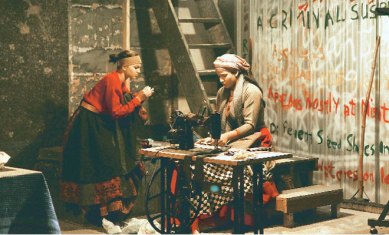
Of late,Anuradha Kapur hasnt been juggling meetings,teaching schedules,and curation,as her tenure as director of the National School of Drama NSD,in Delhi,recently ended. After almost six years,she is now focusing on the one thing that drives her the most directing plays. Kapur looks back at her tenure,the galaxy of actors she has taught and forward to the future in this interview with Dipanita Nath.
Excerpts:

Now that you are no longer the NSD director,can we look forward to more plays from you?
I have a very large project slated for next year on the life of an artist. At present,though,Im working on Virasat,a play about the breakdown of a family of farmers in Vidarbha between the 50s and 80s. This is a prophetic play,specially because we are all concerned about the farmer suicides in Vidarbha. It will be staged at the NSD Repertory Festival in Delhi this month. I also have a teaching programme in South Africa. But,before that,Im going to take a holiday for a while in Delhi and then go to the mountains,which I love.
Did your duties as director affect your output as a theatre director?
A bit. I used to do a play almost every other year but in the five-and-a-half years Ive been the director,I have done only two plays Sweet Bird of Youth in 2008 which used a multi-level stage and Dr Jekyll amp; Mr Hyde in 2012 which used material found on the campus and around. Outside the school,I used to always do a play a year,but during my term as director,I did only two plays,Henrik Ibsens John Gabriel Borkman in 2008 based on a true incident from the 1850s about an army officer accused of embezzlement and Rabindranath Tagores Jeevit ya Mrit,starring Seema Biswas. Fortunately,both had long lives,they travelled a lot.
How did you keep the artiste alive during your stint as a director?
I had to keep the artiste alive else I would not have survived and one of the things that kept me alive as a person of the arts was teaching. It was a lot of pressure to teach while administrating. Often,there was too much administration work and too many meetings but I had to keep teaching,which means I had to prepare for my lecture,had to keep up with my reading,had to see the students work and I also taught practicals.
A roll call of your students reads like a minor galaxy Seema Biswas,Irrfan,Rajpal Yadav,Nawazuddin Siddiqui and Adil Hussein are a few of them. What is it like to watch fresh talent mature into brilliant actors?
In an arts institution,a good relationship is not like a typical student-teacher relationship. Its more like thinking through problems of acting together and figuring out problems of direction and design together. Ive had a long working relationship with Seema,Harish Khanna,Daulat Vaid and Vidyapathi Phukan. Seema was the second batch that I taught at NSD. Seema was very,very reserved and shy but,from the beginning,all of us noticed that she was extremely focused and committed to getting the details right. Irrfan was also very particular about detail. He was thinking about acting all the time,he was trying to figure out how an actor could be completely easy on stage.
In the theatre versus cinema debate,where do you stand?
I dont think theres a clash between cinema and theatre. At NSD,we teach a range of acting,and whether the students act on stage or in cinema is a question of choice and opportunity. What I would go for would be a back and forth between cinema and theatre. Repertories and opportunities for practising actors to keep their theatre alertness alive need to be created.
As director of NSD,your special focus seemed to be on projecting student theatre on platforms outside the school.
My generation has had many opportunities but if a younger person has an opportunity to present his work,it would keep a theatre movement alive. Students have toured Chandigarh and Bhopal,and attended the Young Peoples Festival in Kerala. The student productions are sometimes raw,sometimes very new. There was a play on illegal mining in Goa called Ferrous a few years ago,which was not even like a theatre show. The play evolved in seven different enclosures,with the audience playing interactive games where they struck land deals,wrote blogs,and visited the construction sites virtually. The students returned with the confidence to talk about their work,to handle criticism and to explain and even convince the audience that this was another kind of play.
Artistes often discuss the paucity of arts management courses in the country. How did you,a theatre director and a teacher of World Theatre,make the transition and become an administrator of a school?
I had already taught for 25 years when I became director. When I began to teach,most of my students were only a few years younger than me. As a director,I realised that administration is a huge learning curve and its a hard curve. We have no arts management course,nor is arts administration a special category in India. As director,you have to keep in mind that the knowledge about theatre has to be in step with the world outside. What students hear outside in the world must also be a part of their experience here,and thats one thing that I think our drama school was able to do.
Also,you have to try to keep your innovations within a rule frame the syllabus rules,the financial rules,the economic constraints. One has to put whatever new things one wants in a way that they are within structural limits,one cant reframe the structure.
One of your initiatives,as director,was to make traditional art forms such as Koodiyattam and Kalaripayattu a part of the syllabus. Why focus on the ancient folk forms?
Though I taught World Theatre,my PhD thesis was on the Ramayana of Ramnagar,which is a huge religious performance but also,in a parallel way,a secular performance. I have been interested in traditional vocabulary in theatre as it establishes a critical relationship with the past. In Koodiyattam,for instance,the students learn how to emote with every muscle of their face and hands. For this,they have a detailed inner monologue. The students will have to think about,say,the Kailash Parvat and express it through their face. Now,every students Kailash Parvat will be different because they come from different parts of the country. So,they think about whether it is big or small,are there trees,is there a river? And all this is expressed only through the muscles of the face and certain mudras. In three months,the student becomes a changed person. As a teacher,let me tell you that it is extremely fulfilling to watch a young person develop into an actor whose imagination is widening.
NSDs popular annual drama festival,the Bharat Rang Mahotsav BRM,said to be the largest in Asia,comes in for flak every year about the quality of plays and selection. Many seniors in the theatre community refuse to apply or be a part of the show. What have you to say about this?
BRM follows a very democratic process you can apply,there is a selection,there will be heartburn but nobody says dont apply because you are small group. BRM is not a commissioning theatre festival. If somebody chooses not to apply then,they have exercised that choice. People are against applications,they say,Hum apply nahin karenge,they feel lessened and I can understand that. They feel nobody should judge them,and I can understand that feeling.
You had started your career as a young actor. Now that you have more time,will you return as an actor?
Gosh,I am very afraid. I think I have forgotten how to act. I wont act again but,I am definitely going to direct a lot of plays.


