Journalism of Courage
 6 min read


Two decades ago,on a midwinter flight from New York to Chile en route to Antarctica,over a dozen fellow travellers and I came down with bronchitis. When the Antarctic voyage got underway,so many people were sick that the ships doctor nearly ran out of antibiotics. Since that trip,I have diligently followed a preventive routine whenever I fly.
I make sure I am well rested and minimally stressed when I leave. Just before the flight I take echinacea and 1,000 milligrams of vitamin C. The immunity-boosting powers of these supplements are still much debated,but they seem to work for me. During the flight I drink lots of water but no alcohol and minimal caffeine to keep protective membranes well hydrated.
I wash my hands often and keep them away from my eyes and nose.
Though I can cite no studies that endorse my routine,I have never again become ill from flying.
I also take precautions to prevent blood clots a special concern because I am short. In addition to staying well hydrated,I always book an aisle seat so I can get up easily and walk around at least once an hour. On very long flights,I wear compression stockings.
Rising risks
Each year nearly two billion people travel aboard commercial airlines. Yet as two experts in emergency medicine noted in February in The Lancet,Many passengers are unaware of health implications associated with commercial air travel.
Data on inflight medical problems are limited and no one keeps track of how many people become sick from flights after they leave the airplane. But the experts,Dr Danielle Silverman of Georgetown University Hospital in Washington,and Dr Mark Gendreau of the Lahey Clinic Medical Center in Burlington,Massachussets,maintain that flight risks to health are rising because the age of travellers is increasing,and long-haul aircraft,such as the Airbus A380 and Boeing 777LR,are now capable of extending flight times to 18 to 20 hours.
Older passengers are more likely to have health problems that can be aggravated by long flights. Infectious diseases known to have been spread by air travel include influenza,severe acute respiratory syndrome SARS,tuberculosis and the common cold.
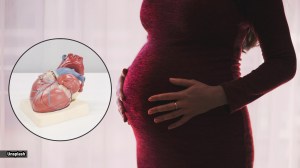
Several factors can affect the health of airline passengers,including changes in cabin pressure that reduce oxygen supply; immobility and dehydration that raise the risk of blood clots for all passengers,not just those in the tighter space of economy class; exposure to passengers with infectious diseases; and jet lag when crossing multiple time zones. Flight crews also face chronic exposure to cosmic radiation,which is a hazard for pregnant women as well.
Passenger protection
Some airlines have taken steps to minimise health risks,like offering passengers plenty of water during flights and recommending exercises that keep blood from pooling in the legs.
All flights carry emergency medical kits,and most now also have an automatic defibrillator to rescue passengers whose hearts develop an erratic rhythm,which can be fatal within minutes.
But the bulk of any protection may depend on you,the passenger. If you have a chronic health problem,the Lancet authors suggest a pre-flight medical assessment to determine whether it is safe for you to fly and what precautions you need if you do.
Airline cabins are commonly pressurised to altitudes of 1,524 to 2,438 meters,or about 5,000 to 8,000 feet,above sea level. Healthy people have no problem at such altitudes,but those with heart or respiratory disease,who may already have low levels of oxygen in their blood can develop symptoms of mountain sickness fatigue,headache,lightheadedness and nausea. Those passengers may need supplementary oxygen when flying,the doctors wrote.
Even healthy passengers may develop mild abdominal cramps and ear problems as gas in body cavities expands with rising altitudes. The doctors also warn against flying too soon after surgery.
The risk of blood clots starts to rise four hours into a flight and peaks on flights of more than eight hours.
Flying business class offers no protection,despite the expanded leg room,research has shown.
The more flights taken within two weeks,the greater the risk. Passengers who are obese,have cancer,recently had surgery,take oral contraceptives or have conditions that raise their susceptibility to blood clots including genetic conditions like factor V Leiden are at particular risk of flight-induced clots.
Many may benefit from blood thinners when flying.
On long flights,the less passengers move about cabin and the less water they consume,the greater the risk. Wearing compression stockings and exercising the calf muscles during flight can lower the risk.
Steps against jet lag
While exposure to cosmic radiation is not considered a problem even for frequent air travellers unless they are pregnant,anyone can develop jet lag from abrupt changes in multiple time zones. After a westward flight,it can take a day to adjust for every time zone crossed; after an eastward flight,a day and a half.
Although controlling exposure to sunlight is the best way to limit jet lag,it can be challenging for some travellers,so the doctors recommend taking melatonin 0.5 to 5 milligrams.
When flying eastward,try to get morning light wear sunglasses only in the afternoon and take melatonin at the desired bedtime. When flying westward,get afternoon light wear sunglasses only in the morning and take melatonin in the morning. And in either direction,be sure to stay well hydrated.
To prevent contagious illnesses,the most important measure is to be sure all your immunisations are up to date,including annual flu shots.
The Lancet authors noted that the risk of onboard transmission of infection is mainly restricted to individuals with either close personal contact or seated within two rows of an infected passenger.
But since there may be no way to know who sitting near you might be infectious,my regimen should not hurt and may very well protect you.