


Tags:


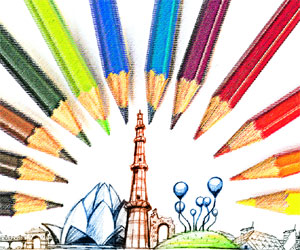
Mumbai and Delhi are our twin cities of art. Is one outdoing the other?
Five years ago,when curator and artist Peter Nagy moved from New York to India to open an art gallery,the wise men and women of the art world told him to head to Mumbai. He didnt. Delhi chose him,he says,because gallery space was more affordable. I am glad I made that choice because today Delhi has turned out a far more intellectual space than Mumbai. Its not just Bollywood. And there are so many venues to discuss art without looking only at the market, says Nagy,whose Nature Morte gallery in south Delhi supports some of the best experimental work in the country.
It takes precious little to spark a small battle between residents of the countrys two biggest cities when the best city tag is at stake. When the prize involves the label of Indias top centre of art,the debate is only a little less fiercer: If Mumbai flaunts big artists like Atul Dodiya and Jitish Kallat,Delhi can drum up quite a lot of noise about Subodh Gupta and Arpana Caur.
But in the last two years,the balance seems to have tilted towards the capital. Two successful art summits,world-class infrastructure and non-profit organisations like the Devi Art Foundation,say artists,give it an edge over Mumbai. And ironically,for a city known for cocooning itself in red tape and conspicuous consumption,its Delhis ability to support non-commercial art that has got artists talking.


Another example of a non-profit venture is the effort put in by Anupam Poddars year-old Devi Art Foundation,that has been supporting young curators like Deeksha Nath,and showcasing artists from countries like Pakistan,Bangladesh and America. This 7,500 square feet establishment in Gurgaon has two floors dedicated to cutting-edge art. Besides showcasing Poddars personal collection of paintings,sculptures,installations and video art,Devi Art has organised large-scale exhibitions of works that were not for sale. It opens its door to accommodate the vision of young curators and critics,a case in point being Naths Still Moving Images,and Kavita Singhs exhibition Where in the World that showcased Shah,upcoming performance artist Nikhil Chopra and other biggies like Sudarshan Shetty and Bharti Kher. The plan is to attract a crowd larger than art connoisseurs and buyers. The attempt is to bridge the gap between the audiences and art, Poddar writes in his mission statement.
Poddar is not alone in his mission as newer art organisations announce their presence. The Shiv Nadar Art Foundation is due to go official by mid-November though the people behind it are reluctant to divulge anything more. When that project takes shape,Delhi could get a glimpse of the Nadar familys fine collection of modern and contemporary Indian art,including large-scale sculpture. You can also expect more curated shows that encourage upcoming talent.
In the last six to seven years,about five new galleries have opened in the city to give company to established names like Vadehra Art Gallery or Gallery Espace. With newer spaces like the forthcoming auditorium at the National Gallery of Modern Art,the panel discussion group Contemplate at the Art Summit and the discussions at Vadehra Book Store and Art Gallery,there is no arguing with Delhis force as an intellectual hub. That scholars like Nivedita Menon,Salim Kidwai and Shivaji Panikkar are planning to start the Archive,Research and Queer Cultural Practice in Delhi,not Mumbai,is another affirmation.
And then there were the art summits. The latest edition in September,especially,buzzed with an energy that is rarely seen or associated with white-cube galleries. It was a mela of colours as Delhiites thronged the venue to gape at Anish Kapoor and Dali,and gasp over the Riyas Komus and Ved Guptas. The footfall went up to 40,000 across four days and 250 artwork worth Rs 26 crore were sold. Mumbaikars were more than a little overawed. A young artist like Remen Chopra agrees she got good exposure at the summit. It was the Guild in Mumbai that nurtured me,but I got international exposure at the summit, says the 29-year-old who studied at the Delhi College of Art.
What Delhi doesnt have is an art district that compares to Kala Ghoda or a battery of big artists. Mumbais strength remains artists such as Riyas Komu,T.V. Santosh and Jitish Kallat. But what it has,conversely,is space. Collectors have large spacious homes to display their art as opposed to Mumbai flats that can barely house one or two sculptures. There are,of course,exceptions like the homes of collectors such as Czaee Shah and Sangita Jindal. One could say that Delhi has moved a step ahead in terms of the money that collectors have and the space that gallery owners have, says Abhay Maskara,whose Gallery Maskara,an old cotton storehouse,is one of the bigger spaces in Mumbai. Mumbai is a vertical city and Delhi,which has developed horizontally,has more to offer in terms of outdoor spaces, he says.
Maskara is quite eager to have his artists show in Delhis galleries. I have sent Anupam Poddar images of my latest artist,Awantika Bawas show and I intend to meet up with gallery owners like Peter Nagy and Renu Modi of Galley Espace to see if we can do shows across cities, says Maskara.
Artists like Chintan Upadhyay do feel that Delhi is better equipped to pilot such coordination. In Delhi,there is a better synergy between the arts. Theatre and music interact more with fine arts. Writers too are more involved with the fine arts,since there are a larger amount of publications, says Upadhyay,who recently showed at a group exhibition at Delhis Religare i Arts Gallery. Upadhyay also says its easier for an artist to get overnight fame in Mumbai but its possible in Delhi to forget the price war. I am not saying Mumbai is not vibrant. But talks and openings are usually geared towards an image-building exercise for a particular artist, he says.
The blue-eyed-boy of the Delhi art scene,Subodh Gupta,is not happy with comparing the two cities. Each city has a different atmosphere and its strong points. Mumbai has its own rhythm and I find Delhi more aggressive, he says. The artist has held shows in both cities though it was in Delhi where he became a well-known name. Delhi has many emerging galleries and,of course,it is ideal for the art summits as its a much more political place, Gupta says.
Mumbai-based Jitish Kallat does not see a fixed equation between the art cultures of the two cities. The hierarchy keeps switching and rearranging. Delhi has organisations like KHOJ,Sanskruti,Ghadi and now the Devi Art Foundation,which are pillars for supporting experimental and non-commercial art. The city does have a magnetic force for me,since these institutes support a larger ecosystem. However,in the last couple of years,the new art district in Mumbai has sprung up around Radio ClubGallery Maskara,Project 88,Volt Gallery,the new Chemould Prescott and Chatterjee amp; Lalhave created new energy, says Kallat. My vote would go to Delhi,however,on account of those four organisations, says Kallat.
Upadhyay though would end by exhorting the art communities in both cities to stand up and be counted. We need more public art projects. Whether it is in Delhi or Mumbai,everyone assumes that the average man on the street is not interested in art. That has to change, he says.
The example of Mumbais biggest artist and one who has made his city his muse,Atul Dodiya,illustrates how tricky this debate can be. Dodiya has lived in the Ghatkopar chawl he was born in despite the many highs of his career. That is the lab of emotions he accesses. Its very hard for me to give an objective opinion about the Delhi versus Bombay debate given that the latter is my hometown and the former I visit always as a tourist, he says. Dodiya would find it difficult to paint if he were to live outside Mumbai,so interwoven his work is with his city.
Which is a city of artone that inspires such rootedness or an impersonal vast space that acts as a catalyst for its artists imagination? The two cities and their many experiments with art might have the answer.


