


Tags:


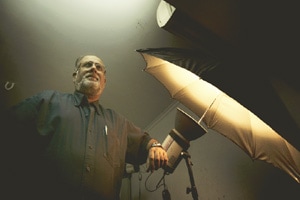
With everyone turning into a shutterbug,what happens to photo studios? Fat Indian weddings have come to their rescue
Delhi Photo Company,established in 1937,was the first official photographer of the President of India. When we went looking for the studio in Janpath,we asked a cobbler for its location. Thats now a hotel,turn right and youll see a green board, he said. The board was green,but it read Fresco a popular Italian restaurant. Its subscript: Delhi Photo Company. Inside,families were gorging on pasta instead of posing for pictures. We shut down because we cant cheat on our trade, said Ajay Shankar,son of Vijay Shankar,over a cup of cappuccino at Fresco Delhi Photo Company became its franchisee eight months ago. Id rather have trained chefs than system operators who know nothing about photography,and are told to erase a pimple from a face, he said,with undisguised sarcasm. Of course,we did adapt to computerisation and digitisation,but,in the end,decided not to compromise just for the sake of keeping afloat. We are artists,we refuse to be system operators, said Shankar,whos now into film and fashion photography. At Fresco,he plans to have photo exhibitions and book reading sessions.


Shankar blames camera manufacturers for killing the artist in the photographer. In 2007,he tried converting the studio into a cafe-cum-gallery that would promote young photographers. Shankar was in talks with a big camera company,that runs a similar gallery in New York,for a tie-up in Delhi. But the company wanted him to sell and repair their cameras as well. I couldnt be running a service centre for them. It seems everybody just wants to cater to the market, he says. Shankars anger also comes from arrogant customers. In a changing India,where technology is readily available,patience is rare. With new money,arrogance has set in. Ive seen people talking to photographers like,ek shot idhar maar. People answer mobile phones while being shot, he says.
But even as some studios shut down,there are others that thrive. Umesh Sabharwal,co-owner of Prem Studio in Delhi,went to Montreal,Canada,in 2005,for a portrait photography workshop. In a single day,he saw three studios shutting down there. When he asked fellow studio photographers for their mobile numbers,they told him they couldnt afford their phone bills. Sabharwal immediately read the warning signs. That night,he rewrote the profile of his studio,veering its focus away from studio portraiture to wedding photography. He took two years to study wedding photography before putting in a huge amount of investment into it. Prem Studio has ambitious plans opening 100 branches countrywide in 30 years on a franchisee model. Besides a multi-level space with demarcated desks for passport-size pictures,matrimonial photography and weddings,it has a full-fledged post-production facility with a floor dedicated to printing,designing and album-binding/frame making.
Indeed,while most people no longer deposit their film reels of the summer holiday and wait anxiously for the prints,they still frequent the studio,for wedding day studio shots,matrimonial profiles,or visa photos. And in Photoshopping times,they want the studio to become,in Shankars words,a production unit,where system operators delete wrinkles and pimples.
Weddings have turned out to be the saviours of traditional photo studios. Over the last decade,while weve become inveterate shutterbugs,weve also learned to make our weddings bigger and fatter. Dipak Studios,a popular studio in Faridabad,may have seen its printing business plummet by 90 per cent in the last five years,but the 500 per cent rise in seasonal wedding photography has made their overall business soar in the same period. Raman Dipak,proprietor,says,We do 50 to 100 weddings in peak season November-December,adding that they are shifting their focus from Haryana the studio caters to the rural belt beyond Faridabad to Delhi where weddings are grander. Forty per cent of our business comes from Faridabad,60 per cent from Delhi and 10 from the rest of India, he says. As people have no more than one or two children these days,especially in urban areas,they have fewer occasions to celebrate so the wedding day is their biggest day and they want to spend the most on it. They have the money as well to do so, says Dipak.
Studio photography,say Sabharwal and Dipak,has to adapt to changing family values,in order to survive. Sabharwal is making plans for kids photography and pregnancy photography. Most couples want only one child now,whose every move they want to record,even before his birth, he says. But as digicams,laptops and editing software evolve,wont we be able to click pictures of children,edit them and share them ourselves? Sabharwal whips out an album,whose laminated sheets show a child in various poses,playing with a ball,a toy car,hugging his mother. One of the backgrounds has a smoky effect,and the other has one picture fading into another. Mixing and placement of pictures is an art. Even if people know how it can be done,they wouldnt want to put in the effort or the time, he says,adding that he does what customers cant do in order to survive.
Awareness about technology has ironically also helped photo studios. It has made people more demanding with wedding albums. They want different effects for the photos sepia tone,fade-in,flawless faces,etc, he says,even as he shows us around the designing facility where a designer works on a frame in which he brightens the fire and the bride and groom along with the decorative flowers,while keeping everything else black-and-white. In the finishing department,pimples and wrinkles are being eliminated.
Packaging is being innovated too. Prem Studio produces guest folders,which have pictures of a guest with his/her family,that can be given as souvenirs,and key chain albums,which are small enough to tie to a key chain. Mahatta amp; Co,which is also surviving on wedding photography,has brought out photobooks in which photographs are printed,making it lighter than a wedding album in which pictures are inserted inside folds. The popular studio in Connaught Place,Delhi,however,looks more like a camera shop with DSLRs neatly arranged on racks. We even spot Nokia phones,which,says Pavan Mehta,proprietor of Mahatta amp; Co,have become the biggest camera sellers. Isnt selling of digicams self-destructive? Those who buy cameras from us,also come back to buy other things lens,batteries,memory chips. If,for instance,companies have stopped asking us to click pictures for their brochures,they still give us money by buying cameras and related equipment, he says.
Each of the 26 outlets of the 101-year-old Bangalore-based GK Vale studio which has shot high-profile weddings in Bangalore such as actor Vivek Oberois contains a glamorous glass showcase of the best cameras money can buy. Its website boasts a gear store and offers online printing solutions. We maybe one of the leading sellers of Canon and Nikon cameras in the country today,but we are essentially a studio, insists V Sukumar,grandson of founder GK Vale and partner in the business. At the Bourne amp; Shepherd studio,established by British photographers Charles Shepherd and Samuel Bourne in 1867 in Kolkata,a black-and-white portrait of Rabindranath Tagore hangs neglected in one corner,even as customers ask Bimal De,the man at the counter,to show them digicams. Digital photography has changed the way we work, he says. n
Inputs from V Shoba amp; Premankur Biswas


