Journalism of Courage
 4 min read



A quiet winter evening, a warm auditorium- warmed by glowing silk saris, jolly camaraderie and lively singing- celebrations of a silver jubilee. This was the scene last Sunday in the rarely hyped but respected Institute of Management and Development Research IMDR.
IMDR was founded in 1974 by the Deccan Education Society DES with generous contributions from Padmashri Dr. R.T. Joshi and Sumatilal Shah. At that time it was affiliated to the University of Pune UoP. In 1977 the institute took the unconventional step of declaring itself an autonomous body. Since then IMDR has come a long way, conducting at least eight management courses in various subjects, including its newly started diploma in International Trade and awarding its own diplomas.
Their autonomy has allowed them to pursue a more 8220;flexible, comprehensive and result-oriented teaching programme8221;. It allows their students to be more creative, productive, competent and self-reliant. Their curriculum allows their students to study at their own pace unlike other management institutes. 8220;I M I am Directly Responsible,8221; is how Gopal Iyengar a Reader in IMDR describes the institute and its policy.
A striking feature of their policy is their commitment to a more enlightened management practice in the Indian context trying to establish a relatedness with industry in India in theory and practice. Their unique Indian approach to management education, where students not only possess the knowledge and analytical skills, but also the desire to apply themselves and to develop a judgement of people and situations.
IMDR has been described as a 8220;frightfully innovative and delightfully original8221; institute. What makes this institute different from other management institutes in the Oxford of the East8217; or in India? Their wish to learn from everyone, but imitate no one? Their fee structure? Rs 12,000 a year for an MBA is mere peanuts in today8217;s age. Their healthy student-teacher camaraderie? 8220;We are on a first name basis with most of the faculty,8221; was how Siddharth, second year PGDM student described it. 8220;The only reason we aren8217;t so with the rest is purely out of respect for their age and experience. Not that they would mind,8221; added his classmates Subbu and Chitra. On the lighter side, the tapri of IMDR has also gained a reputation and is a much frequented place. A plate of pav and omlette is a much coveted thing.
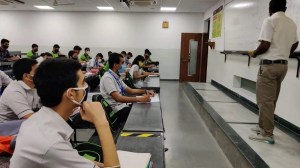
The institute has a five member full-time faculty headed by Ashutosh Bhupatkar and a 36 member visiting faculty comprising practitioners, consultants and academicians. With nearly 800 students, both full-time and part-time, IMDR has 24,000 square feet of building space of classrooms, auditorium, conference hall, library, reading room, canteen, common room, administrative block, staff accommodations and limited hostel facilities for the students.
Students are encouraged to conduct seminars and cultural programmes. As part of the Jubilee Year Celebrations, the institute conducted three symposiums in export efficiency, Human resource and Market research practices in India. Their very active Cultural Forum decided to hold traditional cultural programmes for their jubilee year. A Hindustani Classical Flute recital by Shri Nitin Amin in September was followed in November by a solo violin performance by Smt. Rajalakshmi Pitchumani and a vocal recital in Carnatic music by Srilatha Sunderarajan.
Aroha8217; an evening of Light Indian Music on November 29 saw staff, students and alumni participating with talent and enthusiasm as nostalgic numbers and ghazals were sung to make a magical evening for them. Savita Gokul, a member of the staff enthralled the IMDR crowd with her magical voice. The duo of Gopal Iyengar and Trina Bannerjee, was applauded wildly for their endearing rendition of Shola jo Bhadke. IMDR will be holding many more such programmes this jubilee year- a tribute to Indian traditions and culture. An aim to spread the message of Indianness in a field so often connected with the fast moving modern lifestyle. A good thought, an interesting way of doing it too.
The institute, with its paved, granite courtyard and terrace is a 8220;second home8221; as Mugdha, a first year PGDM puts it to the many students who have come from other states.