Journalism of Courage
 4 min read



Anita Ratnam tells Sanjukta Sharma that her dance drama Daughters of an Ocean8216; takes myth and metaphor to forge a contemporary language
Trained in Kathakali, Mohini Attam and Bharat Natyam, Anita Ratnam belongs to a generation of artists with an eclectic worldview 8212; one that adopts a unified approach of the arts to expressing truths and myths. Known primarily as a choreographer and exponent of contemporary Indian dance, Ratnam has also authored books on Indian Dance 8212; Natya Brahman on the comparative drama traditions of India and Greece and Narthaki, a directory on Indian dance, conceived, edited and published by her. Ratnam first shot into fame through television. A career in television in the USA established her as a media ambassador for India 8212; associated with projects aimed at promoting awareness about Indian culture, which, she later abandoned to involve herself full-fledgedly in classical dance.
Eventually, Arangham was born.
The director explains: quot;Arangham seeksto energise an interaction between traditional dance forms and the related arts both in India and abroad. When it started, it was a vision for the arts to mesh, impact and re-invent itself. Through our festivals and various collaborations, we have managed to make that possible. The territory of art is the territory of change. At the new millennium, Arangham is embracing the arts in a style and tone that intersects the crossroads of performance, faith, purpose and ethics.quot; It is now an interactive body, which educates, promotes and innovates Indian dance and the arts. Arangham also hosts the annual Other Festival8217;, which promotes avant-garde artistic talent from India and the world.
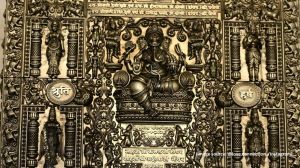
But Ratnam8217;s own choreographed shows with her troupe are what the rest of India gets to see of her art. One of her recent dance dramas, Daughters of an Ocean8216;, to be performed in Mumbai, takes up three Indian goddesses 8212; Durga, Saraswati and Lakshmi 8212; to convey one simple message: The goddess is within us.8217;
Not assimple as it sounds: quot;It is based on a book by Shobita Punja. It is a series of letters to her daughter, who has grown up and operates in a different cultural context altogether. The first lines of the book caught my attention three years ago. My daughter, born in New York, is growing up in an India caught in many time cycles8230; What is India in her imagination and how does she, like millions of urban teenagers, navigate the confusing signals of image, myth, metaphor, to forge a contemporary meaning for themselves? I could relate to the book as a daughter and a mother.quot;
And so the brainstorming began. To bring a book to the stage and the hurdles it entailed 8212; holding the attention of an impatient urban audience, while keeping the narrative and body language appealing. quot;But what has emerged is a new way of story telling, a new language which is contemporary and essentially Indian. The goddesses aren8217;t supreme beings. They could be your mother, aunt, sister or daughter,quot; says Ratnam.
At its heart then,Daughters of an Ocean8216; is a woman8217;s story, an Indian story. Was the feminist undertone intentional? quot;I have not created the piece for a feminist or any other statement. I8217;m not a radical feminist myself. The theme is close to my heart and I8217;ve tried to share it with my audience. If any statement emerges in course of the performance, so be it,quot; says Ratnam.
At least for as long as her new, urban audience discerns its essence.
Daughters Of An Ocean8216; at the Experimental Theatre, NCPA. On Feb 11. Time: 6.30 pm.