Journalism of Courage
 4 min read



Outside the small restaurant where he was having dinner, Huang Qi saw men he recognized, plainclothes police officers. He got on his cellphone to alert colleagues: Something might happen tonight, he said.
Huang, who had already served a five-year prison term for political material posted on his Web site, had just published an article about China8217;s latest forbidden topic: shoddy construction of school buildings in Sichuan province, where more than 9,000 children were killed when their classrooms collapsed in the May 12 earthquake.
As Huang predicted, when he and two friends walked out of that restaurant in Chengdu on June 10, the police closed in. He is being held in a detention house in the city, the capital of Sichuan province, charged with illegal possession of state secrets, a catchall term often used to stifle dissent.
Huang, 45, is among dozens of Chinese writers and lawyers who have been convicted, detained, placed under house arrest, tailed or otherwise harassed as part of China8217;s broad crackdown on dissent in the run-up to the Olympic Games in Beijing next month. At least 44 writers are in Chinese prisons in violation of their rights to free expression, more than at the beginning of the year, according to a report released Tuesday by the PEN American Center, an advocacy group.
While much has been written about the political stakes involved, less well known is the personal toll that opposing the official Chinese government line these days can take. Huang8217;s friends are often harassed and sometimes detained; his wife, Zeng Li, has been forced to change apartments frequently after police pressed landlords to evict her; frequent beatings when he was in prison left Huang with brain injuries that now spark bouts of violent anger and other health problems. The stress eventually became too much for Zeng; she separated from Huang in 2006.
His life did not have to be one of hardship. The communications engineer was just 36 and a successful businessman in Chengdu when he stepped off the path taken by China8217;s budding capitalist elite.
In 1999, he established a Web site that publicised the grievances of the poor in Sichuan province, where he lived with Zeng and their son. Conceived as an online site where families would share information about missing relatives, it quickly became a place to read about common people attempting to defend their rights: seven local girls who were sold into prostitution; thousands of area farmers sent overseas to work and then refused pay; a mother fighting for compensation for a son whose death was linked to the suppression in 1989 of democracy protests on Beijing8217;s Tiananmen Square.
Shortly after that last article was published in 2000 8212; Tiananmen, like the Sichuan school collapses, is a forbidden subject in China 8212; Huang was arrested and convicted of 8220;subverting state sovereignty.8221;
Although he was recently quoted as saying the human rights situation in China is better now than 10 years ago, on June 10 he again became an example of what happens to activists and their friends when someone crosses the government.
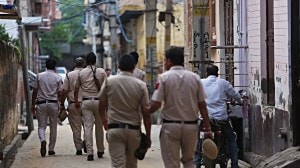
8220;Run!8221; Huang yelled to his two friends as he was knocked to the ground outside the restaurant and surrounded by plainclothes officers. They dragged him to a waiting car and drove off 8212; the last time anyone outside China8217;s security apparatus has seen the Web journalist.
Under the state secrets provision of Chinese law, Huang can be held incommunicado for more than six months, said Mo Shaoping, Huang8217;s attorney.
As the Olympics draw near, Chinese security officials appear to be targeting people who could channel information about rights abuses and government corruption to foreigners by publishing, as Huang8217;s Web site does, in Chinese and English. The site, 64tianwang.com, is hosted on a server in the United States and is blocked in China by government censors.
8220;The government has locked itself into a fictional account that the Chinese population has no interest in human rights and no criticism against the preparation of the Olympic Games,8221; said Nicholas Bequelin, a Hong Kong-based researcher for Human Rights Watch. 8220;Since that8217;s not the reality and thousands are involved in human rights activities, they have to silence quite a few people.8221;