4 min read

Journalism of Courage



When Mahatma Gandhi sailed across the Brahmaputra from Guwahati and landed in Sualkuchi in 1946,he was so impressed with the silk that was woven here that he said,Women of Assam can weave dreams on their looms.
But over the last few years,those dreams seem to be deserting the looms of Sualkuchi,a village 35 km west of Guwahati and home to the GI-protected muga silk Antheraea assamensis,which is said to be one of the costliest silks in the world and which is found in the Brahmaputra Valley in Assam. Raw muga silk costs around Rs 6,000 a kg as against
Rs 1,500 for the mulberry-variety of silk.
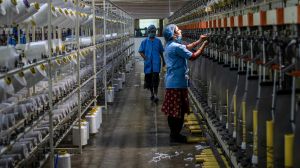
All is not well with Sualkuchi,where almost every family is engaged in the production of paat mulberry and muga silk,and that too exclusively on the traditional handloom, says Tirthanath Kakati,president of Sualkuchi Tant-Shilpi Sangstha,an association of weavers.
Sualkuchi is a 10 sq km spread on the north bank of the Brahmaputra and has a population of about 40,000,all of whom are involved in silk weaving. The annual production of silk,which was estimated at about 31 lakh linear metres in 2006 and was valued at Rs 90 crore,is coming down.
There are several factors that has complicated the Sualkuchi story: the cost of raw material has shot up,labour is in short supply and power supply is erratic.
Weavers who were from other districts have mostly gone back. While the Bodo women from Kokrajhar or Baksa districts have returned to their villages because of attractive schemes introduced by the Bodoland Autonomous Council,others have left because they make more money from work under MNREGS, says Kakati.
Sualkuchi is said to have been established in the 11th Century by King Dharmapala of the Pala dynasty that ruled western Assam from 900 AD to about 1100 AD. Dharmapala,the story goes,brought 26 weaver families from Tantikuchi in Barpeta to Sualkuchi and created a weavers village close to modern-day Guwahati,seat of administration and trade for more than 5,000 years.
Sualkuchi is as important to Assam as Kaziranga or Majuli is. But one must admit that the increasing cost of raw materials and shortage of power are serious concerns, says Assam Health and Education minister Himanta Biswa Sarma,whose Jalukbari assembly constituency covers Sualkuchi.
Sarma says Chinese silk too has posed a major threat to Sualkuchi. While the government of India has hiked import duty on cheaper Chinese silk to protect our silk rearers,it has also created problems for Sualkuchi. It is a peculiar situation because the cost of yarn produced in both countries has gone up. Last year,for instance,cost of silk yarn increased by about 100 per cent over the previous year, says the minister.
As local MLA,Sarma wants Sualkuchi to adopt a two-pronged approach. On one hand,we must protect Sualkuchis traditional handloom sector and on the other,we must also create a synergy between handloom and powerloom in order to cater to the consumers who cannot afford to buy silk, he says.
Last week,Reta Jo Lewis,Special Representative for Global Intergovernmental Affairs in the Obama government,visited Sualkuchi. She promised to explore the possibilities of US support that might help Sualkuchi get a bigger global market.
The village recently got its own Sualkuchi Institute of Fashion Technology SIFT that looks at product diversification. While SIFT will become a nodal centre for design and also attract the younger generation towards weaving,we are also setting up an engineering college here that will double as an Ramp;D centre for Sualkuchi, says Sarma.
Kakati,of the weavers association,says Sualkuchi needs a yarn bank so that the silk produced in Assambooth cocoon and yarnstays here. At the moment,almost the entire silk reared in Assam goes out to Bangalore and Mysore and returns as twisted yarn. This has made raw material expensive for our weavers, he says.