Premium
This is an archive article published on March 15, 2009

Success at last

It is tough to hold a grudge against someone like Jesse Ryder. The stands,where Gujarati was the common language and the tricolour fluttered from Row A to Z...

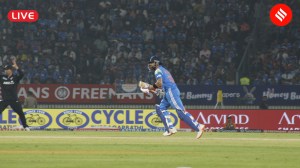
It is tough to hold a grudge against someone like Jesse Ryder. The stands,where Gujarati was the common language and the tricolour fluttered from Row A to Z,gave the New Zealand opener a standing ovation after his entertaining knock of 63 despite the fact that it spoiled their dream of witnessing a 4-0 rout by Team India.

The few Kiwi fans among the crowd had obvious reasons to cheer the four sixes since they had enough of hearing the Sehwag stories from their friends of Indian origin. But the common connect for the 21,285 gathered at the Eden Park with Ryder,was the feel good factor of watching the changing fortunes of a man on the mend.

Ryder has been New Zealand crickets problem child who started the year with a one-match ban as he missed the team meeting during the West Indies tour because of a late night drinking session with friends. He later missed the tour of Australia because of injury. The one-day series against India was as much a test of his shoulder as it was of his will to keep away the inner demons. There seemed a sense of frustration among the games administrators who were already blamed for giving a long rope to the gifted cricketer prone to moments of madness.

Passing the test

New Zealand might have lost the series but Ryder has passed his test,and how. On the field,his 225 runs from 5 games mean hes scored more than anyone else in the Kiwi dressing room and his match-winning effort of 3 for 39 and 49-ball 63 on Saturday has given his team a consolation they were desperately seeking for ahead of the Test series. Off it,he has kept his public promise of keeping away from alcohol. After the Twenty20 triumph,Ryder sat with a bottle of cold drink. Watching him walking off the field with the Man of the Match champagne bottle,with the earlier episode in mind,it seemed safe to say that Ryder had not only handed over the win to his mates but the celebratory drink too.

When the game started this morning after the rain delay on a pitch with bounce,it seemed that finally the conditions were right for a specialist bowler to walk away with the bubbly. Two men were expected to be the spoilsport for the new ball bowlers and it was the disparity of their batting performance that proved to be the difference between the two sides.

Virender Sehwag and Ryder are two men with contrasting lives but there is a lot in common when they are on field. Both swear by aggression but have a calm exterior and unfazed temperament. Blessed with immaculate hand-eye coordination,their strokeplay is rarely pre-meditated. Though on Saturday Sehwag unusually danced down the track to hit Jacob Oram out of the ground and miscued a shot. With the target of 150 within striking distance Ryder avoided such rush of blood. He did what Sehwag usually does. Giving respect to the good balls but showing utter disdain to anything marginally short or within the striking distance of his bat.

Aggression is the key

Indian skipper MS Dhoni knew that if there was one man who can match his teams USP of belligerence,it was Ryder. Aggression has been the key but you have to be calm when it comes to Tests because the red ball does a bit more,so the approach will change a bit. Some of the batsmen will play the kind of cricket they have played. It can be a Sehwag or a Ryder because of their strengths and natural way of playing cricket. You dont want to curb it. Sometimes they may change it but more often than not they will be aggressive, Dhoni said.

Story continues below this ad

Like Sehwag,Ryder isnt the one for big jargons and both the openers have a way of describing their startling show on field in simple words. Since the Sehwag-Ryder resemblance wasnt too hard to miss,the hero of the day was asked if he was inspired by the star of the series. Id love to say that but hes a bit more destructive than I am. I have just got back into form and am trying to under-hit the ball most of the time and spend a bit of time in the middle and its working for me, he said.

Its indeed tough to begrudge him. A few overs after Ryders heated exchange with Ishant Sharma,there was a warm handshake between the two.

Sandeep Dwivedi is the Sports Editor at The Indian Express. He is one of India's most prominent sports journalists, known for his deep analytical insights and storytelling that often goes beyond scores and statistics to explore the human and cultural side of sports. Professional Profile Role: As the Sports Editor, he leads the sports coverage for the newspaper and the website. Weekly Column: He writes "The Sports Column," a weekly feature where he provides sharp, narrative-driven perspectives on the biggest sporting news of the week. Podcast: He is a frequent contributor to the "Express Sports" podcast (Game Time), where he discusses evolving trends in cricket and other international sports. Areas of Expertise While Dwivedi covers the entire sporting spectrum, his work is particularly noted in the following areas: Cricket: He provides extensive coverage of the Indian National Team and the IPL. He frequently analyzes the leadership styles of figures like Virat Kohli, Rohit Sharma, and Gautam Gambhir. He is known for tracking the transition phases of Indian cricket and the evolution of specific players like Kuldeep Yadav and Rishabh Pant. Athletics & Olympic Sports: He has written extensively on Neeraj Chopra’s rise in javelin, the nuances of Indian shooting, and tennis legends like Sania Mirza and Leander Paes. Human Interest Stories: A hallmark of his writing is his focus on the struggles and backgrounds of athletes, such as the sacrifices made by Shafali Verma’s father or the "silent battles" of veteran players like Cheteshwar Pujara. Notable Recent Work & Themes Leadership and Dynamics: Recently, he has written about the dynamic between Gautam Gambhir, Virat Kohli, and Rohit Sharma, arguing that personal friendship is not a prerequisite for team success. Sports & Culture: His articles often intersect with global culture, such as his deep dive into the 100-year legacy of the Harlem Globetrotters and their role as American soft power during the Cold War. The "Grey Areas" of Sport: He often addresses sensitive topics like the mental health of cricketers post-retirement, the "outrage industry" in sports broadcasting, and the impact of fan-wars on the game. Tenure and Experience Dwivedi has been with The Indian Express for over three decades. This experience allows him to provide historical context to modern sporting events, often comparing current crises or triumphs to those of previous generations. You can follow his latest work and columns on his official Indian Express Author Profile. ... Read More


Latest Comment
Post Comment
Read Comments
Advertisement
Advertisement
Advertisement
Advertisement