6 min read

Journalism of Courage




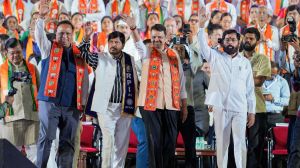
Patna8217;s historic Gandhi Maidan was the grand setting for two coronations on Thursday last. Nitish Kumar8217;s swearing-in as Bihar8217;s new chief minister was the story of the day. But intimations of the second crowning were drowned in the extravaganza of the first. Of the 25 ministers sworn in along with Kumar in the first go, as many as four belonged to the Extremely Backward Castes EBCs. Two members of these castes found place in the Cabinet and two were sworn in as ministers of state.
It has been a long and arduous trek to centrestage for the EBCs in Bihar. They are the Kahars, Dhanuks, Kumhars, Lohars, Telis, Tatmas, Mallahs, Nais, Noniyas, Kevats and Paneris 8212; about 108 castes in all, with no individual segment an overwhelming presence like the Yadavs.
Though they make up almost 32 per cent of the state8217;s population, until recently the popular narratives of Bihar politics did not even take the EBCs into account. In spite of being socially and economically marginalised, they were not paid any special lip service either, like the Dalits or the religious minorities. They were subsumed without trace in the undifferentiated category of the Other Backward Castes.
The story within the story of the rise of backward castes in Bihar has been this: while the upper backwards 8212; Yadavs, Kurmis and Koeris 8212; rode the Mandal wave into the political spotlight and stayed there, the lower backwards or EBCs languished in the ill-lit peripheries of power structures.
There are accounts of how in the early part of his tenure as chief minister, Laloo Prasad Yadav tried to outmanoeuvre his powerful opponents and establish his own claim to power by promoting several lower backward caste leaders, like Rameshwar Rai Amat, Puncham Mandal Dhanuk, Rabindra Kumar Tanti, Ramdev Bhandari Keot, Jai Narain Nishad Mallah. He also upped their quota in government jobs from 10 per cent in the Karpoori Thakur formula Thakur himself belonged to the EBC to 14 per cent and after the division of the state, to 18 per cent.
But EBC representation in the legislatures did not grow in the way that the representation of the upper backwards did. There was no EBC representative in the 1962 Bihar Vidhan Sabha. In 1967, of the 82 backward caste representatives, only 5 were EBC. Between 1967 and 1985, there were a maximum of 7. There were 6 EBCs in the 1990 Vidhan Sabha; that number leaped to 16 in the 1995 Vidhan Sabha. In this election, there are 19 EBC MLAs 8212; an all-time high. But this time the EBC headcount in the Vidhan Sabha is an imperfect measure of their influence. It doesn8217;t tell the full story.
Though these castes still lie scattered across constituencies, and though they still lack a common agenda or articulate leadership, there is a visible increase in the influence they exert on the political game in the state. Some would trace the process of change to the panchayat elections held in Bihar after 23 years in 2001. Shaibal Gupta of the research center ADRI in Patna, counted out the number of EBCs elected either as mukhiyas 3.9 per cent or as members of the zilla parishad 3.5 per cent and detected larger stirrings: 8216;8216;This election has thus revealed that they no longer want to remain as electoral fodder of the upper backwards, and would like to be at the helm of different power centers. For the first time, they have tried to forge a pan-lower-backward alliance at different levels. Their success in the Panchayat election is certainly not spectacular, but their presence in the power structure has at least become noticeable8230;8217;8217; wrote Gupta.
In this October-November election, the EBC story began with a never-before political mobilisation centred around them. Laloo, Nitish and Ram Vilas Paswan, each chief ministerial wannabe was ostentatiously seen next to an EBC leader in his helicopter campaign. All three parties, JDU, RJD and LJP, hosted EBC sammelans in Patna8212;again a first. Laloo issued a slew of newspaper advertisements proclaiming his special sensitivity to EBC concerns. Nitish Kumar told this newspaper the EBC vote would be crucial in the election results. And it was.
Contrary to the exaggerated rumours of his political demise, Laloo did not suffer an erosion of his vote base. If 78 per cent Yadavs voted for RJD in the February polls, the figure actually rose to 81 per cent for the Congress-RJD alliance in the October-November polls. In the Muslim vote, the comparable figures are even more opposed to the trends of popular storytelling: 42 per cent and then 70 per cent figures from the CSDS survey and the HT-IBN survey.
What changed from February to November was this: there was an unprecedented consolidation of upper caste vote behind the JDU-BJP combination 8212; from 49 per cent in February to 71 per cent in November, according to the above mentioned surveys. But given their small numbers, that by itself would not have been enough, had the EBCs not pitched in with a never-before consolidation behind JDU-BJP. The data shows that EBC consolidation behind the JDU-BJP rose from 24 per cent in February to 50 per cent in November. The comparative rise in EBC consolidation behind the RJD was meagre: from 24 per cent to 29 per cent.
Why did the EBCs vote as they did? The answer to that question holds the key to the verdict perhaps. It may also hold some crucial suggestions for CM Nitish Kumar. As he gets down to address the magnificent challenges of his new job, he might consider this: Chances are, given their scatter, the EBCs did not even vote as a self-conscious caste. Their vote will have to be explained far more painstakingly. It may cast a responsibility on Bihar8217;s new government that is more demanding than a rote enactment of the well-worn rites of identity politics in the state.