Journalism of Courage
 3 min read



Despite the fast pace of the world we live in, the relationships that are closest to our heart remain of the greatest importance. Relationships are of two kinds: that we share with our family members and that we share with the world. If we are not comfortable with the first, we cannot understand the second. That is why, when psychologists start treating a person, they try to discover something about his/her family background and their standing in the family.
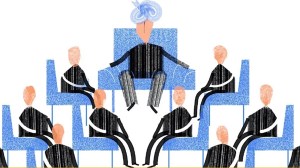
The best way to study and understand families is through non-verbal gestures and their seating arrangements at the dining table. The family member that sits at the head of the table is the dominant member. The person that sits to his immediate right is not in competition with him/her. The rationale is that they are close enough to share intimacy at the table and are close to the kids. If, on the other hand, the husband and wife sits at either ends of the table, they are usually in conflict with one another over dominance, even if the conflict exists at a subconscious level. Of course, if the husband and wife sit across one another, and the table is a smaller one, then, this is the most comfortable position the for intimacy. If one of the kids is competing with one parent for the affection of the other, then the child will sit directly opposite the parent that he/ she is in competition with. The youngest normally tied to sit next to the mother.
Another clue about inter family relationships can be found in the tightness or looseness of a family. For instance, in homes that represent a closed family, even the postures of the family members are rigid and unbending.
Everything is in place in these neat and formal homes. We can usually be sure that the family in such a home is less spontaneous, more tense, less likely to have liberal opinions. They are less likely to entertain unusual ideas and are more likely to conform to the standards of the community. By contrast, the open family8217;s home will have a lived-in look, perhaps even in untidy, disorganised appearance. Such a family is less demanding, freer and more open in thought and action. In the closed family, each member is likely to have his own chair, his own territory. In the open family it seldom matters who sits where, whoever gets there first belongs. These, of course, are the two extreme ends.
Most families fall somewhere in between, and have some amount of openness and closeness. While some are equally balanced, some may incline towards one or the other end of scale. The outsider studying any family can use openness or closeness as a clue to understanding the family and the individuals who make it.