Journalism of Courage
 7 min read



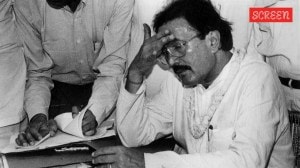
Over so many years of watching the political scene, you may have seen L.K. Advani in victory and defeat, joy and melancholy, anger and generosity, but never lost for ideas, forlorn, as he looked in Parliament this week. His was a case of a top quality lawyer dumped with a bad case, and a worse script to defend it. For the BJP8217;s tallest leader it was tough enough to build a case against the nuclear deal, given that his party and its constituency have championed unabashed strategic engagement with the United States for five decades now. It is tough to bring out passion when there isn8217;t reason or conviction to match, so don8217;t just blame his speech-writers. And for decades I haven8217;t known Advani to have the talent to fake it. He takes it on the chin, which is one of his great qualities and it makes him such a substantive politician, and also such an interesting one, articulate, speaking his mind, never ducking an inconvenient question. That is why so many of us in the media, even those who may not necessarily be his voters, have learnt to admire him over the decades. So why did he look so unlike himself, drifting along, not in control over this week?
This dirty little Lok Sabha session is now over. Being a reflective, introspective man, you8217;d expect Advani to try and figure where it all went wrong. His partymen would tell him with fake bravado that the cash-for-votes sting has tainted the UPA8217;s victory and turned the tables on them entirely. That in any case, this session and the politics that will now follow are about fighting the next general election. And, to that extent, the general air of corruption and wheeling-dealing, the UPA8217;s embrace of Mulayam Singh and Amar Singh and the compromises 8212; like the induction of Shibu Soren in the cabinet 8212; will all make this victory short-lived. Mayawati as the rallying point of the third front, they will argue, can devastate the Congress nationally and, on balance, this confidence vote victory may lose the Congress the next election. There is some merit in this. But Advani has seen too much in his six-decade public life to get so dazzled by this talk as to miss the big, not-so-pretty picture.
In a vote where 22 MPs of all denominations defected, 15 came from his party or its allies. In fact, each one of his important allies suffered a defection BJD, JDU, Akalis, Shiv Sena. The Congress, on the other hand, had just one defection and its UPA allies none at all, even though they include such usual suspects as the RJD, DMK and PMK. The only real defections from the winning side came from the Samajwadi Party six, but they were late entrants and probably had already lost most of these six by the time they switched to the UPA. Now what happened to a party like the BJP? A cadre-based, disciplined party that hung together even after the Rajiv Gandhi landslide of December 1984 when it was reduced to a strength of two? Why were his allies, all strong leaders with near-total control of their states and their parties, not able to keep their flocks together? If the politics of this session was all about fighting the next general election, could the feeling within his own party, across four states, and among his allies in four others, be that the UPA8217;s was a more winnable ticket?
On all evidence that would be unlikely even now. The UPA faces strong anti-incumbency across the country and even a novice in electoral politics would know that Mayawati8217;s emergence as the rallying point for the third front would work primarily to the detriment of the Congress, at least for now. Inflation is not about to decline dramatically and this year8217;s monsoon is beginning to look dodgy. In an interview with me on NDTV8217;s Walk the Talk last week, Chandrababu Naidu made a touching, if also shockingly cynical, slip of the tongue. When I asked him how things were for him, he said, with a smug smile: 8220;Things are very good, really good8230; people have so many problems, inflation, no water.8221; And so on. In such a situation what incentive would be there for the BJP-NDA people to scoot while the UPA mostly stays together? That too just after a series of victories in state elections. The BJP will probably explain this disastrous performance by arguing that some of these had no hope of winning again, had lost their constituencies to delimitation, or were too old to seek re-election. All these, however, were known facts. There can be no defence for leaving their own flotsam 8220;uncovered8221;.
As a party, the BJP today has more internal democracy than any other 8212; certainly more than the CPM in the light of the recent happenings there. It is also a party that believes in introspecting and holding chintan-baithaks. Advani has a sharp, sharp political mind and if he were to assert his authority 8212; which he hasn8217;t done lately 8212; he would need to call some people to account. In fact, it will be almost his entire A-team. His political managers completely failed to keep his numbers together, or to even explain his nuanced opposition on the nuclear deal. You talk to the BJP workers, sympathisers as you travel along the country, and they all want to know why their party is opposing the nuclear deal. In any case, what is it doing in cahoots with the Left? Why is it in such a hurry for an election when the Congress may indeed benefit from the anti-incumbency that some of the BJP state governments Rajasthan, Madhya Pradesh, Chhattisgarh face in November? Why not allow this 8220;half-dead8221; UPA government to drag along for another six months while inflation rises?
His party8217;s think tank got carried away. Or maybe there was an element of revenge there: the Congress helped vote out our government twice, in 1996 and 1999; it was about time we paid them back. Either way, they played poor politics and Advani cannot absolve himself of the blame. Yes, he has problems. His party president does not know who he is, why he is where he is, and what he is supposed to do and how. At least on the nuclear deal his instincts were right but nobody would listen to him. With no core leadership in control, the party elders manipulate the politics of his state leaders 8212; who actually bring both the votes and the bucks 8212; even more cynically than the Congress8217;s Rajya Sabha-ist durbaris do. His chief ministers are alienated. It is well-known that most of his party8217;s central leadership would have been happy to see Modi lose. And Vasundhara? She may have succeeded in putting down the revolt within her unit, but what is she to do with the venerables in her own high command who play Henry Kissinger in the morning and James Bond in the evening, but would do their damnedest to make her life impossible? It is this anarchy at the top, and alienation at state levels, combined with the intellectual blunder of going against its grain by building its case against the nuclear deal, that explains the current state of the party, its leader and the coalition they lead.
sgexpressindia.com