Journalism of Courage
 2 min read



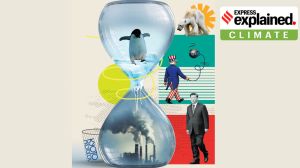
Friedman says he8217;s 8220;not against global treaties,8221; but thinks that they are unlikely to accomplish much. Instead, his plan is for America to become a green economy so that others will then 8220;emulate us voluntarily.8221; 8220;A truly green America,8221; he insists, 8220;would be more valuable than fifty Kyoto Protocols. Emulation is always more effective than compulsion.8221;
This is probably not the iron rule he postulates indeed, he fantasises at one point about turning America into China for a day, so that power can compel us to turn green8230;
But the real problem is simply the timing. Let8217;s say America commits to a strong buildup of renewable and efficient technology, and that a decade hence our economy has begun to look somewhat greener. That would mean a huge effort. This is a dream that, frankly, looks even less likely in the wake of our recent financial mess8212;that 700 billion could have built a lot of windmills. Under Friedman8217;s scheme, China, India and the rest would then look up, notice, and begin the process of transition themselves.
Had we started on this process twenty years ago when we first learned about global warming, this kind of approach might possibly have carried the day. But it can8217;t now8230;.
There is, therefore, no escaping the need for politics, for a robust international agreement that, among other things, commits America to sharing the burden for helping China and India develop without burning their piles of coal. The controlling metaphor here is not the Manhattan Project or Apollo; it is a Marshall Plan for carbons by which the global north makes up some of the difference between cheap coal and more expensive renewable energy for the global sout8212;another possibility that has probably grown less likely as our financial strains have increased. But if the conventional wisdom doesn8217;t line up behind such a plan soon, before the Copenhagen talks, then the chance will pass.
From Bill McKibben8217;s review of Thomas Friedman8217;s 8216;Hot, Flat and Crowded8217; in the 8216;New York Review of Books8217;