Journalism of Courage
 6 min read



The fascinating public debate consequent to the questions by the Sachar Committee on the number of Muslims in the defence forces is cause for reflection. If as The Indian Express reported, Justice Sachar said that the military is no different from any other central government organisation, there is cause for disquiet. If that was the case, quotas in proportion to castes, backward classes and other marginalised elements of society would have been introduced in the armed forces decades ago. That it did not happen, more as deliberate policy than by accident, is evidence of the sagacity of the earlier generations of our political leadership.
If the Sachar Committee interprets that policy as injustice to and discrimination against Indian Muslims, its approach to the question of the place of Muslims in Indian society is flawed. The presumption is insulting to the ethical and moral principles every soldier, sailor and airman adheres to. The Indian armed forces are emphatically not, and cannot be presumed to be, like any other central government organisation.
It is useful to start with some statistic. Before 1947, Muslims formed some 32 per cent of the armed forces of India. In other words, 25 per cent of undivided India8217;s population formed short of half of its armed forces. The reasons for this were more political than military. The British had prudently decided a long time ago that a large representation to a minority community was good insurance against insurrection by India8217;s majority populace. The freedom movement and its rapid momentum further consolidated this policy, despite a large expansion during the Second World War. The recruitment of Indian soldiery was, therefore, overwhelmingly from the areas that were later to become part of Pakistan. Today, Muslims provide two per cent of the Indian armed forces. The low representation of the Muslim community is a consequence of its socio-economic perceptions. It is equally a consequence of its leadership8217;s inability or unwillingness to prepare the Muslim youth for a career outside the community8217;s traditional choice of vocations.
The small Muslim representation in the armed forces is in spite of the openings available to them in the armed forces. Some Indian infantry regiments have Muslim sub units in them. The regiments from J038;K have as much as 50 per cent Muslim troops. The Indian Army has maulvis and mosques as authorised components of military organisations. There are Muslim officers in command appointments in different ranks. Gallantry award-winners in all categories, including the Param Vir Chakra, have Muslims. Those who join the armed forces are thus no less patriotic.
In military locations, mandir, masjid, gurudwara and church are placed close together and sometimes share common space. In Siachen, the religious place first visited and last prayed at by officers and soldiers has all gods under one roof. The Kaaba, gods of the Hindu pantheon, the Virgin Mother and Sikh Gurus are content to live under one roof or a tent made from a large parachute. There are no disputes there or elsewhere in the armed forces about numbers or quotas, or on issues of affirmative action. As the soldier8217;s saying goes, 8220;There are no atheists when the bombs begin to fall.8221;
Interestingly, there are views in Pakistan about the consequence of the large Muslim presence in the Indian Army before 1947. More than one analysis in Pakistan of the military factors that led to the creation of that state has concluded that the strong Muslim percentage in the pre-1947 army influenced in good measure the British decision to acquiesce in the demand for Pakistan. This fact does not in any way reduce the legitimacy of Pakistan as a state, or the basis on which its current military structures are based. Indeed, proportional representation on the basis of co-religionists does not prevail in Pakistan8217;s professional army.The overwhelming dominance of troops from Punjab in its army is a long-standing reality.
A question can rightly be raised on whether the armed forces truly reflect the multi-religious Indian society. The answer to that is to be found in the composition of military forces all over the world. No country8217;s armed forces are or, for that matter, can be arithmetically representative of its societal distribution. Every liberal society and its government attempts to and must continue to encourage participation in its military of all societal segments. That does not, as in Britain or in the US, help in social engineering through manipulating military manpower ratios on religious terms. Militaries are meant to fight and win wars. In wars and in combat, no soldier can or should look to see if his partner in the foxhole is a co-religionist. If a soldier is wounded, his buddy cannot wait to first determine the religion of the fallen colleague before helping him. Soldiers keep faith with each other, but they also ask for political leaders to keep faith with soldiers.
Militaries created to mirror the religious beliefs of their soldiers belonged to the age of the Crusades and Europe8217;s wars for monarchic dominance of religious beliefs. That world has long discarded those archaic socio-military systems. The armed forces of secular nations that are structured on religious affiliation are a recipe for military disasters in our times. Those who wish to tamper with this cardinal principle demonstrate an ignorance of the psychology of the soldier in combat. Such assumptions are the result of not knowing why a soldier, sailor or airman is motivated to risk his life or limb in combat. They do so not for religion but for a higher cause that combines personal faith, which is a spiritual issue, with the military8217;s collective beliefs. They do not fight to defend religion but to defend their belief in national values. In India8217;s case those values can only be constituted of secular and democratic principles and not of quotas or social arithmetic.
The writer, a retired lieutenant general, is director, Delhi Policy Group

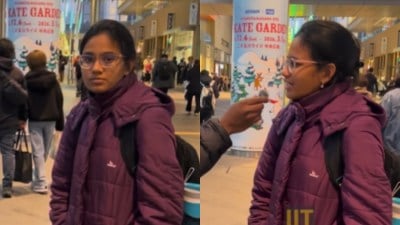
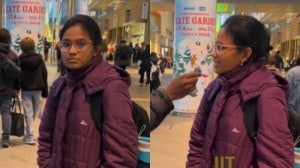
An Indian professional based in Japan has sparked online discussion after a video of her comparing work culture in the two countries went viral on Instagram. In the clip, the woman, an IIT Hyderabad graduate, introduces herself as a project manager at Rakuten and says that she secured the role through campus placements.