Journalism of Courage
 6 min read



Much speculative analysis and obfuscatory prognosis have occurred about Pakistan8217;s invasion of Kargil. Questions are also asked, motivated or otherwise, about whether there is any real evidence of direct Pakistani involvement in the conflict. It is time to take note of what Pakistan has been up to and, more importantly, have a clear perception of Pakistani motivations on which we should predicate our future policies.
Over the last week I have visited Indian army establishments where evidence of direct Pakistani military involvement is on display. These are arms and ammunition captured from regular Pakistani army troops with markings and numbers of the units to which the weapons belong.
There are a large number of well-thumbed pay books with green covers and official emblems of Pakistani military officers and soldiers killed in battle in the last eight weeks. We have captured a sufficient number of the operational and battle diaries kept by the Pakistani military personnel.
More importantly, we now havethe battle plans and order of battle directions given to Pakistani field commanders during the conflict which they had noted in their diaries. We have identity cards, uniforms and military divisional and battalion shoulder patches of Northern Light Infantry and other units of the Pakistan army taken from dead Pakistani soldiers and officers.
Most revealing and poignant are the letters written to the soldiers by family. Some are so intimate that no civilised armed force or government would publicise them. The letters, mostly in Urdu and in local dialects, have been methodically and precisely translated by our Army intelligence. I have seen this material. It reveals details of the methods and tactics of the Pakistani government and armed forces in mounting this aggression.
Plans for the ingress were hatched some time in the autumn of 1998 and finalised by January 1999. The intrusion was not a regular, normal, large-scale military phenomenon. It was done gradually over two months, perhaps between March andApril.
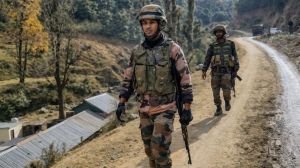
Pakistan relied primarily on troops from the Northern Light Infantry NLI because soldiers of this regiment are mostly young local men from the mountainous regions of Skardu, PoK, Baltistan, Gilgit and the North West Frontier Province. They are fully acclimatised to military activities at high altitudes. They were ordered to shed their uniform, put on salwar kameez, grow beards and wear skull caps.
They infiltrated in groups of three, four or five to take up positions all across the Kargil sector which they did by late April. Their weapons, rations and other logistical support were taken across to their positions in a parallel exercise by porters and Yaks.
The forces commander, northern areas FCNA and the higher command of the 10th corps of the Pakistan Army provided command and control and back-up for the military operation. Heavy weapons like mortar, machine guns and grenade launchers were supplied to their full complement to the soldiers ordered to intrude into India in mufti. Roads andanimal paths were constructed up to the highest points possible. Helipads were built to back forward positions in Kargil taken by Pakistani forces in the absence of Indian forces in these areas at that time.
An interesting dimension was that the irregulars, barring foreign mercenaries, were used as porters and logistical support personnel. Those cadres from Pakistan-occupied Kashmir and other parts of the northern areas who were not in the regular Pakistan Army were used as a logistical labour force. Most of the military operations were carried out by regular Pakistani army officers and soldiers. Pakistan had also deployed squadrons of its helicopters and artillery to give cover to the military offensive.
Parvez Musharraf, Chief of Army Staff, and Chief of General Staff of the Pakistan Army Headquarters Lt. General Aziz were direct planners and commanding officers of this operation. The entire operation was conducted with full coordination and consensus of the Defence Committee of the Pakistan Cabinetwhich consists of the prime minister and the ministers for foreign affairs, defence, information, home and finance, plus the three service chiefs. We have sufficient evidence of this in hand, with none that the civilian side of the Pakistan government was averse to this operation.
An interesting nuance, however, is that a fair number of corps commanders of the Pakistan army were not informed of these plans almost till the Indian counter-offensive started. There are reports that Musharraf and Aziz have not been very popular with some of their senior colleagues in recent weeks.
The Pakistani army units were of course joined by mercenaries from the Afghan conflict and members of the Taliban. The weapons available to the Pakistani aggressors and the logistical support system along with artillery cover and air support nails the lie that Pakistan had no direct involvement.
Pakistan is withdrawing its regular troops. It is orchestrating a dispersal of the irregular cadres and so-called mujahideen all along theLoC and into Ladakh and the Kashmir Valley. Regardless of the call for dialogue by Nawaz Sharif and other pretences, higher levels of violence by Pakistani terrorists here are on the cards. While the LoC may be technically respected, Pakistan will continue to put pressure on it.
Our forces undertook an extremely difficult task in completing the counter-offensive against Pakistan. They did this without the logical option of total strategic and military offensive because of the political decision to show restraint and not carry the battle into PoK. That they succeeded despite this should be acknowledged as a major feat of military and strategic success in very adverse circumstances.
Prospects continue of a hostile bilateral relationship. Pakistan8217;s national consolidation can only be achieved by weakening and fragmenting India. This consolidation cannot be complete till the territorial aspirations of the Muslim League at the time of Partition are achieved. Pakistan8217;s self-esteem can only be restored if itavenges the defeat of 1971 and the creation of Bangladesh by taking away Indian territory.
We are dealing with a Pakistan army which is a force indoctrinated in religious dogma and extremism without commitment to normal military norms. We are also dealing with a Pakistani civil society held in thrall by a power structure with a similar mind set. We should resume the dialogue only at a time of our choice keeping these motivations in mind and without illusions.