Journalism of Courage
 4 min read



A tale retold
Yet another artist inspired by Kerala8217;s art forms. We are all familiar with the story of Cinderella, but when four Kathakali dancers collaborate with two contemporary French dancers, it8217;s quite another story! The ugly step-sisters metamorphose into step-brothers with dancing eyebrows, the charming prince is no longer fair, and the fairy godmother is enveloped in traditional Kathakali attire. So, you can rightly call it Cinderella.
Otherwise 8212; as this delightful piece was titled by The Annette Leday Company which performed at the Homi Bhabha, recently. The theatrical dimension of Kathakali dominated that evening, never letting the liberty of contemporary movement take off on a tangent. So coherent was the piece that even children in the audience were absolutely enthralled, not once did their attention stray.
I wish there were more of them in a hall filled to capacity. What a wonderful way to introduce the television-saturated, theatre-starved urban child to a fusion of thetraditional and the contemporary.
This Franco-Indian co-production resulted from a workshop designed to serve as a dialogue between two cultures as well as between the two mediums of dance and theatre. Many who left the auditorium that evening did so feeling light and airy as dancers often do, but surely a thought lingered as it did in my mind: such an interaction not only enriches the dance forms, it makes our traditional arts more accessible. Groups from the interiors of Kerala, and other parts of India, usually perform to scanty city audiences.
Mumbaikars, it seems, lack patience. Give them something short and expressive as Cinderella Otherwise and even children may turn to our rich art forms so far removed from their environment.
Poets past
It is difficult indeed to preserve the past when even contemporary writers go out of fashion! Dr Alastair Niven, director of Literature at the British Council commented on this as he chaired a panel discussion on Post-Independence Indian Writing inEnglish8217;. Inevitably, the discussion led to visible8217; and invisible8217; writers. The award-winners were in the limelight, while work by other writers remained practically unknown in the UK. Even the home8217; scene was rather dismal, many felt. Adil Jussawala elaborated on the difficulties poets faced in finding publishers.
The small press has always come to the rescue of the poet, and that, it seems, will be the way of the future. Poetry fails to generate big bucks, so why should major publishing houses bother? Who cares to feed the soul in this Cielo-driven culture? But poets there will always be, and many will lament as C P Surendran did that evening: quot;What does one do after a poem is written? How will it reach others?quot; In the West, poetry readings and festivals are on the increase and we need more of them here. Our regional counterparts organise mushairas, and even though organisations like The Poetry Circle have regular readings, there8217;s scope for more. The message at the discussion was clear: No one wishesto hide in the closet and be discovered8217; centuries later. Here and now8217; is what matters. And if audiences respond 8230; ah, bliss!
Living8217; culture
THE sound of music drowned car horns as we entered a small colony in Navi Mumbai. Since appreciating culture on our streets is all but forgotten, armed with chai and batata vadas, we stopped on the road to listen to kirtans in Marathi. quot;Gold becomes coal; coal becomes gold,quot; they sang, expounding the concept of ascetism. Later, I learnt, they were Varkaris, inspired by the ways of devotion. Bhakti Marga has been prevalent in Maharashtra for 100s of years. The Varkaris make regular pilgrimages to Pandharpur and believe in the Vedic scriptures. Spiritual gurus from Dnyanesvar to Tukaram are their guides. They share the vision of the saints with others to help liberate man from the cycle of birth and death.Much of the content escaped us but the sound stayed even as we drove into the night.
The last word
Asked Ms Vulture to Ms Culture:
Imagesendure at the NGMA,
will our temples ever
be preserved that way?

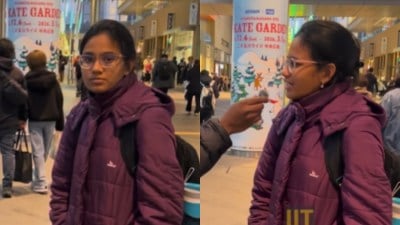
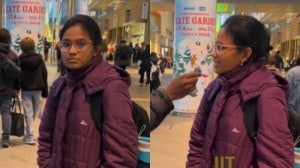
An Indian professional based in Japan has sparked online discussion after a video of her comparing work culture in the two countries went viral on Instagram. In the clip, the woman, an IIT Hyderabad graduate, introduces herself as a project manager at Rakuten and says that she secured the role through campus placements.