Journalism of Courage
 11 min read



On the morning of September 19, a grey Indica with an Uttar Pradesh registration number drove into Jamia Nagar, a south Delhi neighbourhood with tightly packed houses and narrow lanes.
The car carried policemen of the Delhi Police8217;s Special Cell, including Inspector Mohan Chand Sharma. At 10.30, Sharma8217;s mobile phone rang. It was a missed call. A signal. The caller, Dharmender Kumar, a Special Cell sub-inspector who, dressed in formal clothes and posing as a Vodafone salesman, had climbed up to the fourth floor of L-18, Jamia Nagar, a flat the police zeroed in on after hours of telephone surveillance.
Kumar peeped in and saw two men inside the two-bedroom flat. They said: 8220;Kuch nahi chahiye we don8217;t need anything8221;.
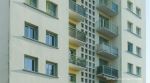
Kumar then dialled Sharma8217;s number. Sharma and his colleagues rushed to L-18, the nondescript four-storey building in Batla House, Jamia Nagar, a few serpentine streets from Khalilullah Masjid.
The residents of the building 8212;which has two flats on each floor 8212; were asked to remain indoors.
With two officers standing guard at the gate, the inspector and his men barged into one of the two doors on the floor and overpowered the men. What they did not not know was that there were three other men in the flat.
8220;We barged inside, with Sharma saab leading us and overpowered the two men. But there were more men, whom we didn8217;t see,8221; said an officer who was part of the team.
One of the three in the other room opened fire and Sharma, who was in front, got hit. As he fell, the next bullet hit Constable Balwant Rana, who was behind him.
Eyewitnesses saw Sharma get down the steps of the building, helped by Kumar and constable Sandeep. The two policemen who were standing guard downstairs yelled and Sharma was rushed to hospital in the Indica.
When the operation began, there were just eight policemen, all in civilian clothes. Though they had a specific intelligence tip off, they did not expect firearms, which was perhaps why Sharma, a veteran of many encounters, was not wearing a bullet-proof jacket.
After Sharma was shot, there was panic and chaos. Sources say the two alleged terrorists, later identified as Junaid and Shahdab Bhai, escaped through the same staircase as there was no other exit from the flat. The guns went silent for a while, till the reinforcement reached the spot. The photographer who clicked pictures of Sharma after he was shot says an Ambassador car, carrying three officers, two of them wearing bullet-proof jackets, came after 10 minutes. They rushed upstairs.
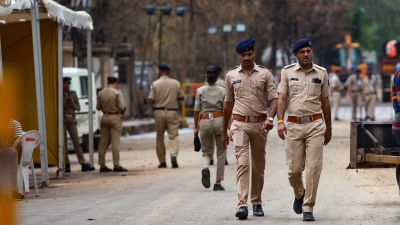
Soon the area was awash in khaki. Soon, NSG commandos too had arrived. Nearly 45 minutes after the first team went inside, two suspected terrorists, Mohammed Sajid 17, who the police claim fired at Sharma, and Atif Ameen 24, were declared dead. Mohammed Saif was arrested.
Closing in on Jamia nagar flat
On September 18, the Special Cell had got conclusive inputs pointing to the presence of alleged terrorists in the Jamia Nagar area. Call intercepts and inputs from Gujarat Police and the Intelligence Bureau had indicated as much.
It was not perhaps a coincidence that Mufti Abu Bashar, the 27-year-old Azamgarh native who was picked up on August 14 from Uttar Pradesh in connection with the Ahmedabad blasts, was in Delhi for questioning that day.
Bashar told the Uttar Pradesh Police in his first statement, soon after his arrest, that he had visited two different places in Jamia Nagar and Zakir Nagar. 8220;On the evening of July 24, I stayed at the house of Aftab, who studied with me at the madarsa in Sarai Meer, Azamgarh. The house was on Lane 3 in D-block of the Abu Fazl Enclave in Jamia Nagar,8221; Bashar informed the police nearly 20 days before the Delhi blasts.Bashar also told the police that while he was in Uttar Pradesh after his Delhi visit, he had received a phone call from Abdul Subhan Qureshi alias Tauqeer, allegedly a key SIMI figure in the Jaipur, Ahmedabad and Delhi blasts, saying, 8220;IM Indian Mujahideen wale taiyaar hain, kya aap log ready hain?8221;
The night before the encounter, Bashar was taken around to the places he claimed to have stayed at during his July sojourn. It is not known whether he physically identified the L-18 flat that night before the encounter. The police deny that Bashar informed them about the IM module8217;s location.
Investigators in Delhi had found that a number, found to be Atif8217;s, passed on to them by the Gujarat Police 8212; they zeroed on it after the arrests in connection with the Ahmedabad blasts 8212; was present in the area. That was the clincher.
The final plan to raid L-18 was charted at the Special Cell8217;s Lodhi Road office at 2 am. All key officers of the Special Cell were present at the meeting: ACP Sanjeev Yadav, ACP L N Rao and ACP Ravi Shankar. The meeting went on into the wee hours. Teams were formed and each assigned its task. At 3 am, the officers finally retired for a nap and change of clothes
The first team reached the spot around 7.30. Sharma, who was with his son, undergoing treatment for dengue in a west Delhi hospital, got a call and left for his office.
He left his office at 10.10 am and headed for Jamia Nagar 8212; for what would be his last encounter.
with Johnson T A in Bangalore
THE TEAM
Inspector Mohan Chand Sharma
One of the most decorated police officers of the Delhi Police, he had received 150 rewards and seven gallantry medals. A key officer of the Delhi Police8217;s Special Cell, he had worked in anti-terrorist operations for a long time. In his career spanning 19 years, Sharma had shot dead 35 terrorists and 40 gangsters. He8217;s also credited with the arrests of 80 terrorists and 120 gangsters. Sharma had been in the Special Cell for nearly a decade. He was also part of the team that solved the Red Fort and Parliament attacks.
Sub-Inspector Dharmender Kumar
He went dressed as a Vodafone salesman to survey the apartment in which the alleged IM module was staying.
Head Constable Balwant Rana
He was just a few steps behind Mohan Chand Sharma. When the Inspector fell after being shot, another bullet aimed at Sharma hit Rana. His right arm was injured. Rana was discharged from the hospital on October 6 after 18 days at AIIMS Trauma Centre.
OTHERS
SI Anil Tyagi
SI Rahul
SI Kailash Bhist
Constable Udaiveer
Constable Sandeep
CAUGHT
Mohammad Saif
Arrested by the Delhi Police after the encounter. He was the mastermind of the blasts in Lucknow, Faizabad and Varanasi on November 23 last year, according to the Indian Mujahideen activist Mohammad Arif who was arrested the Anti-Terror Squad in Lucknow. Saif allegedly stayed at his brother Shahnawaz8217;s rented house in Hussainganj until a day after the blasts. Shahnawaz, a doctor who worked in a local hospital, went missing after the encounter in the Capital. The Anti-Terror Squad, too, confirmed that Saif played a key role in the execution of the explosions in UP in November. Saif, a native of Azamgarh, told the Special Cell officers that on August 28 he travelled to Udupi under the name Rahul Sharma along with Shahabad Bhai. He met a contact of Atif8217;s who handed him 10 bombs. While the bombs were made in Karnataka, the circuit design came from Mumbai.
Zeeshan Ahmed
Atif Ameen8217;s former roommate at L-18, Ahmed surrendered in front of TV cameras on the day of the Jamia encounter. A part-time MBA student at IIPM, he went on air pleading his innocence. Zeeshan, who was talking to Headlines Today outside its studio in Delhi8217;s Jhandewalan when detained, said he had gone to his hometown, Azamgarh, and returned on Friday. 8220;I had no idea that Atif had terror links. When I stayed with him, I never suspected him of having any such links,8221; he said.
Saquib Nisar 23
A gold medalist in economics from Jamia Millia Islamia University, he was pursuing a part-time MBA from Sikkim Manipal University. Saquib, according to his brother Shakir, had taken the Civil Services examination in 2006 8220;because he wanted to root out corruption8221;. The Delhi Police arrested him on September 21, two days after the Jamia encounter. He lived in a joint family in a modest house at Shaheen Bagh, and is the eldest son in his family. He was an introvert but transformed into an outgoing person in the last two years and went on to make many friends, including Saif who introduced him to Atif Ameen. During his interrogation Saquib allegedly said he was supposed to plant the 10th bomb in Delhi but the plan was cancelled at the last minute.
Zia-ur-Rehman
He is said to have arranged the living quarters at L-18 for Atif Ameen and friends. His father Abdur Rehman, the retainer of the house, is also in police custody. A third year BA student at Jamia Millia Islamia University, he had known Atif for four years. Zia allegedly planted the bombs in Central Park at Connaught Place, neatly wrapped in two grey polythene bags. He was responsible for providing the logistics to the module in Delhi. He was among the three suspected members of the Indian Mujahideen arrested by the Delhi Police on September 21. The terror module was planning 20 more blasts in the Capital, particularly targeting the commercial hub of Nehru Place, the police said.
Mohammad Shakeel
A final year student of Masters in Economics at Jamia Millia Islamia, he lived in Sangam Vihar. Shakeel allegedly placed the bombs in Gaffar market and planted bombs on bicycles in Ahmedabad, the police said. He is the one who kept the group motivated with stories of atrocities on Muslims. Shakeel enjoyed Atif8217;s confidence, which is reinforced by the fact that he was sent to plant the bomb alone while others were sent in pairs.
DEAD
Atif Ameen 24
A native of Azamgarh, he was pursuing a Masters in Human Resource Development from Jamia Millia Islamia. The alleged head of the Indian Mujahideen IM module in Delhi, he was part of the think tank of the outfit and involved in the serial blasts in the Capital. He headed a group of 13 men in Delhi who planted the nine bombs on September 13. The Delhi Police believe it was he who surveyed the markets where the bombs were placed. Atif shifted to L-18 in Batla House nearly two-and-a-half months ago. The police say that he had gone to Ahmedabad on July 24 with nine others 8212; two days before the blasts there 8212; and returned to Delhi on July 27. His involvement in the bomb blasts in Uttar Pradesh and Jaipur has also been established, they say. He closely monitored every member of the group he was heading, scrutinising every aspect of each man in the module.
Mohammed Sajid 17
He was the youngest among the suspected members of the outfit. Pursuing an English speaking course, he also hailed from Azamgarh and came to Delhi just a few months ago.
Tomorrow: questions the encounter sceptics are asking 8212; and answers