Journalism of Courage
 3 min read



BRAZIL
Its growth is slow when compared to other emerging countries, but certainly faster than the deceleration witnessed in the late 1990s. Last month, national statistics agency IBGE said GDP expanded 0.8 in the fourth quarter and grew a modest 2.3 in 2005 as a whole. In comparison, India is now witnessing 8-plus growth. This has put pressure on the da Silva government8212;expected to seek re-election this year8212;to cut interest rates more aggressively to give the economy a boost. RBI has lowered its benchmark lending rate six times since September, but at 16.5, the base rate remains among the highest in the world. But Brazil8217;s markets are anticipating a strong growth in the coming quarters. The Bovespa index of the Sao Paulo Stock Exchange is currently traded at 38,082, near its all-time high levels. As per MSCI index, Brazil stocks have given a one-year return of 64.61.
CHINA
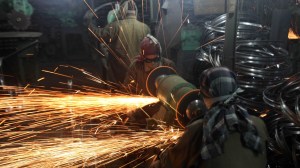
The toast of economic growth among foreign investors. With the Chinese economy expected to have grown by a further 9.3 across 2005, most economists now predict China8217;s growth will rise still further at 8 in 2006 to fourth place in the global GDP list. Its manufacturing sector is booming. The country8217;s manufacturing industry grew by an average annual rate of 10.3 during the period of the 10th Five-Year Plan 2001-05, accounting for 52.2 of China8217;s GDP in 2003. It8217;s one of few countries with a huge trade surplus of over 90 billion, which has led to tensions with the US. China was the top emerging markets pick for investors, who bought 1.5 billion of Chinese stocks in February, Emerging Portfolio Fund Research said. One-year return: 54.09.
RUSSIA
The red flag is now becoming a beacon of growth and wealth creation. Foreign investment in Russia8217;s economy is expected to double by 2008 to reach 25 billion as against 11 billion in 2005. High oil prices have helped Russia8212;a leading oil producer8212;to accelerate its growth. GDP growth may reach 5.7-5.9 in 2006. Russia8217;s Economic Development and Trade Ministry forecasts the average industrial production growth in 2006 at 4.4. In 2006-2008, new leaders of growth appear to be industry. Sectors oriented to the domestic market and producing final consumption products are likely to develop at the highest pace. With foreigners pouring in money, Russian stock markets are booming. Russia has given a one-year return of 105.23, as per the MSCI index.
Global rating firm Fitch expects the South Korean economy to achieve its GDP growth target of 5 for this year. This comes on the heels of strong exports and a rebound in consumer spending. Exports continue to remain strong despite the strengthening of its currency Won. Korea expects a strong recovery in domestic consumption to be limited to some extent, resulting in stabilising the inflation rate below the targeted 3 for the time being. In March, the Bank of Korea retained its key interest rate in a bid to buttress the nation8217;s economic growth. Korea8217;s Finance Ministry has indicated an upward trend in the Asia8217;s fourth-largest economy, after a two-year slump. A report from the Ministry said the economy is gaining upward momentum, citing improvement in employment conditions as well as a lightening of the household indebtedness.