Journalism of Courage
 4 min read



PUNE, June 7: Have you bought yourself a piece of land in the City or its satellites towns? Chances are that if you don8217;t plan to build a house soon, the people living in the area will soon put it to use as a dumping ground.
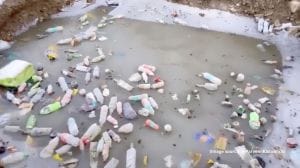
Every morning, without the slightest feeling of guilt or shame, buckets full of garbage are heaped on to vacant plots in thickly-infested localities. What is appalling that those who indulge in this careless act are not unaware of the concept of cleanliness and hygiene. For them, cleanliness is confined to the premises of their houses. That the trash keeps on piling, rotting, stinking, turns into a breeding ground for mosquitoes, flies and bacteria which could lead to ailments such as jaundice, gastroenteritis even an epidemic in a severe form 8212; is not their concern.
Consider the state of the dustbins which have been provided by the administration. More often than not, rubbish is thrown not inside the bin, but somewhere in its vicinity. This becomes a vicious cycle. Those who want to use the bin cannot make their way through the dirt. So, they land up dumping the rubbish outside the bin. Dogs and cattle do the rest, in their search for anything that8217;s edible.
The result is a major health hazard right in the middle of where we live.A major portion of the house-hold rubbish is the ubiquitous polythene bag. But the menace caused by it is quite severe. These nondegradable bags turn out to be eyesores as they litter streets, pavements and grounds. They choke the soil and drains only to encourage breeding grounds for mosquitoes and flies.
Many of these bags are made up of cheap quality granules to which cheap colours are added. Using them for carrying or storing eatables is dangerous because they leech colour and chemicals into the food. Even if they8217;re burnt, they release carbon particles which only add to the pollution.For once, let8217;s not pass the buck, but accept the fact that we ourselves are to blame for the mess. It is equally important that each one of us begin to do his/her bit in improving things.
One simple, no-fuss method which can be adopted by every household is vermiculture. Here, the refuse from the kitchen, such as leftover chapatti, rice, daal, fruit, and vegetable peels can be used to make excellent manure.
A pit, about 2 to 3 feet deep, is dug in the ground and a layer of leaves or a sack is placed as the base. A few earthworms are released and the kitchen waste thrown in. The procedure is repeated till the pit, which is kept moist, fills up. Within 30 to 45 days depending upon the amount of refuse, manure is formed.In many localities, people hire a person to collect the rubbish from their houses every morning. In such cases, people should ensure that the garbage is put in dustbins and not carelessly thrown elsewhere.
Also, if you see anyone dumping trash where it shouldn8217;t be, do not be a mute spectator. Stop the person and educate him about the health hazard he is creating.The administration, on its part, should provide bins which have a wire mesh as a cover. Not only will this stop animals from eating and spilling the trash, it will also allow people to throw the refuse where it ought to be.
Regarding poly bags, there is nothing better than refusing them. Even though shopping may become cumbersome, it8217;s a good idea to carry own bags and baskets.
The College of Military Engineering, Pune, reportedly, banned the sale of goods in plastic bags from shops in its premises. It was decided that any shopkeeper breaking the ban would be fined Rs 2,000. The effect is reported to have been almost immediate and the result impressive.
If such stringent measures are taken in the City too, it8217;ll not be long before the poly bag makes a permanent exit.It8217;s our health that8217;s at stake here, and believe me, nothing matters like health. Let8217;s do our bit, and see the difference. Remember, we don8217;t have to breathe air that stinks and we don8217;t have to live amidst filth.