Journalism of Courage
 3 min read



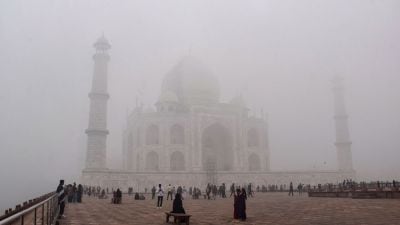
By ordering the enforcement of strict emission standards for non-commercial vehicles, the Supreme Court has clearly sought to enable Delhiites the luxury of a lungful of fresh air. Though public debate has of late centered around whether diesel vehicles which are overwhelmingly responsible for sulphur emissions should be completely banned, the apex court has decided to also take note of emissions of benzene a suspected carcinogen by petrol vehicles. It has accordingly banned the registration of automobiles 8212; in the National Capital Region NCR from June 1 8212; that do not conform to Euro-I emission standards. Thereupon, from April 1, 2000, Euro-II norms will hold. And as happened with the unleaded petrol standard, environmental measures undertaken in the Capital will catch on in other cities in no time.
The order has no doubt caught automobile manufacturers, who count on the NCR for an estimated one-third of nationwide sales, unawares. But even as these manufacturers launch into a race against time tomeet the advanced deadlines, it is already evident that a series of problems will have to be addressed if, indeed, the Capital is to be saved from becoming a gas chamber. For one, the enforcement of desirable emission limits cannot be the responsibility of just the manufacturers, for it also hinges on fuel quality. For instance, even the most sophisticated of diesel engines cannot check sulphur emissions if the quality of diesel is abysmal, as is the case in India. Hence the government would have to take simultaneous measures to deliver cleaner diesel, which involves a relatively small price differential, if the order is to translate into tangible health benefits. A regulatory authority too will have to oversee the various automobile models. There is, besides, the question of micromanagement. Large chunks of the middle class may be worrying that their carburetor engine cars will now be worth the price of so much metal, but the real dent, at least in the short run, may just be visible in local governmentrevenues. For, it could result in car-owners greasing a few palms and registering their non-Euro standard wheels over in Alwar or in Manali.
But these are perhaps petty quibbles. They will no doubt be addressed adequately in coming months. Yet, given the population implosion on Delhi8217;s streets, any gains made via better engines are bound to be offset by sheer numbers. The bottomline in any endeavour to check vehicular pollution has to be to finally tackle two-stroke engines and foster an efficient public transport system. The ambitious, and long overdue, Mass Rapid Transit System has finally been flagged off; but addressing the despicable state of the bus network and suggestions like cab-sharing and shifting of offices and institutions like the Indian Council of Agricultural Research out of the city are critical in lessening the burden on Delhi8217;s roads and its citizens8217; lungs. Measures like dual pricing of diesel and variable parking fees too merit attention. Only such a concerted, holistic effort canadequately check the registration of two lakh vehicles in the Capital every year and dissuade the average Delhiite from converting his wealth into a dream machine.