5 min read

Journalism of Courage




NAGPUR, SEPT 4: You dont have to starve yourself or give up craving for good food if you wish to reduce your weight. Contrary to the popular notions of weight-reduction, you can eat the food of your choice and yet succeed in shedding those extra kilos of fat and that too without doing any exercise.
Hard to believe. But former member of parliament and fitness freak, Dr Shrikant Jichkar made out a case through a new Carbo-Insulin Connection8217; technique. Having got his own weight reduced with the technique, Dr Jichkar motivated close friends Avinash Pande, Raju Akolkar and even 50 of his close followers to follow it.
Encouraged by the results, Dr Jichkar made a presentation on the technique today in front of a jam-packed fitness-conscious crowd that occupied every available space of the Deshpande hall on Sunday evening. The response was so palpable that Commissioner of Police Baidyanath Mishra, who had left his front-row seat to be welcomed by the organisers, found it occupied on his return. As the programme proceeded, people even occupied the theatre wings and the rear part of the stage.
In a two-hour long presentation, Dr Jichkar narrated how he had learnt about the technique during his previous visit to the United States, last year, and shared his experiences with the people. According to him, the carbo-insulin theory was extremely popular in the US and has been proven after exhaustive laboratory tests.
The problem of fat accumulation and weight gain was a gift8217; from the new civilisation, Jichkar said adding that the problem arose due to faulty dietary habits. Introducing people to the topic, Dr Jichkar said that insulin and glucogan are the two secretions from the pancreas which exercise a major control over the body.
The function of the insulin is to break the blood sugar to release energy and also to form fats from the extra carbohydrates consumed by the body. The Glucogan, on the other hand, has the job of attacking the extra fats and disposing it in the form of energy.
However, the change in dietary habits like consumption of more carbohydrate-rich food, irregular and frequent eating, changes the natural life-cycle in which insulin and glucogan control each other. 8220;Today due to frequent eating of carbohydrate diet, frequent insulin release takes place and that too more than what is required by the body,8221; Dr Jichkar said. The release of excess insulin and the maintenance of high insulin levels over the years leads to obesity. This is because 8220;in this process, the role of glucogan has virtually been reduced to zero8221;, he added.
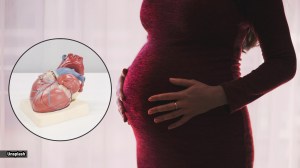
High insulin level prompts feeling of hunger and a person goes on to eat more. High intake of food and high insulin level leads to accumulation of fats. Insulin also gives birth to low-density lipoprotiens or Cholesterol8217;, as it is called. It also stimulates the blood-carrying arteries which, in turn, absorb this cholesterol leading to thickening of the artery walls. Insulin also stimulates the heart8217;s pumping action. The combined effect of the thickening of arteries and heart stimulation results in high blood pressure, Dr Jichkar said.
Similarly, diabetes is also an outcome of high insulin level and not low insulin secretion as is the popular misconception. Explaining further, Dr Jichkar said that the process of energy release occurs in body cells through the utilisation of blood sugar. In this process, the blood sugar molecules take the help of insulin molecules to enter body cells.
Body cells develop their own defence mechanism to stop insulin and sugar molecules from entering the cell. The accumulation of insulin and sugar in the blood after large scale rejection all over the body leads to a stage called diabetes, he said.
He clarified that insulin injections are administered to diabetes patients to make the blood insulin level cross the resistance level of the cells, so that blood sugar molecules can once again gain entry.
The only solution to this problem was to reduce insulin levels and allow Glucogan to resume work. This was possible if the intake of carbohydrate-rich food was reduced and eating habits were corrected, Dr Jichkar said.
He advocated that persons wishing to reduce insulin levels and in turn weight should stick to a two-meal diet, reducing intake of chapatis and rice and increasing intake of low-carbohydrate vegetables and fruits.
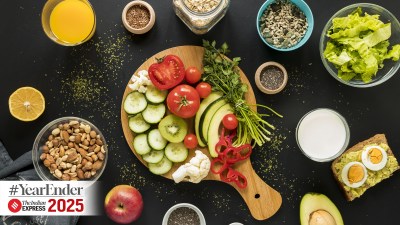
Vegetables like cabbage, cauliflower, spinach, raddish, ash-gourd, bitter-gourd, bottle-gourd, brinjal, cucumber, drumstick, french-beans, capsicum, parwar, pumpkin, cow milk paneer can be consumed in plenty during meals, while tomoto, cucumber, orange juice, coconut water, anjeer, watermelon, papaya, buttermilk etc can be taken as gap-fillers.
8220;One can also eat sweets, snacks etc provided it is consumed during the meals8221;, he said.
Dr Jichkar also stressed on the need for consuming anti-oxidants to prolong cell-mutation process which causes the ageing process. He also felt that regular striking, strengthening and stretching exercises should be taken to keep the body fit.