Journalism of Courage
 6 min read



The DMK, after the Supreme Court judgment took away the protection given to certain laws by the Ninth Schedule, gave a call to rewrite the Constitution. The UPA, of which it is a part, did nothing to oppose the call. The opposition BJP has also remained silent. In fact, as was clear when they had set up a Constitution Review Commission headed by Justice M.N. Venkatachaliah when the NDA was in office, they do nurse a distaste for some crucial constitutional provisions and would like them set right. It appears that the entire political class, for their own different reasons, would like the Constitution rewritten or changed. It is almost fashionable to talk of putting it aside and write a more 8216;modern8217; one, a document more 8216;in tune8217; with the times.
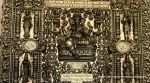
The calligraphed text in the 1950 edition of the Big Book no doubt appears a bit dated, but it is useful as we have just finished observing its 58th anniversary, to consider whether there is a case for looking for another Testament. Of course one should adapt and amend 8212; we have done so more than 90 times 8212; but is there something in the Constitution, especially its basic structure and its notion of the Indian citizen that would suggest that it is old, anachronistic in 2007? Quite the contrary, if you just look around.
Some countries like modern-day France or Turkey provide a context for introspection. In recent years, one apparently persuasive argument about citizenship, identity and other such things has been, just do away with this identity nonsense. It8217;s a strain, keep citizenship sanitised, clean, straight-lined and hassle-free. Mainstream all, this difference saps our productivity, the clicheacute; of 8216;unity in diversity8217; should be left to NCERT textbooks8230; let8217;s go the French way. They don8217;t have 8216;different8217; people, no turbans, no lockets or headscarves please. Just keep it French.
Take Turkey. If there is the one other symbol that tells the story of modern-day Turkey, and even Europe, on the question of identity in recent times, it is the head scarf. A hotly contested issue to the day, after being banned by the Republican government of Mustapha Kemal in 1923, it remains unofficial to the day. You cannot wear it to public functions, or even write public exams with it on. The head scarf, along with the Turkish fez, was banned as Turkey tried to carve a distinct republican identity for itself. The Turkification of the country is what Orhan Pamuk laments about in his wondrous Istanbul 8212; Memories of a city: 8220;When the empire fell, the new republic while certain of its purpose was unsure of its identity; the only way forward, its founders thought, was to foster a new concept of Turkishness8230; It was an end of the grand polyglot, multicultural Istanbul of the Imperial age; the city stagnated, emptied itself out, and became a monotonous, monolingual town in black and white.8221;
Here in India, with the Constitution sparing an Article for every conceivable faith, colour, creed, language, region and race, we must 8212; at the risk of appearing unfashionable 8212; spare a moment for those who dared dream of a plural India with all its idiosyncrasies and peculiarities as one nation state way back then, and not just as an idea thought up on a calm, clear day. It was tirelessly worked upon and given shape, in the immediate aftermath of the ghastly and the bloodiest exchange of populations witnessed in this part of the world on the very question of identity and an assertion of differences.
It is important to take stock of how stable things are with such a wide-angle view of citizenship and nationalism that we inherited back from 1950 8212; and also, importantly, the ability to laugh at ourselves and our differences.
In the more recent context of the reality TV show Celebrity Big Brother in Britain, when the self-styled Indian representative was attacked in ways that she 8212; at least initially 8212; described as racist, may have exercised many of us. But scratch a little deeper, and most of us were wondering what the fuss was about. In a country that functions and identifies 8216;them8217;, those even a little different from 8216;us8217;, with loudly stated adjectives personal or community-linked like Sardar, Mallu, Jat, Mian, Bihari, or Madrasi would be hard pressed to explain what the difference was with what Jade Goody said and what we say, at the drop of a hat, just to make clear who we are talking about, a sort of shorthand, expecting the other to comprehend in a snap exactly what we mean about the one being referred to.
There are no doubt several people who take umbrage at the uncensored flow of adjectives in India 8212; as we occasionally see in calls for banning this or that film or song. But at the risk of sounding politically incorrect, doesn8217;t the fact that we can actually laugh at our differences or just casually refer to them say something about the resilience of the Indian identity and its wonderful ability to accept all kinds of angularities?
Those amongst us who believe that Enid Blyton should be rewritten, minus the Gollywog 8212; or that large chunks of the TV show, The Laughter Challenge, must be blipped to keep out the wild references to the Panju or Gujju would do well to look just east of the Eiffel Tower, or near Sultan Ahmet Square in Istanbul where I am sure they long to laugh at each other instead of dealing with the pretence of state-dictated 8216;sameness8217; masquerading as equality 8212; the tragedy of modern women feverishly arguing to wear the veil or young boys for the right to wear a turban.
Of course, we have more than our share, of Gohana two years ago, the brutality of Gujarat in 2002, and the killings of 186 innocents guilty of trying to get home on a Mumbai train. But as we mourn those who were victims of cynical assertions of identity for whatever ends, we must take time out to look at the spirit and 8216;idea8217; of India 8212; given form and structure by the Big Book. After all, in which country capital would you have 8216;Comrade8217; Inderjit Gupta Marg just 2 km from 8216;Shrimant8217; Madhav Rao Scindia Marg?