Journalism of Courage
 2 min read



Priya Ranjan Dasmunshi has been a busy minister. There he was, agitated about Shilpa Shetty8217;s ordeal on British reality television, advising the actor on how best to deal with it: just run to the Indian high commission. PS: In future let the big guys in government/ high commission know before accepting a foreign assignment that could turn sour, 8216;embarrass8217; a whole nation. There he was again, decapitating a whole channel for two months, protecting 8216;public morality8217; and 8216;good taste8217; and 8216;decency8217;. From Big Brother to Moral Policeman all in a day8217;s work, Dasmunshi was in fine fettle.
As the minister waves about his stick, we need to ask ourselves: do we need him to do this? Do we need the government to tell us what we and our children can and cannot watch on our TV sets? Do we need it to watch over us when we go abroad? At the heart of the matter is this question: as a society and a democracy, are we adult enough? The I038;B ministry8217;s
recent exertions speak of the puritanism that takes over ministers who take charge of it. But surely, they also say some terribly disrespectful things about us. They tell us that we cannot be trusted to choose and to discriminate, to self-regulate or simply switch the channel. They tell us that we need the state, police and the censor board to define 8216;obscenity8217;. Or to bail us out of the bad situations we sometimes choose to land ourselves in.
It was equally telling when the government proposed a ban on smoking on TV and in film. At that time, many pointed out to the fact that such censorship does not exist even in countries where the anti-tobacco lobby was much stronger. Advocates of the ban might argue that it is precisely because civil society movements are not strong that the government must step in. But that is not the whole truth, or even part of it. The real reason why our government goes about imposing bans is this: because it can. Priya Ranjan Dasmunshi must be told that he cannot.

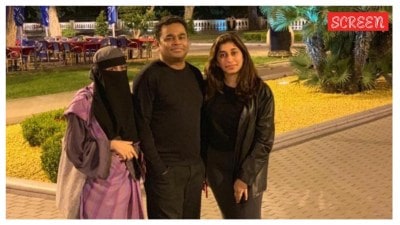
AR Rahman has been under fire after his interview last week, during which he noted how less work has been coming to him due to a power shift within the Hindi film industry in recent years and said it could also be due to the “communal thing”. Now, Rahman’s daughters Khatija and Raheema have come out in their father’s support.