Journalism of Courage
 7 min read



To the Kannada speaking population the district is known as Belagavi. To the Marathi speaking population it is Belgaon. For both, Belgaum, located 502 km from Bangalore and 500 km from Mumbai, is their own.
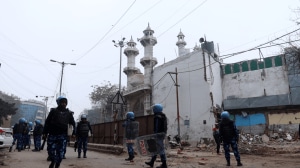
When it comes to modern amenities, educational facilities and investment opportunities, Belgaum city comes second only to Bangalore in Karnataka. Its proximity to the coast and Goa is one more point in its favour. But at present it8217;s best known for being at the epicentre of a five-decade old border dispute between Karnataka and Maharashtra. With pro-Kannada and pro-Marathi emotions running high among Belgaum8217;s 42-lakh population, politicians are trying hard to score in this recurring fight. In 1986, nine people were killed in the worst case of clashes between Kannada and Marathi chauvinists in the 8216;8216;seema ladai8217;8217; in the district. The battle for Belgaum tops the list of perennial disputes which politicians in Karnataka and Maharashtra turn to when they need to divert public attention from their own performance.
There are both territorial and linguistic dimensions to the dispute over Belgaum. The dispute involves Maharashtra8217;s claim over the city of Belgaum and 865 of the 1278 villages in the district, measuring approximately 7770 sq km, currently in Karnataka, on the grounds that the majority of people in these places speak Marathi.
The genesis of the dispute lies in the reorganisation of states on linguistic lines in 1956. Belgaum was a part of the Bombay state till the re-organisation. In 1956 it became a part of the Mysore state renamed Karnataka in 1972. Even before the re-organisation, in 1948, the Belgaum Municipality passed a resolution asking 8216;8216;the Indian Dominion, Indian Constituent Assembly and the Boundary Commission to include the Belgaum Municipal District in Samyukta Maharashtra only8217;8217;. The municipality resolution said this was necessary since the majority of people in Belgaum district spoke Marathi and since it was the administrative language.
During redrawing of borders, the States Reorganisation Commission, while going into Maharashtra8217;s claims, observed that 8216;8216;if any section of people living in one State is encouraged to look upon another State as its true home land and protector on the sole ground of language, then this would cut at the very root of the national idea8217;8217;.
After the re-carving too, Maharashtra and the Marathi-speaking population in Belgaum continued to insist that the areas in Belgaum where a 8216;8216;relative majority8217;8217; speak Marathi must be merged with Maharashtra. Under pressure from Maharashtra, the Central government on October 25, 1966, set up a commission under the third Chief Justice of India, Meher Chand Mahajan to look into the demands made by Maharashtra. The state willingly agreed to abide by the Mahajan Commission8217;s recommendations while Karnataka did so reluctantly. The commission also looked at other disputed border regions involving Karnataka.
Using a formula where villages were judged to have a majority in a particular language if fifty or more percent of people claimed the language as their mother tongue, the Mahajan commission in its report recommended that 264 villages, measuring 656 sq km be transferred to Maharashtra. The commission also recommended the transfer of 247 villages from Maharashtra to Karnataka and the transfer of 71 villages in Kasargod district in Kerala to Karnataka. The commission, however, did not recommend the transfer of Belgaum city to Maharashtra finding insufficient linguistic basis for it.
8216;8216;On the appreciation of the materials and assessing it objectively I have come to the conclusion that I cannot recommend the inclusion of Belgaum in Maharashtra,8217;8217; Mahajan said in his report. Following the report, Karnataka became an ardent supporter of the Mahajan recommendations while Maharashtra has opposed it.
Belgaum8217;s recent presence in news is a result of a Supreme Court case filed in March this year by Maharashtra against the Mahajan Commission report and the UPA government8217;s stand on the issue. In response to Maharashtra8217;s petition, the centre initially prepared an affidavit calling Maharashtra8217;s case 8216;8216;not maintainable8217;8217; and time barred. It, however, withdrew this affidavit to reportedly file a modified statement. The JDS-BJP ruled Karnataka has perceived this action of the UPA government as being biased in favour of the Maharashtra Congress-NCP government.
Karnataka chief minister H D Kumaraswamy moved quickly to hold a special, first-time legislature session in Belgaum between September 25 and 29. At the session, the legislature passed a resolution yet again on implementing the Mahajan commission report.
The Karnataka chief minister also announced that Belgaum would be the second capital of the state and that it would be renamed Belagavi. He also promised speedy development in the district.
8216;8216;Maharashtra is again trying to rake up the boundary dispute. At the same time, the Centre is also adopting a dual stand. The decision to hold the session was taken to convey a clear message from our side,8217;8217; Kumaraswamy said. Opposing the legislature session, Belgaum-based Maharashtra Ekikaran Samiti MES held a massive rally with the support of Maharashtra deputy CM and NCP leader R R Patil.
While the dispute has been simmering for over five decades, it appears to have reached tipping point with big politicians attempting to derive mileage from it. The dispute has always been a source of survival for fringe political groups propagating language chauvinism. In Belgaum it has been the Maharashtra Ekikaran Samiti that has been flying the flag of unification with Maharashtra for over five decades. Parties in Maharashtra like the NCP and the Shiv Sena have rallied on the platform of Maratha pride created by the MES.
Since 1956, the MES has consistently won elections to the Belgaum City Corporation and its assembly seat and this is often cited by Maharashtra as a reason for merging Belgaum with Maharashtra. It was only in 1999 that the MES suffered a defeat and this is often cited by Karnataka as an example of an increasing lack of interest in merging with Maharashtra.
Political observers say the MES suffered a loss on account of a growing frustration among a younger generation of voters over the lack of development in the region under the MES. On the Karnataka side, it is struggling pro-Kannada political groups like the Kannada Chaluvali Paksha, the Kannada Rakshana Vedike that thrive on the dispute. It was a consortium of these groups that called the bandh in Karnataka on October 4.
However, there indeed seems to be a perceivable difference in the opinion of the younger, educated groups of Marathi-speaking people in the district. There is a growing demand for development over merger. 8216;8216;If people8217;s concerns are addressed will they demand merger with Maharashtra In fact in such a situation I would be the first to oppose any merger with Maharashtra as I don8217;t see things improving under Maharashtra,8217;8217; says Dinesh Desai, a Marathi speaking native of Belgaum who is working in the IT industry at Bangalore.
8216;8216;Development is the key. Make Belgaum an IT city like Pune. After all, all Indian languages are equal. It8217;s only our fate that we are born into a particular language or the other and have views from that population,8217;8217; says Prema Mhatre, a Marathi speaking resident of Belgaum. Belgaum residents have in the past complained that Karnataka gives the district a step-motherly treatment. In support of their argument they cite lack of teachers in schools, forcible imposition of Kannada as the administrative language and diversion of industries and investments to neighbouring Hubli and Dharwad. But recent developments seem to indicate that Belgaum will be taken more seriously as a centre for economic growth.
But for that to happen, the dispute needs to be settled first.