Journalism of Courage
 3 min read



Imagine a man and a woman from India8217;s educated, progressive slice of society. Malini Saran, with a post-grad degree in art history, spends more than a decade in Southeast Asia, of which five are in Indonesia. Vinod C. Khanna, educated in Mumbai and Oxford, is an IFS officer. He puts in three years in the 8217;80s as India8217;s ambassador to Indonesia and writes a book, between whiles, on the future of Sino-Indian relations.
They discover a shared fascination with the Indonesian Ramayana tradition and decide to work together on a book. Their spouses and families pitch in gladly. A simpatico publisher from their circle of Delhi contemporaries is found. More than ten years pass. The authors are rarely in the same country. They have to locate source material at long distance on how this Hindu tradition works in the world8217;s largest Muslim population. Delhi scholars are generous with help and resources: Professor Lokesh Chandra, Romila Thapar, Krishna Deva, Devangana Desai, Himanshu Prabha Ray, Kapila Vatsyayan, Professor Azhar the authority on Persian Ramayanas, K.V. Soundara Rajan, C.D. Paliwal. Australian and Dutch scholars, Indonesian and Malaysian experts, Tamil expats in Kuala Lumpur: a host of people find the time and inclination to share learning. Saran8217;s husband, Ajit, who took many of the pictures, passes away. Finally, after four drafts revised by Ravi Dayal, the book appears in print, with nine chapters, three appendices and the necessary glossary, index and biblio.
In their preface, the authors say: 8216;8216;To get a true idea of what the Ramayana has meant to the people of Indonesia over the last thousand years or so, we feel it necessary to take an integrated look at all that the cultural spheres which the Ramayana has touched 8212; literature, the plastic and performing arts, political and moral philosophy. When we could not find any single study with such a comprehensive view of the subject, we decided to attempt it ourselves.8217;8217;
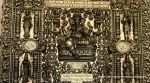
Accordingly, the first two chapters lay out the historical journey of the Ramayana to Indonesia, starting with its multiple forms in its land of birth and the creative processes through which the Mahabharata and the Ramayana travelled across the eastern seas nearly two millennia ago. Chapter Three zeros in on the earliest known depiction of the Ramayana in the islands of Indonesia and its transformation into stone in the beautiful friezes of Shiva and Brahma temples of the great Lara Jonggrang palace in Peramban in Central Java, circa the ninth century this is one of the meatiest chapters and fascinating to read. Around the same time that the Ramayana is being etched in stone, a literary form of it takes shape right there in Central Java, in Old Javanese: the Ramayana kakawin kathayan. It is a masterpiece in its own right and the authors examine the views on its relationship to its source, the Sanskrit poem 8216;8216;Bhattikavyam8217;8217;.
| |
|
In the 8217;90s epic symbols were used during the overthrow of Suharto. He in turn sponsored allegorical plays in which Ram rescues Sita
|
|
|
The social beliefs underpinning the epics as performing arts in Java and Bali are examined in Chapter Seven respect for the mother is a big cultural pillar. Epic symbols are cleverly used in contemporary politics, during the overthrow of President Suharto. The pop song 8216;8216;Anoman Obong8217;8217; becomes a hit in 1996. It tells of how Anoman Hanuman during his visit to 8216;8216;Alengka8217;8217; in search of 8216;8216;Sinta8217;8217; is captured by 8216;8216;Rawana8217;s8217;8217; forces and his tail set alight, by which he sets Alengka ablaze. In turn, Suharto sponsors plays in 1998 like 8216;8216;Rama Tambak8217;8217; in which Rama builds a bridge to rescue Sita. This is allegory for Suharto Ram saving Indonesia Sia from the Asian economic crisis.
The last chapter sums up the enduring importance of the epic in the inner lives of Indonesians and how Islam, in this case, has not killed off older local culture. Indeed, the 8216;8216;Hikayat Seri Rama8217;8217; has a happy ending for Valmiki8217;s doomed couple.
The authors tell their tale in a gentle, factual way, devoid of Indian chest-thumping. Throughout, it is impossible not to feel deeply moved by the many felicitous links between people and cultures, then and now: vasudaiva kutumbakam.