This is an archive article published on April 6, 2024
In Uttar Pradesh, a long list of bahubalis
Before 1980, the bahubali or the musclemen were a slightly different breed: they sought the patronage of the local politician to run their criminal activities. This arrangement changed with Gorakhpur-based muscleman Hari Shanker Tiwari.
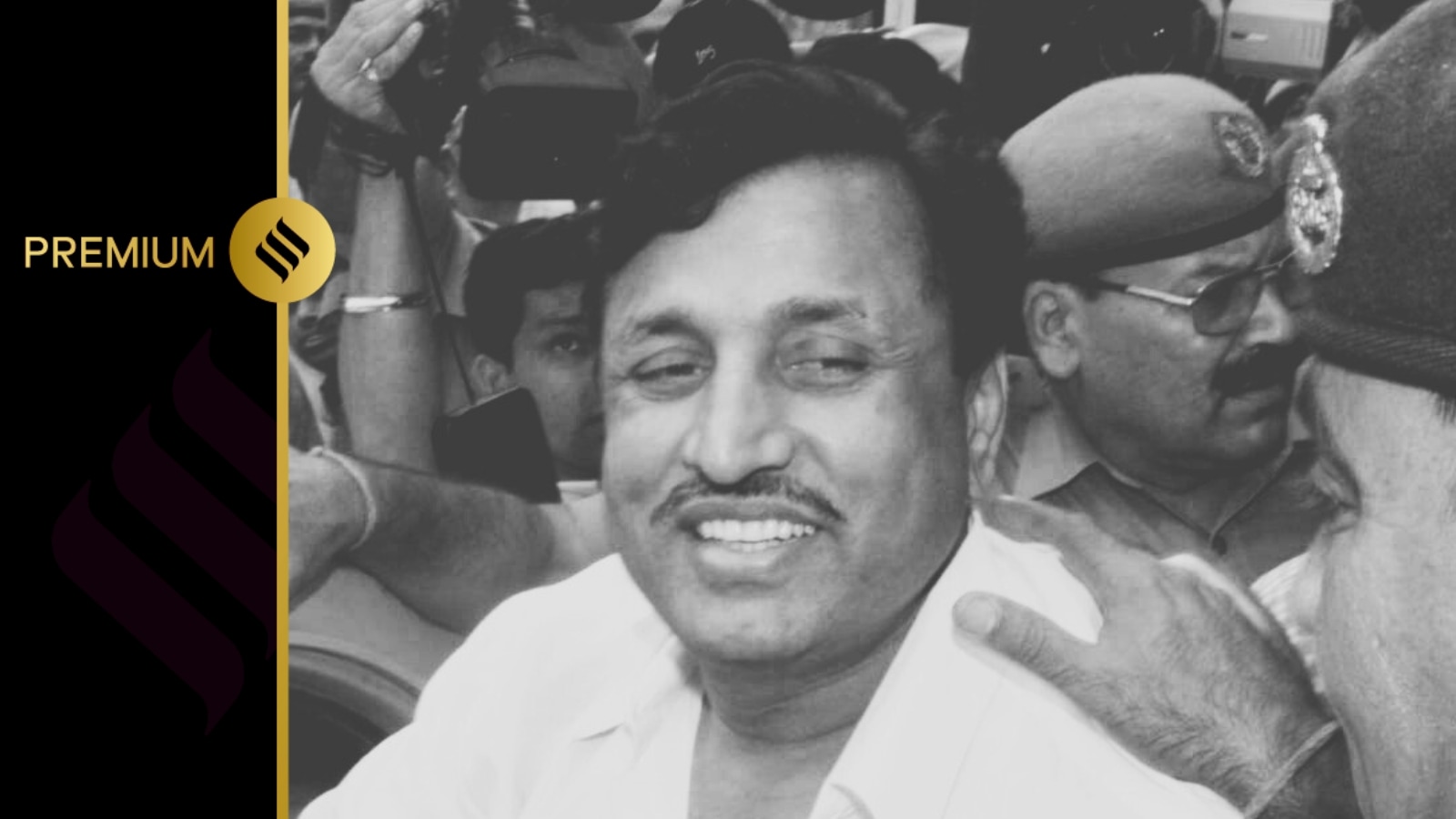
Amarmani Tripathi became an MLA in 1989 on a Congress ticket. (File/Prem Nath Pandey)
The politician-criminal nexus has been a staple of Uttar Pradesh’s political landscape for more than 40 years. Before 1980, the bahubali or the musclemen were a slightly different breed: they sought the patronage of the local politician to run their criminal activities. In return, these musclemen worked to ensure ‘hassle-free’ elections for their political masters.
This arrangement changed with Gorakhpur-based muscleman Hari Shanker Tiwari, who became one of the such gangsters to contest an election while in prison. In the 1985 Assembly election, which Tiwari contested as an Independent, he defeated the Congress candidate from Chillupar seat of Gorakhpur. He continued winning the seat in all subsequent state polls until 2007.
Tiwari also managed another first: he got a Cabinet berth, as minister of Science & Technology, in BJP’s Kalyan Singh government in 1996. He was also made minister in subsequent governments headed by BJP’s Rajnath Singh in 2001, BSP’s Mayawati in 2002 and Samajwadi Party’s Mulayam Singh Yadav in 2003. These were governments formed through alliances with smaller parties and Tiwari had evidently proved useful in managing the numbers.
Tiwari’s darbars at his residence in Lucknow’s Hazratganj area and at his home in Gorakhpur drew not just the common man but politicians and bureaucrats who came in seeking his help in resolving their problems.
At least two of his close disciples, Mukhtar Ansari and Amarmani Tripathi, followed in his footsteps. While Tripathi became an MLA in 1989 on a Congress ticket, Mukhtar won in 1996 as a BSP candidate.
Like his mentor, Tripathi went on to get ministerial berths in governments headed by Rajnath Singh and Mayawati. His political career ended with his conviction in the Madhimita Shukla murder case in 2007.
Mukhtar, however, never joined the government since he remained in jail for most of political career, though he kept winning his Mau Sadar Assembly seat starting from 1996 until his son Abbas took over in 2022.
Story continues below this ad
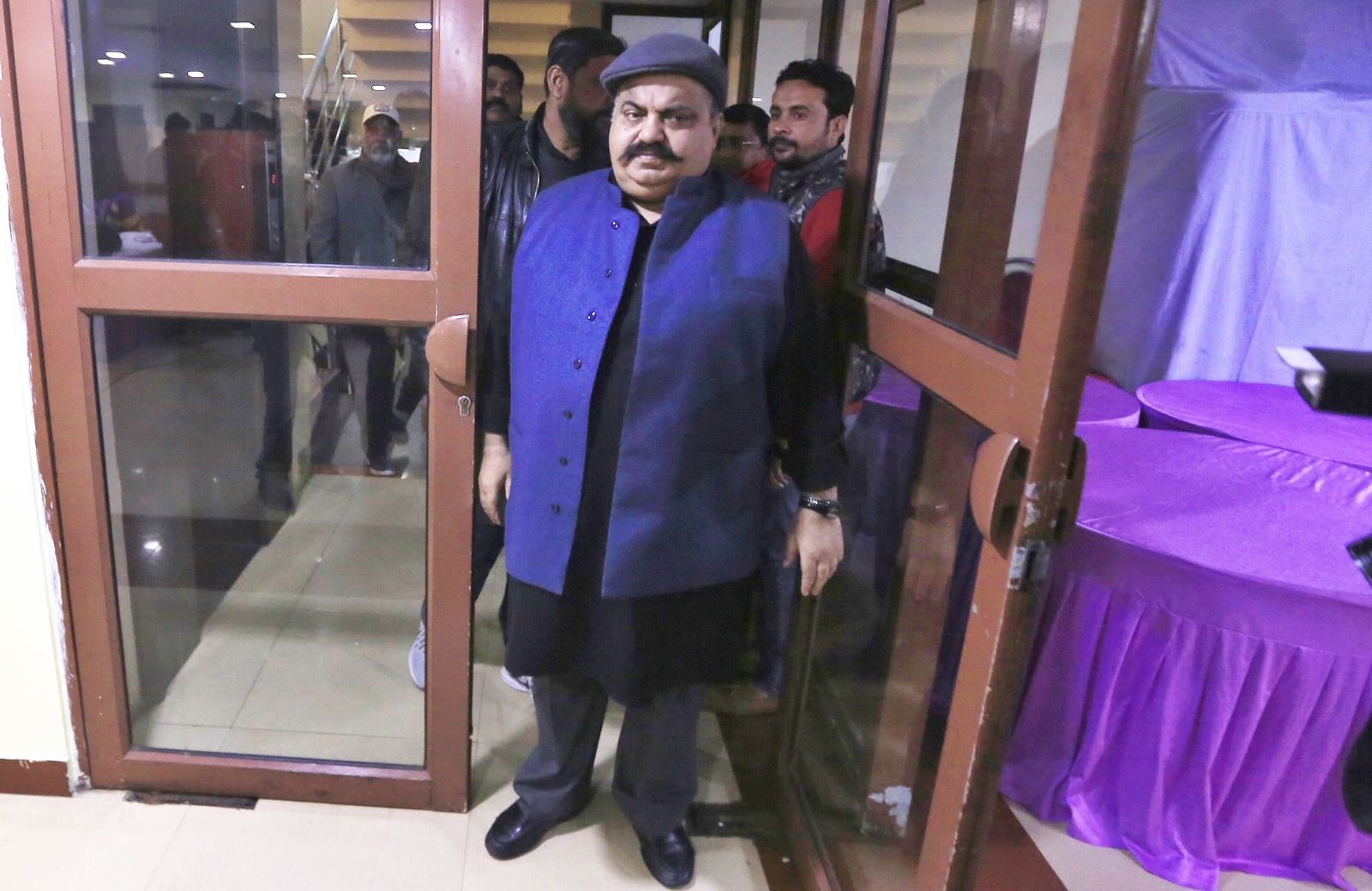
Atiq Ahmed, who had over 100 criminal cases against him, won his first Assembly election in 1989 from Allahabad West and retained the seat in 1991, 1993 and 1996. (Express File Photo/Vishal Srivastav)
Another gangster who effortlessly navigated the world of politics and crime was Atiq Ahmed of Allahabad. With over 100 criminal cases, he won his first Assembly election in 1989 from Allahabad West and retained the seat in 1991, 1993 and 1996. He was famously involved in the Lucknow Guest House incident of 1995, when Samajwadi Party workers attacked Mayawati.
In this gallery of muscleman was a dacoit too – Shiv Kumar Patel alias Dadua, whose influence in the 1980s, ‘90s and early 2000s was such that no politician could ignore him.
For more than 30 years, Dadua openly lorded over the ravines while carrying a reward of Rs 6 lakh on his head. While Dadua’s services were open to all parties depending on their clout in the government, since 1989, he patronised politicians of the Samajwadi Party and the BSP. He remained untouched until 2007, when the STF killed him in an encounter in Chitrakoot during the BSP regime. Such was his clout that after his death, his brother Bal Kumar Patel became an SP MP while his son Veer Singh became an MLA from the party.
Bhupendra Pandey is the Resident Editor of the Lucknow edition of The Indian Express. With decades of experience in the heart of Uttar Pradesh’s journalistic landscape, he oversees the bureau’s coverage of India’s most politically significant state. His expertise lies in navigating the complex intersections of state governance, legislative policy, and grassroots social movements. From tracking high-stakes assembly elections to analyzing administrative shifts in the Hindi heartland, Bhupendra’s reportage provides a definitive lens on the region's evolution.
Authoritativeness He leads a team of seasoned reporters and investigators, ensuring that The Indian Express’ signature "Journalism of Courage" is reflected in every regional story. His leadership is central to the Lucknow bureau’s reputation for breaking stories that hold the powerful to account, making him a trusted figure for policy analysts, political scholars, and the general public seeking to understand the nuances of UP’s complex landscape.
Trustworthiness & Accountability Under his stewardship, the Lucknow edition adheres to the strictest standards of factual verification and non-partisan reporting. He serves as a bridge between the local populace and the national discourse, ensuring that regional issues are elevated with accuracy and context. By prioritizing primary-source reporting and on-the-ground verification, he upholds the trust that readers have placed in the Express brand for nearly a century. ... Read More


 3 min read



 Atiq Ahmed, who had over 100 criminal cases against him, won his first Assembly election in 1989 from Allahabad West and retained the seat in 1991, 1993 and 1996. (Express File Photo/Vishal Srivastav)