6 min read


© IE Online Media Services Pvt Ltd



 Top news on January 5, 2025
Over the weekend, the United States conducted military raids in Venezuela, capturing President Nicolas Maduro. He and his wife are being held in a New York detention centre, awaiting a court appearance, after the US charged them with drug trafficking and weapons charges. Maduro’s capture ends years of his autocratic rule, but has sparked much uncertainty over the future of a country that has the world’s largest oil reserves. The Vice President of the country, Delcy Rodriguez, has taken his place. What happens next?
Who’s in charge? US President Donald Trump told reporters late Sunday night, “We are in charge”, reiterating his Saturday statement that he intends to “run” Venezuela. He warned of a second strike if the current administration does not cooperate with his plans — to fix the country’s drug problem and overhaul its oil industry. State Secretary Marco Rubio, however, insisted that the US will not govern Venezuela directly but apply pressure on the oil industry to coerce government leaders to fall in line with American demands. Follow live updates here.
Crude job: Oil remains a key factor in the unfolding crisis. Trump wants to open up Venezuela’s oil reserves to American companies, and “fix” its broken oil infrastructure. However, the task is not as easy, and it would take years to fix a system debilitated by years of sanctions and economic crises. How will these developments impact the oil market, especially for India? We explain.
Poke: Trump’s actions revive a long history of US interventionism, invoking the controversial Monroe Doctrine. The US relies on the doctrine to keep Europe from interfering in the Western Hemisphere, while asserting its own dominance in the region. Trump has rebranded it as the “Don-roe doctrine” to justify his military interventions around the world. Late Sunday night, he also warned Colombia of a similar operation, stating that the country was run by a “sick man who likes making cocaine and selling it to the US”.
In a bind: India will have to walk a diplomatic tightrope, though it has a low-stakes relationship with Venezuela. On one side is Trump, with whom India is still negotiating a crucial trade deal, and on the other is New Delhi’s own position, favouring a rules-based international order. Shubhajit Roy reflects on India’s position.
On that note, let’s get to the rest of today’s edition👇
Off pitch: Bangladesh will not play any World Cup games in India, the country’s cricket board (BCB) has said. It requested that the International Cricket Council shift the T20 World Cup matches next month from India to co-host Sri Lanka. This makes Bangladesh the second country, after Pakistan, that won’t play in India, and could stick to neutral venues in the future as well.
👉 The move came a day after the Board of Control for Cricket in India asked IPL team Kolkata Knight Riders to remove Bangladesh seamer Mustafizur Rahman from its squad, citing “recent developments.” This is believed to be a reference to the ongoing unrest in Bangladesh, where the lynching of two Hindu youths prompted much anger in India.
👉 Parliamentary Standing Committee on External Affairs chairperson Shashi Tharoor called BCCI’s decision on Rahman “appalling.” He also insisted that one cannot equate Bangladesh and Pakistan, given that India’s relationships with the two countries were different. Read the full interview.
👉 Meanwhile, the Assam government is intensifying its drive to “push back” those declared “foreigners” by a tribunal into Bangladesh. Several families are scrambling to seek recourse, while the government has invoked the 1950 Immigrants (Expulsion from Assam) Act, which allows them to bypass legal challenges. Read Sukrita Baruah’s report.
Cash, crime, kabaddi: The killing of a kabaddi promoter, Kanwar Digvijay Singh, aka Rana Balachuria, at a packed tournament in Mohali on December 15 reveals a worrying trend. Kabaddi is no longer a sport of the soil. Now a Rs-100 crore industry, its tournaments have gone international. It’s bigger and more contentious, involving bets, gangs and crime.
Safety matter: WhatsApp broadcast messages and posters inside housing societies in Mumbai warn parents of the rising menace of kidnapping. But that isn’t the case, insists Mumbai Police. An officer told The Indian Express that a court ruling mandating that all missing cases be registered as kidnapping cases, along with incomplete data, was creating panic.
The Indore case: The recent deaths in Indore linked to the consumption of contaminated water have thrown up more questions than answers. The Health Department has only counted four deaths, while municipal authorities peg the figure at 10. Medical reports have revealed peculiar cases, and some deaths have also been linked to comorbidities.
👉 Meanwhile, the source of the contamination is yet to be determined, with officials looking beyond the police chowki toilet, which was suspected as the source.
👉 For seven years, Indore reigned as the cleanest city in India according to the Union Housing and Urban Affairs Ministry’s annual rankings. The water contamination deaths have tainted that reputation and served as a rude wake-up call to authorities. Damini Nath reports.
Shafali Verma was not picked for the original playing XI for the ICC Women’s World Cup, 2025. But an injury to Pratika Rawal opened the door, and Verma came out as the Player of the Match in the historic final. Verma joins us for the latest Idea Exchange session to talk about her journey and why their win matters for the country.
🎧 I leave you with the latest episode of the ‘3 Things’ podcast, where we analyse the biggest diplomatic tests awaiting India in 2026.
That’s all for today, folks! Until tomorrow,
Sonal Gupta
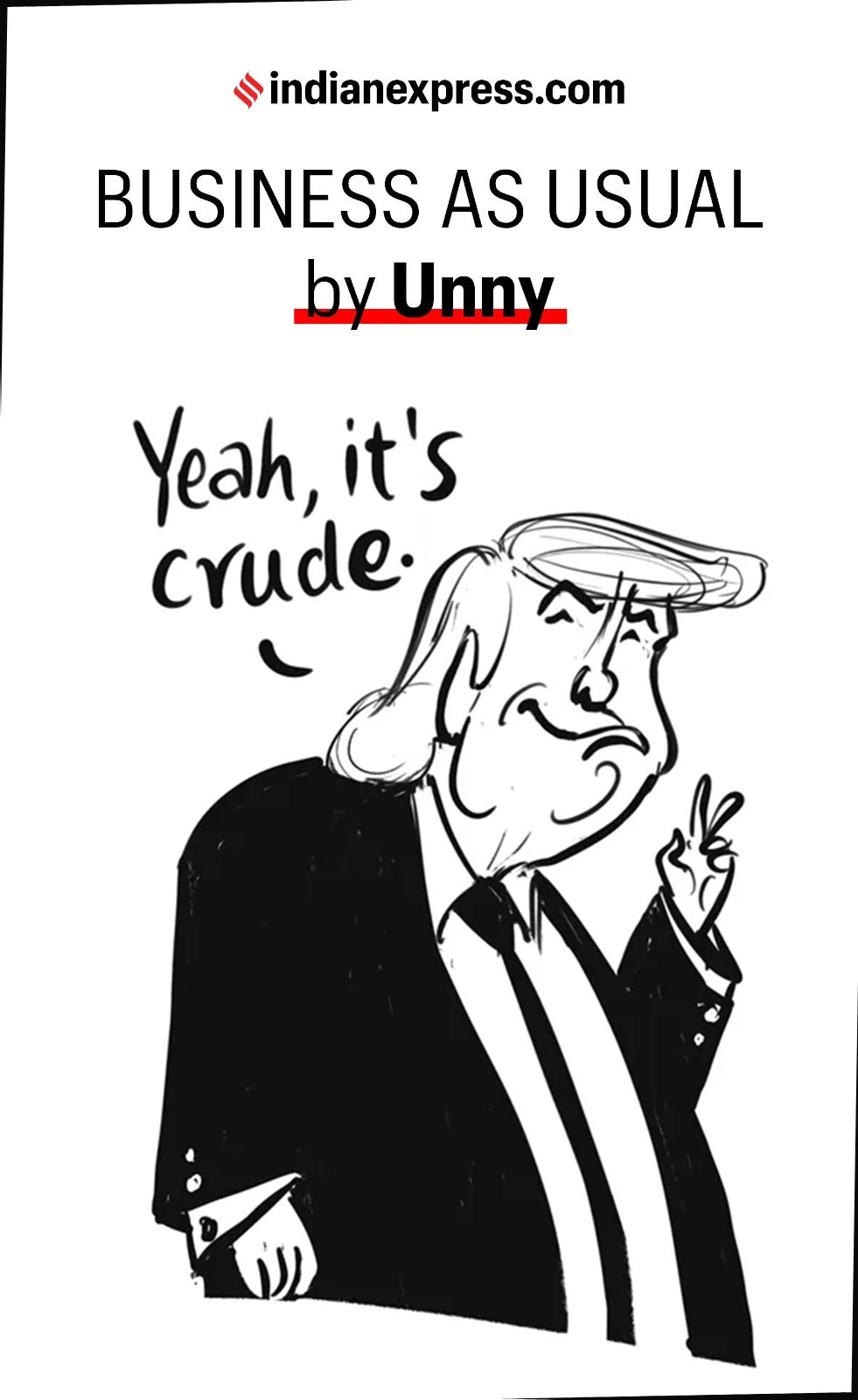 Business As Usual by EP Unny