5 min read
📣 For more lifestyle news, click here to join our WhatsApp Channel and also follow us on Instagram
© IE Online Media Services Pvt Ltd



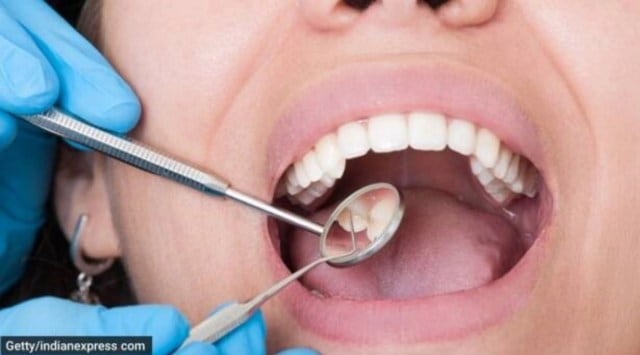 Here's what to understand (Source: Getty Images/Thinkstock)
We are back with yet another interesting piece of nugget about the human body, one which might surprise you all — especially fitness enthusiasts. Ask why? That is because while many of us spend hours in the gym trying to build strong muscles, especially the abs, the human body houses the strongest muscles in the… wait for it… the jaw. Yes, you read that right! However, there is a twist. While it is widely believed that the strongest muscle is the masseter, which runs from the cheekbone to the jaw, it may not be true for everyone. Let’s find out why.
The masseter muscle, located on the side of the face, is responsible for closing the jaw. “It is a thick, rectangular muscle that is attached to the lower jawbone and the cheekbone. When the muscle contracts, it pulls the jawbone up towards the cheekbone, closing the jaw. Hence, the masseter muscle is primarily used when we chew, talk, and clench our teeth,” said Dr Aditya Sharma, dentist, Dentistree, Pune, adding that when the muscle contracts, it pulls the jawbone back towards the skull, retracting the jaw.
The masseter muscle receives its vascular supply primarily from the masseteric artery, ensuring an adequate blood flow to sustain its function, said Dr J Brahmaji Rao, consultant, maxillofacial and dental surgeon, Kamineni Hospital, Hyderabad. “Innervation of the masseter muscle is provided by the masseteric nerve, which allows for the transmission of signals from the nervous system to the muscle, enabling its contraction and control,” elucidated Dr Rao.
In fact, the masseter muscle is capable of closing the teeth with a force as great as “25 kilograms on the incisors and an astonishing 90.7 kilograms on the molars”. “This incredible force allows for effective chewing and breaking down of food,” Dr Rao said.
 Oral health is an extremely important part of healthy living (Photo: Getty Images/Thinkstock)
However, Dr Sharma contended that the temporalis, the fan-shaped muscle located on the side of the head, which is responsible for retracting the jaw, “has more area and more muscle innervations”.
“It plays the opposite role as that of the masseter. It is a large, fan-shaped muscle that covers the side of the skull. When the muscle contracts, it pulls the jawbone back towards the skull, retracting the jaw. The temporalis muscle is used when we chew, talk, and open our mouth,” said Dr Sharma.
Concurred Dr Shrey Srivastav, MD (Internal Medicine), Sharda Hospital, and said that the temporalis muscle is stronger than the masseter muscle mostly because it has a “larger cross-sectional area and more leverage”. “The temporalis muscle is also attached to a larger surface area of the skull, which allows it to generate more force. Additionally, the temporalis muscle has a more vertical orientation than the masseter muscle, which allows it to generate more force in the direction of jaw retraction,” Dr Srivastav said.
Masseter is more commonly known as the stronger one “because it has more control on chewing and grinding function of teeth”, said Dr Sharma.
But experts suggest that the relative strength of the two muscles can vary depending on factors such as an individual’s genetics, diet, and exercise habits. “While the masseter muscle is generally considered to be the most powerful muscle in the human body, the temporalis muscle is also a very strong muscle. Both muscles are important for chewing and jaw movement, and they work together to help us perform these functions efficiently,” said Dr Sharma.
According to Dr Rao, trauma or pathological lesions affecting the muscle can lead to difficulties in chewing and closing the mouth. “Any such issues should be addressed promptly to ensure the proper functioning of the jaw. Moreover, there are common factors that can contribute to overworking the masseter muscles, such as emotional stress or clenching and grinding of teeth during the night. These habits can strain the muscle and potentially lead to discomfort or pain,” said Dr Rao.
In such cases, it is recommended to use night guards, Dr Rao said, as they help “protect the teeth and alleviate the pressure exerted on the masseter muscles”.
📣 For more lifestyle news, follow us on Instagram | Twitter | Facebook and don’t miss out on the latest updates!