4 min read
📣 For more lifestyle news, click here to join our WhatsApp Channel and also follow us on Instagram
© IE Online Media Services Pvt Ltd



 Why do lentils make you gassy? (Source: Freepik)
If lentils make you gassy, you’re probably not preparing them properly. But it’s not your fault; many recipes online skip certain essential steps. Food scientist Wendy Luong took to Instagram to share that traditional cultures used slow-food type methods to make lentils more digestible — from fermenting to soaking to sprouting, there are a variety of options to adopt. She shared 5 tips to cook lentils the right way and prevent gas and bloating:
For raw dried lentils:
1. Always wash your lentils: not just for hygiene, but to remove dust, field debris, and surface-level compounds that can affect digestion.
2. Soak for 8–12 hours: this pulls out oligosaccharides, the fermentable sugars your body can’t digest, and begins to reduce antinutrients like phytic acid and tannins. These interfere with digestion and nutrient absorption. This step is most effective.
3. Rinse again after soaking: the soaking water now contains the stuff you want to get rid of. A good rinse prevents you from cooking those compounds right back in.
4. Never use the soak water for cooking: The soak water becomes full of gas-causing compounds and bitter-tasting tannins that you want to remove through the process of soaking. Why remove them first and add them right back in? Always discard!
5. Cook your lentils completely: Undercooked lentils are tough on your gut, with more resistant starch and incomplete breakdown of digestion inhibitors like trypsin inhibitors.
Bonus tip: Cooking lentils with seaweed (like kombu) can reduce gas-causing sugars even more than soaking alone. Seaweed contains natural enzymes and compounds that help break down raffinose and stachyose (two oligosaccharides responsible for bloating and gas).
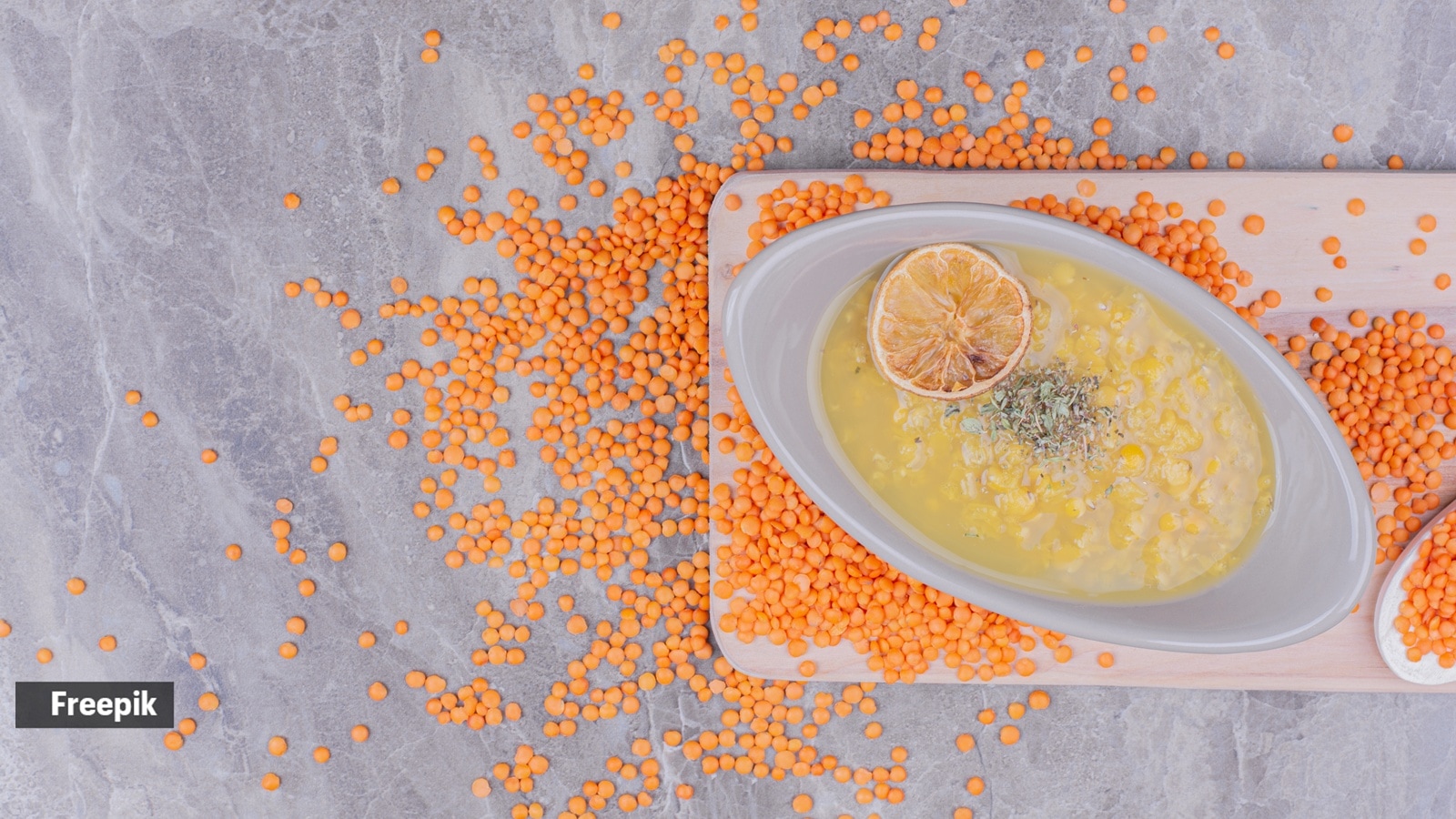 Soak lentils completely. (Source: Freepik)
For canned lentils:
Canned lentils are pre-cooked and often easier to digest, but they still need rinsing. Rinse them well to remove excess sodium and the brine that contains some residual oligosaccharides.
Dr Vidhi Dhingra, Senior Dietician, vHealth by Aetna, agreed with her tips, further explaining why this happens. According to her, pulses contain “large amounts of indigestible carbohydrates which irritate the stomach lining and result in the formation of gas in GI tract“. Due to these properties, pulses are harder to digest and need special methods of preparation before cooking and consumption to avoid bloating.
Bloating is more than just discomfort, said Dr Rashmi Shetty, cosmetic dermatologist, Ra Skin and Aesthetics in Mumbai and Hyderabad, adding that it is more often than not, an early indicator of irritation or inflammation in the gut. If left unchecked, it can escalate into more serious issues like chronic inflammation, leaky gut, or even acid reflux.
“This imbalance can happen when people take prebiotics, probiotics, or other supplements without proper guidance, or when their food habits drastically differ from what their gut is used to. Stress, as well as lack of sleep, can further disrupt the gut microbiome, leading to bloating,” added Dr Shetty.
Dr Dhinghra said to avoid complications such as bloating and indigestion, taking a walk after eating lentils rather than sitting in one place is a great idea. She also recommended choosing lentils and split beans that are easier to digest.
DISCLAIMER: This article is based on information from the public domain and/or the experts we spoke to. Always consult your health practitioner before starting any routine.