


📣 For more lifestyle news, click here to join our WhatsApp Channel and also follow us on Instagram
Tags:


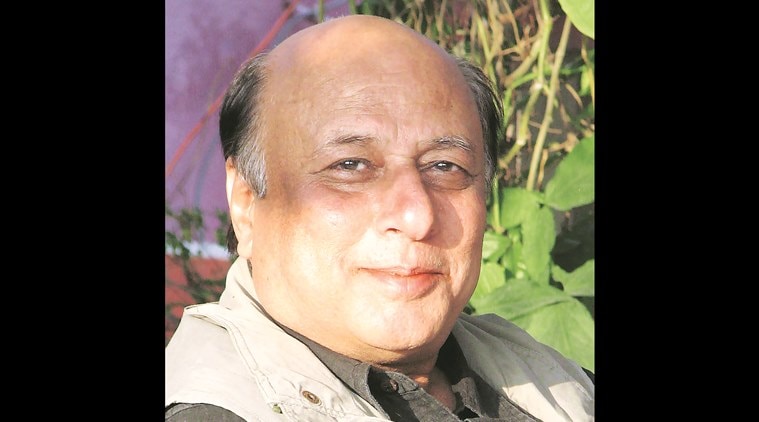
The literary record often has predictive power. The careful reader of Swadesh Deepak, the darkly powerful playwright, author and teacher from Ambala, had always known that he would lose his mind. Of course, there was no symptom that after waking up from the nightmare of bipolarity, and after analysing his mental condition with a clarity unprecedented in Indian literature, he would step out for a walk one day and never return.
Or consider Uday Prakash, poet, writer, journalist and TV professional, who has been much discussed in recent years following the publication of The Walls of Delhi. Briefly, he also made headlines in 2015 for leading the award wapsi charge. He was the first to relinquish a national Sahitya Akademi award, but it was interesting to see that the media grasped that something big was afoot only days later, when Nayantara Sahgal returned her award. Is the power gradient between English and the other Indian languages still intact? Does nothing happen credibly until it happens in English? But perhaps, that’s only an impression, since it was the plight of Perumal Murugan and the murder of three rationalists which had originally urged the creative community to action. Their work was not nationally known and was hardly discussed among the arbiters of literature in Delhi.


The essay concerns the autonomy of writers and their role in a world dominated by institutions — precisely the matrix in which cronyism and cabals can flourish. The Sahitya Akademi comes in for special attention, and is compared to the bizzarely arbitrary society described in Alexander Zinoviev’s Russian novel Zheltyi Dom (Madhouse), in which a young man at the Institute of Philosophy identified only by the initials JRF (he’s a junior research fellow) falls through the cracks when he casts off the armature of party patronage. Actually, the power architecture described is only apparently arbitrary — the aesthetic theorist is assigned to regulate agricultural markets, the share analyst heads the literary academy, and he who is not a journalist is appointed editor. But there is actually a method to the madness, because if even one person and one post were perfectly matched, the whole politico-bureaucratic architecture would collapse into meaninglessness.
In his description of Madhouse, Prakash refers to the Russian literary academy as the “Sahitya Akademi”. In the very next para, he continues thus: “Compare this with our reality. Take a close look at the president and secretary of the Sahitya Akademi. Did the spirit of Nehru and Tagore wish to create such institutions for Chaudhuri-ji?”
Who-ji? Let us not be detained by such tantalising questions, for Google is your friend. Let us, rather, move on to the terrifying Hieronymous Bosch-like images which Prakash paints of the cultural landscape of the Nineties: “The theatre of the century is over. We are in the green room. The makeup is off. The old men who played generous Karna, Dharmaraj and King Lear are now squabbling over their fees. The actresses who played Draupadi, Sita, Cleopatra and Amrapali are smoothing out their wrinkles and soliciting custom. There is no Akhmatova or Meera in the vicinity. No Pushkin, Proust or Nirala. Behold this khadi-clad Gandhian, burping up institutional feasts, a peace-mongering wolf of this lawless, feral reality…” Then he cuts to the quick again: “The IAS officer is the writer [who matters], the heads of Akashvani and Doordarshan are the poets. The day is not far when the legacy of Premchand and Nirala will be handed over to satta brokers, administrators on the take and crooked politicians.”
Apart from his obvious suspicions about a literary establishment based on patronage by cultural czars, Prakash questions the value of the institutions they control. Indeed, it is paradoxical — liberal thought since the Enlightenment has valued individualism and diversity, insisting on the primacy of human rights and freedoms over those of collectives. And yet, this has also been the era of institutions, collectives whose primal instinct is to standardise, mainstream and flatten. This has had the effect of reducing the variation on which modern literature thrives, celebrating authorised modes of production and mass products over risky experiments.
A flat mainstream explains why so few standout books are published every year. And why jacket blurbs tend to be much more impressive than what’s between the covers. Much has changed in literature and publishing since the Nineties, but just as much has remained unchanged.


