Premium
This is an archive article published on March 28, 2015

Heist he wrote

Kiran Nagarkar revives the personal touch and humour that’s intrinsic to a heist thriller.

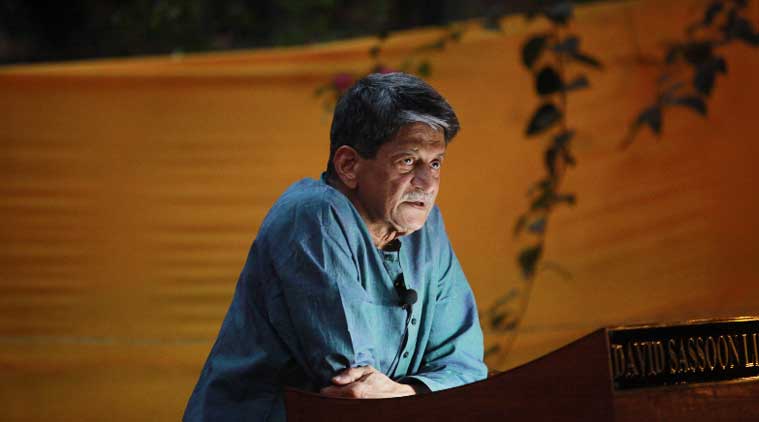
Authors, yoga, Kiran Nagarkar, screenplay, Black Tulip, Bedtime Story, Ravan and Eddie trilogy, Ursula Koehler, scriptwriter, Tara Wilkinson, Black Tulip Kiran Nagarkar (Source: Express photo by Kevin DSouza)
Most authors confess that their characters often acquire a life and mind of their own. Eminent writer Kiran Nagarkar seems amazed by the exploits of Rani, the yoga teacher-cum-con artist, after whose pseudonym his recently-published screenplay Black Tulip is titled. He is also saddened when he recollects the torture she is subjected to by a mafia don while trying to help Regina Fielding, a cop Rani adores.

“On one hand you have Rani who operates entirely on her own and pits herself against Regina, engaging in a game of one-upmanship. Yet she respects Regina and wants to help her,” says the Mumbai-based author animatedly, as if he were talking about an acquaintance.

[related-post]

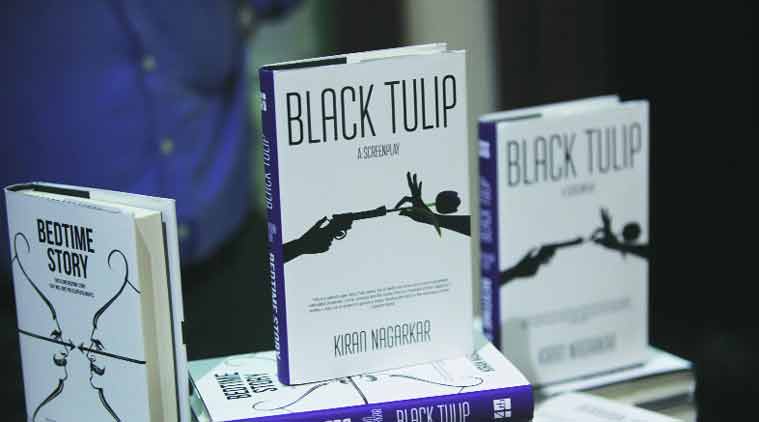
With this screenplay, which offers two alternative endings, Nagarkar tries to revive the heist genre. Using humour, which the author finds sorely missing in modern movies, he has created Rani, a quick-fingered con woman who does not find the need for gadgets to carry out her exploits. The text has been published by HarperCollins as a double bill, along with Bedtime Story, a controversial play he had written after the Emergency in 1977.

Seated in his living room, swept by the morning sun, the 72-year-old author talks about how he has been writing screenplays since he was a budding writer. “My first screenplay was around the time I wrote my first play, Bedtime Story, but this is the first one to have hit the bookstands,” he says. Even Ravan and Eddie (1994), Nagarkar’s most popular novel started out as a script made for the big screen.
However, when the director who had approached him lost interest, the saga of the two Bombay chawl-bred boys turned into one of India’s most popular novels instead.

Authors, yoga, Kiran Nagarkar, screenplay, Black Tulip, Bedtime Story, Ravan and Eddie trilogy, Ursula Koehler, scriptwriter, Tara Wilkinson, Black Tulip The text for Black Tulip has been published as a double bill, along with Bedtime Story

Since the Ravan and Eddie days, Nagarkar had written nearly six screenplays but never showed it to anyone. His Cuckold (1997), the Sahitya Akademi Award-winning novel was also wooed by a number directors and producers to be turned it into a period drama, but to no avail. “If Cuckold and Ravan and Eddie did not get made into a movie, who was going to read my other screenplays?” he quips.

Black Tulip has seen the light of day because of an innocuous discussion on movies with a friend. The author realised he had written a heist script between 2000 and 2001. Once he fished out the manuscript, he zealously rewrote and revised it before handing it over to the publisher. “I wanted the book to be read in an armchair without the reader wanting to put it down. If a director comes into the picture ever, they will change it, but that’s their business. I wanted to make it as readable as possible. I wanted to keep it very visual,” he says.

Apart from consulting German script-doctor Ursula Koehler and scriptwriter Tara Wilkinson, among others, he sent former commissioner of police Satish Sahney a draft of Black Tulip. His meticulous approach to the script was not always appreciated. He even came close to being thrown out of a bank when he met its manager with some queries regarding their cash delivery system.

Story continues below this ad

This year, the final installment of his Ravan and Eddie trilogy — RIP Ravan and Eddie — is expected to be launched. Nagarkar does not have the release date yet but assures that the antics of Ravan and Eddie would be as delightful as in the previous two books. While giving the lowdown on his upcoming title, he stops midway. “Yeh Eddie kitna jhooth bolta hai,” he says, and nods his head in mock disapproval.

alaka.sahani@expressindia.com

Alaka Sahani is a prominent film critic and journalist based in Mumbai. With a career spanning over two decades, she has established herself as one of India’s most authoritative voices in cinematic journalism, known for an analytical approach and insights that transcend the standard cycle of celebrity journalism. Expertise & Accolades In 2014, Alaka was honoured with the National Film Award for Best Film Critic. Her Swarna Kamal (Golden Lotus) citation specifically lauded her for "highlighting facets of cinema beyond glamour and gossip" and for her ability to delve into the contemporary relevance of iconic filmmakers. Her commitment to journalistic integrity was further recognised in 2019 with a Special Mention at the Red Ink Awards for her investigative feature, 'In Search of a Star'. Her article titled 'People Like Us', published in The Indian Express on March 27, 2022, was shortlisted for Red Ink Award, 2023. Global Industry Leadership Alaka’s expertise is sought after by major international and domestic film bodies: Golden Globes: In 2025, she joined the international voting body for the 83rd Annual Golden Globes. National Film Awards: She served on the prestigious jury for the 68th National Film Awards, helping select the finest contributions to Indian cinema. Global Perspective: Her work consistently bridges the gap between commercial Bollywood A-listers and emerging independent talents, offering nuanced insights into both Indian regional cinema and international film trends. Focus & Vision Beyond the screen, Alaka is a dedicated observer of Mumbai’s vibrant theatre scene and the historical evolution of the moving image. Through her long-form articles and deep-dive interviews, she continues to challenge "tried-and-tested" templates, providing readers with a deep understanding of the artistic and systemic workings of the Indian and global film industry. ... Read More


📣 For more lifestyle news, click here to join our WhatsApp Channel and also follow us on Instagram

Latest Comment
Post Comment
Read Comments
Advertisement
Advertisement
Advertisement
Advertisement