📣 For more lifestyle news, click here to join our WhatsApp Channel and also follow us on Instagram
© IE Online Media Services Pvt Ltd
 8 min read


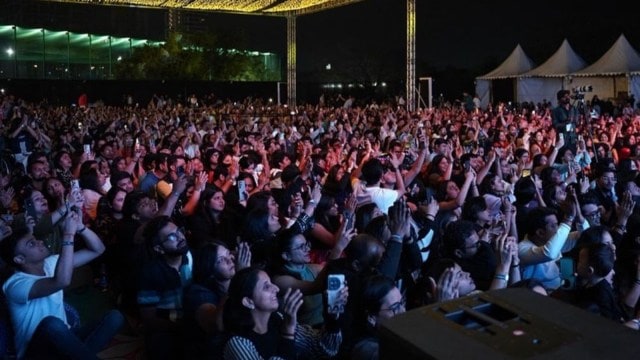 The atmosphere in Mumbai
 For years, India’s Gen Z has carried a reputation shaped by stereotypes: a cohort dismissed as aloof, easily distracted, indulgent in nightlife, and Insta-validation. Popular imagination paints them as the “party generation” — more invested in EDM drops than any spiritual depth. But a startling cultural shift across cities is changing that narrative entirely.
From Bengaluru to Mumbai and from Delhi to Pune, young people are filling darkened auditoriums and café-turned-concert halls — not for alcohol-fuelled raves, but for nights of collective chanting and ecstatic devotion. Music that once belonged to temples and grandparents’ living rooms now reverberates through professional sound systems and stage lighting. The tracks may invoke Krishna, Shiva, or Rama, yet the vibe feels electric, contemporary, and unapologetically youthful. Smartphones are up — not for crazy selfies with drinks, but to capture a kind of high that leaves no hangover.
This emerging culture, popularly referred to as ‘bhajan clubbing’, reveals a deeper truth about Gen Z. Behind the ease of memes and their “too cool to care” image, there is a generation actively seeking belonging, grounding, and meaning. They are questioning the exhaustion of consumer-driven nightlife, the burnout caused by digital noise, and the emptiness of performative pleasure. And instead, they are crafting a fresh grammar of spirituality that is fluid, inclusive, playlist-driven, and unapologetically open.
Event organisers report record turnouts; ticketed devotional nights are selling out as quickly as mid-tier EDM shows; Google searches for “modern kirtan” and “sober rave India” have surged; and curated bhakti events now travel city to city like mainstream concert tours. This isn’t a fringe experiment — it’s a youth-led cultural movement pushing India into a new devotional renaissance.
Bhakti, once bound by temples and timelines, is now being remixed by those born fully into the broadband era. They are transforming prayer into performance, ritual into rhythm, and spirituality into a social experience that resonates long after the music stops.
Take a recent night in Hyderabad — one of many cities where this spiritual rave culture now thrives. In Hyderabad, for instance, the lights are low, the bass is thumping, and fifteen hundred-somethings have their hands in the air, eyes half-closed, screaming in unison. If you walked in blindfolded, you’d swear it was a Sunburn after-party. Except there’s no alcohol at the bar, only cutting chai and cold coffee, and the lyric bouncing off the walls is Shri Krishna Govind Hare Murari. Welcome to Bhajan Clubbing — the unlikely movement that has replaced vodka shots with vibhuti and EDM drops with dholak rhythms.
For some, bhajan clubbing culture is ‘clean rave’
Twenty-four-year-old Vaishnavi Kumar, a marketing executive from Pune, calls it her “clean rave”. “My friends and I are done with hangovers,” she says. “Here the high lasts longer, and I wake up remembering every minute of it.” In Hyderabad, 28-year-old IT consultant Mahi Sharma felt the same electric surge when a hundred strangers linked arms and sang Rama Rama Ratte Ratey Biti Re Umariyya till 2 am. “I posted one Reel, and my DMs exploded with ‘Where? When? Take me!’” she laughs. And Hyderabad is far from unique — the same chants now echo across India’s metros, from Bengaluru to Mumbai and Delhi.
 Prachi & Raghav who started backstagesiblings, India’s bhajan clubbing sensation.
These are not isolated stories. Over the past year, ticketed bhajan concerts have sold out faster than many mid-tier EDM gigs. Prachi and Raghav Agarwal — the sibling duo better known as BackstageSiblings — went from hosting a living-room baithak for 50 people to selling 1,500 paid tickets in Mumbai in under a year. Radhika Das, a London-based Kirtan artist and Bhakti Yoga teacher, drew 15,000 people in New Delhi. Even traditional bands report a spike: Suresh Prajapat, first runner-up on India’s Got Talent Season 8, says audiences now demand entire “spiritual sets” instead of the occasional high-energy bhajan slipped between Bollywood numbers.
The numbers are startling. According to IMARC Group’s report, India’s spiritual and wellness market is already valued at $58.5 billion and is growing at a rate of roughly 10–12% annually. Within this, the live devotional music segment has expanded significantly: organisers like EVA Live now routinely sell 5,000–15,000 tickets for single-city kirtan concerts, a scale that was previously unthinkable. Google Trends shows that searches for ‘bhajan clubbing’, ‘modern kirtan’, and ‘sober rave India’ have risen by 400–600% since early 2024.
But why now?
To understand GenZ’s attraction to sober devotional nights, we must shift from the dancefloor to the psyche — and the social forces shaping their lives. The science is remarkably clear. Dr Sobha Nair, a clinical psychologist, points to the neurophysiology of collective chanting. “Repetitive rhythmic vocalisation — what we do in bhajans and kirtans — down-regulates the sympathetic nervous system and lowers cortisol levels within minutes,” she explains.
Studies published in Frontiers in Psychology (2021) and the International Journal of Yoga (2023) confirm that group kirtan produces significant reductions in state anxiety, enhances oxytocin levels, and measurable heart-rate variability shifts toward parasympathetic dominance — the same “rest-and-digest” state achieved through mindfulness meditation or forest bathing, but faster and more socially bonded. In other words, a 45-minute ‘Jai Sita Ram’ loop gives you the physiological equivalent of a solid therapy session, except you are dancing with strangers who feel like family by the end.
‘A classic case of deterritorialised spirituality’
Professor Anita Raju, who teaches postmodern religion, describes bhajan clubbing as a classic case of “deterritorialised spirituality”. “For earlier generations, devotion was tied to geography (the village temple), time (Thursday evening aarti), and hierarchy (the pandit decides pace and volume),” she says.
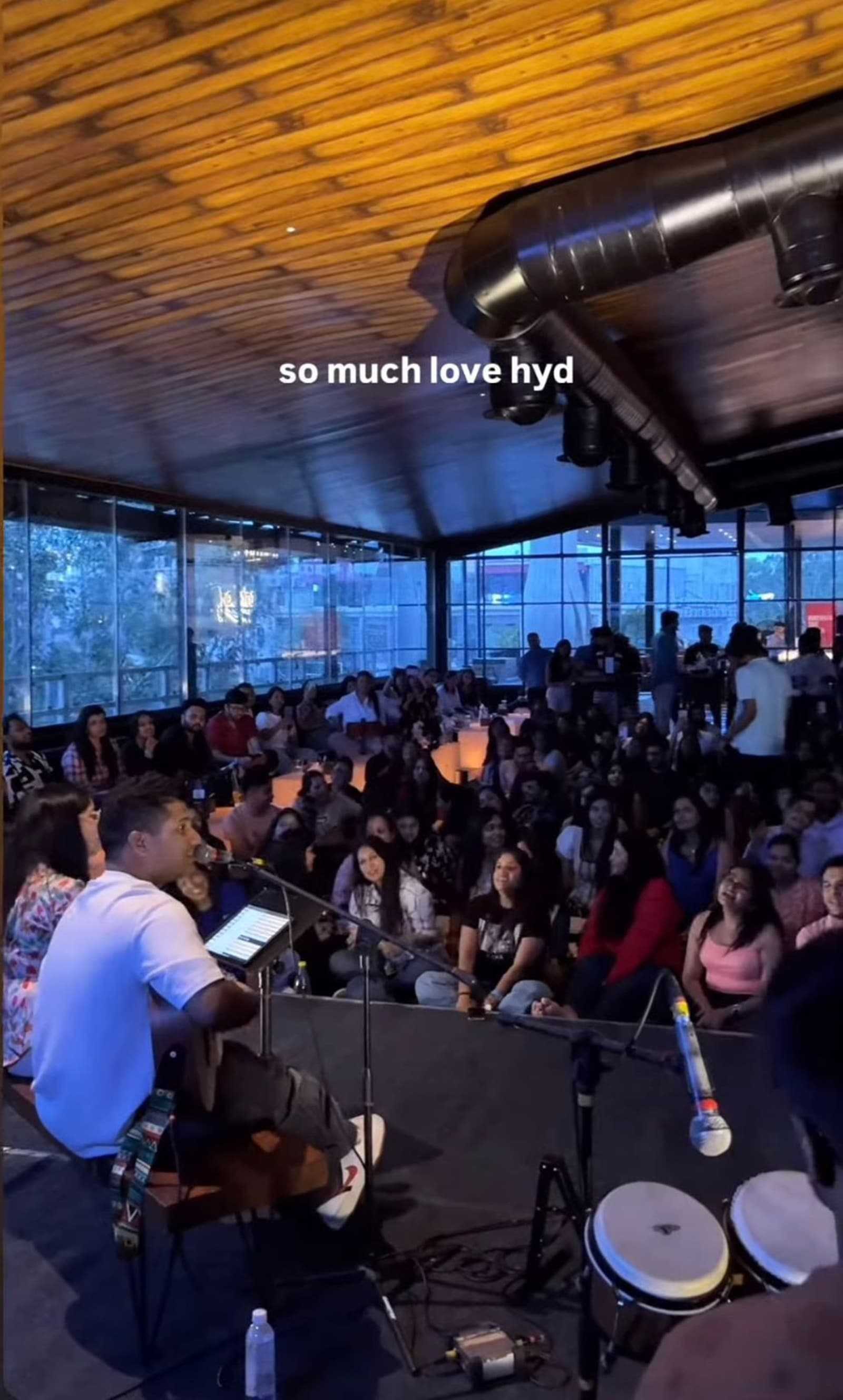 A glimpse from Hyderabad
“Gen Z has unmoored bhakti from all three. They have moved it into cafés, banquet halls, and paid-ticket venues; they decide the playlist on the fly; and they treat the microphone like an open-mic rather than a sanctum.”
This is not secularisation; it is re-enchantment on new terms. The sacred is no longer inherited — it is curated, remixed, and shared on Reels. As Raghav Agarwal puts it, “Any song can be a bhajan if it brings you peace.” Their sets seamlessly transition from Hey Shyam in a trap beat to an old Rafi classic back to Govind Bolo Hari Gopal Bolo, collapsing the binary between the devotional and the popular.
Liquid devotion, where smartphone becomes new temple bell
Sociologists call this “liquid devotion” — borrowing Zygmunt Bauman’s idea of liquid modernity — where identity, community, and even faith flow continuously rather than remain fixed in institutions. The smartphone becomes the new temple bell: one viral 15-second clip of 300 people jumping to Ram Ram Jai Raja Ram does more missionary work than a thousand pamphlets.
Yet the movement is careful not to entirely antagonise tradition. Venues still insist on vegetarian food and total alcohol bans — a non-negotiable clause that clubs happily accept because the footfall compensates for lost liquor revenue. Sheela, owner of a popular Mumbai nightlife space, says, “We used to make 70% of our money from the bar. Now, on bhajan nights, we make it from cover charges, and the crowd is three times bigger. Everybody wins.”
For Gen Z, the appeal is threefold: authenticity, community, and control. After growing up in a world of endless scrolling, dating-app burnout, and quarterly layoffs, many are exhausted by performative hedonism. A 2024 Deloitte Gen Z and Millennial Survey (India chapter) found that 67% of respondents now blend therapy with spiritual practices, while 41% actively seek “experiences that make me feel part of something bigger”. Bhajan clubbing delivers exactly that — without the Sunday-morning regret.
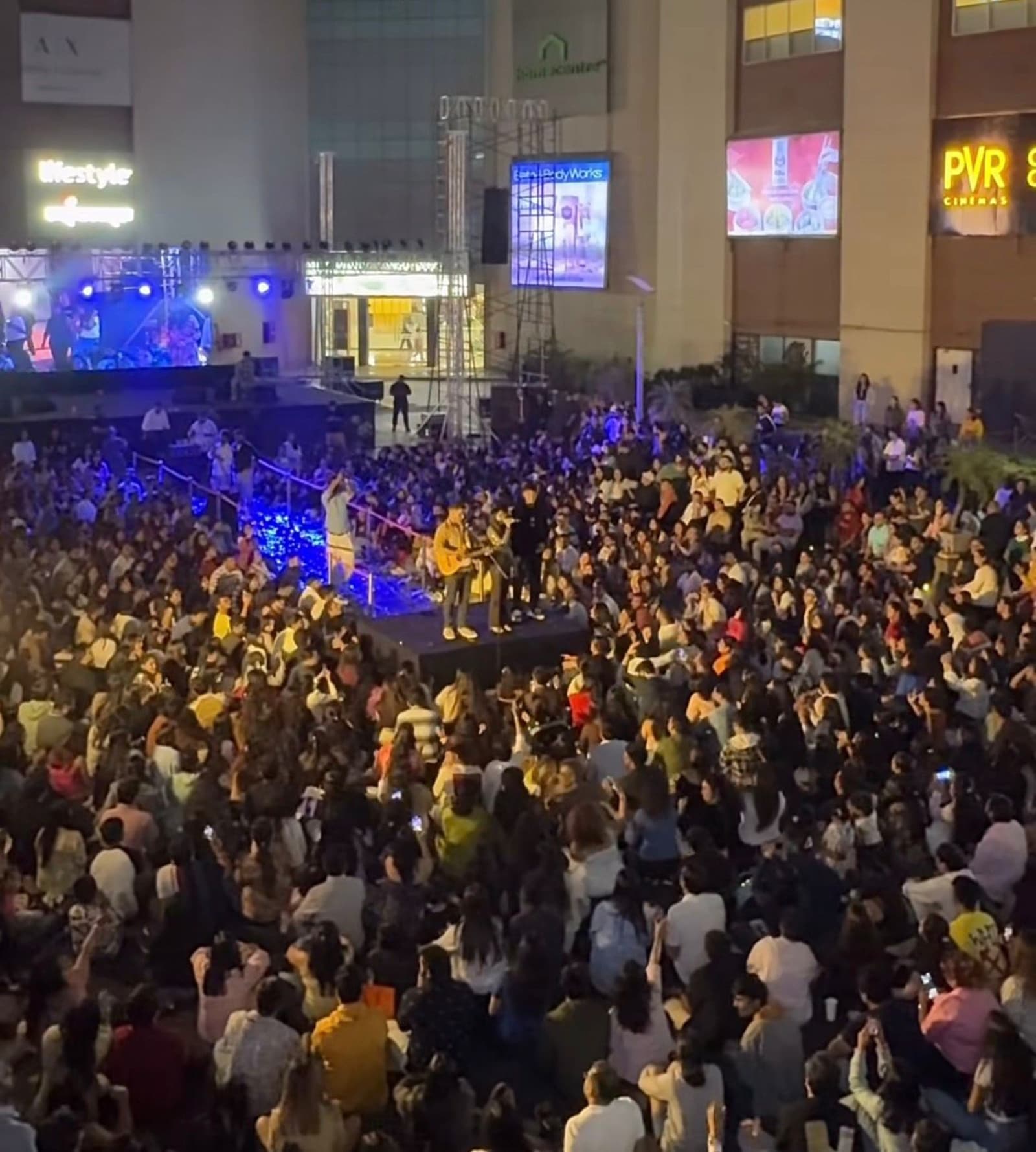 Pune too has joined in
Prachi Agarwal remembers the exact moment she realised they were onto something bigger than a hobby. “We were investment bankers four months ago,” she says, laughing. “We quit when we saw strangers crying and hugging each other after our sets. Money can wait; this feeling can’t.” As the clock edges past midnight in yet another dimly lit hall, the beat drops into the simplest of all mantras — “Hare Krishna Hare Rama”. Phones are up, but not just for selfies; they’re recording something they want to replay when anxiety hits at 3 am on a Tuesday. The crowd sways like one organism. Somewhere between the ancient and the algorithmic, between the temple and TikTok, India’s youngest generation has built a sanctuary that smells of agarbatti and cold coffee.
And for now, at least, they’re calling it home.
The author is faculty at Department of Communication, Sarojini Naidu School of Arts & Communication, University of Hyderabad