


📣 For more lifestyle news, click here to join our WhatsApp Channel and also follow us on Instagram
© IE Online Media Services Pvt Ltd
Tags:


On July 21, 2016, Roger Ailes, CEO of Fox News, resigned after an internal investigation found him guilty of sexually harassing several women routinely over the years. The eviction was prompted by a lawsuit filed by former co-host of Fox & Friends morning show, Gretchen Carlson, against Ailes on July 6 that year, accusing him of pervasive sexual harassment and linking non-renewal of her contract with the channel as retaliation by the media mogul for being rebuffed by her. On July 19, New York Magazine reported Megyn Kelly, journalist and attorney with Fox News, admitting of being harassed by Ailes years back. In 2016, a group of women had come together, recognised strength in solidarity, challenged societal stigma and spoke up and against a man in a position of power. It was they who dropped the bombshell which exploded a year later with a deafening noise as #MeToo, making it impossible for the world to turn a deaf ear to.



He does so by training his lens primarily on three women — Gretchen Carlson (Nicole Kidman), Megyn Kelly and Kayla Pospisil (Margot Robbie) — responsible for perforating, if not dismantling, the culture of silence. It was Carlson who had sued Ailes, it was she who had jumped without a parachute. To corroborate, she had recorded conversations between them for over a year — “I think you and I should have had a sexual relationship a long time ago, and then you’d be good and better and I’d be good and better” — and put up with his wretched behaviour. Her resolve to receive an apology stemmed from both her personal humiliation and her firm belief that there were others like her. It was an audacious act, a leap of faith. Kelly’s statement had aided her testimony. The sought-after lawyer’s refusal to stand by Ailes when most women at the Fox office supported their boss out of a sense of obligation and devotion was telling but her eventual decision to not just revisit her harrowing past but to also identify other women who then were going through what she had undergone helped in gathering the murmurs against him and transform them into a loud voice.
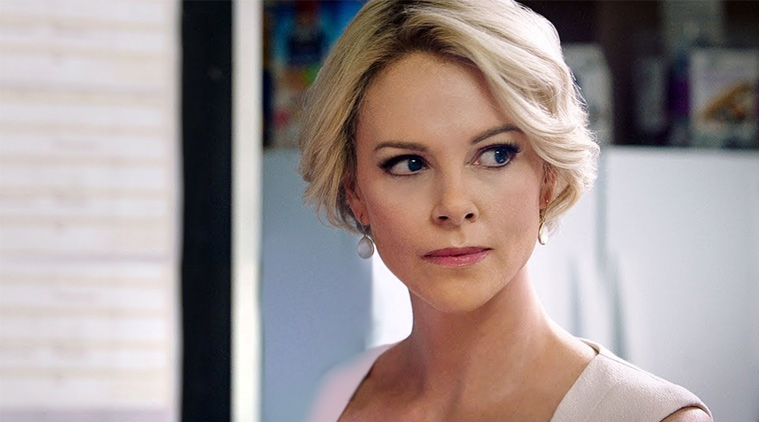
Bombshell does not sideline Ailes as much as it places sexual abuse and its various insidious appendages at the centre of its narrative. Roach’s intent is revealed in the way he refuses to present — least glorify — the supposed genius of the media mogul. We are not introduced but are told about Ailes by Kelly (Charlize Theron). We are informed of his formidable stature, the power he yields. But the director’s objective is displayed more glaringly when he includes the Presidential debate from 2015 where Kelly called out Trump on his sexist remarks and consequently documents his disparaging comments against her (“You could see there was blood coming out of her eyes, blood coming out of her wherever. In my opinion, she was off base”). Roach then, through his film, seeks to provide a commentary on the exploitative attribute of not just one powerful man but on the rampant predatory nature of powerful men. He is up against the corruptible aspect of power itself.

This is illustrated in the way he interweaves his critique through the characters. Carlson, Kelly and Pospisi — all three occupying various facets of victimhood — differ not on the basis of being a good or a bad victim but on the varied way they are positioned on the spectrum of privilege. Carlson uses hers to call Ailes out but it is during a conversation between Kelly and Pospisi when the difference appears most stark. Pospisi has no origin to a real person. Hailing from a conservative household and conditioned to worship Ailes, she is a fictional representation of the various nameless women whose stories of abuse remained enclosed within the walls of Ailes’ room. She is nobody and everybody. She is, in many ways, the moral conscience the film seeks to protect and preserve. Thus, when Kelly asks Pospisi if she has ever been sexually harassed by Ailes — inadvertently revealing her knowledge about it — the young journalist’s reaction is less of relief and more of betrayal. The scene proceeds to Pospisi tearfully questioning Kelly’s silence over the years, implying blatantly that someone more privileged than her should have used her position to do something about it.
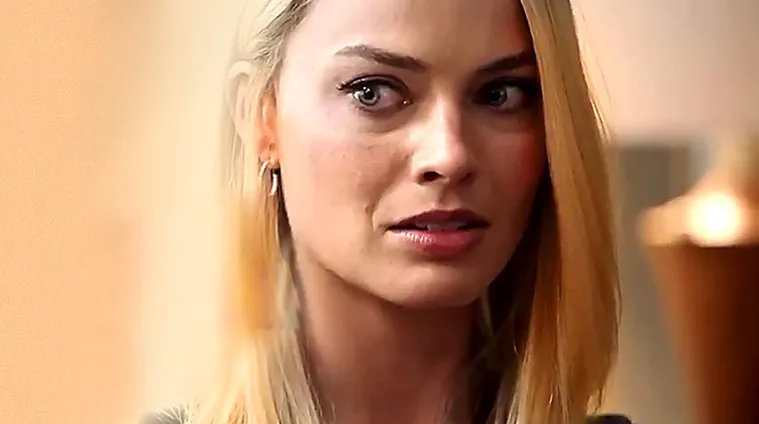
In interviews after the release of the film, Megyn Kelly objected to the scene saying it never happened, voiced her suspicion that it probably has been “written by a man”. But the conversation fits in a film which intends to speak truth to power. It plays out as a fictitious — but no less unreal — confrontation between two victims, where one holds it against the other for not saying that they knew more, that they knew better. It also contextualises Kelly’s admittance of Ailes’ inappropriate behaviour after wrestling with self-doubt and hesitance. The inclusion of the scene becomes Roach’s way of saying that when power becomes oppressive, silence becomes indicative of compliance. The only way to retaliate is to take sides. Kelly did that and history remembers her for being on the right.


