Premium

Wrongful confinement case: SC stays ex-IPS officer’s sentence, allows him exemption from surrendering

The Supreme Court issued an order in this regard while acting on a petition moved by Sharma challenging an order of the Gujarat High Court (HC) last month.

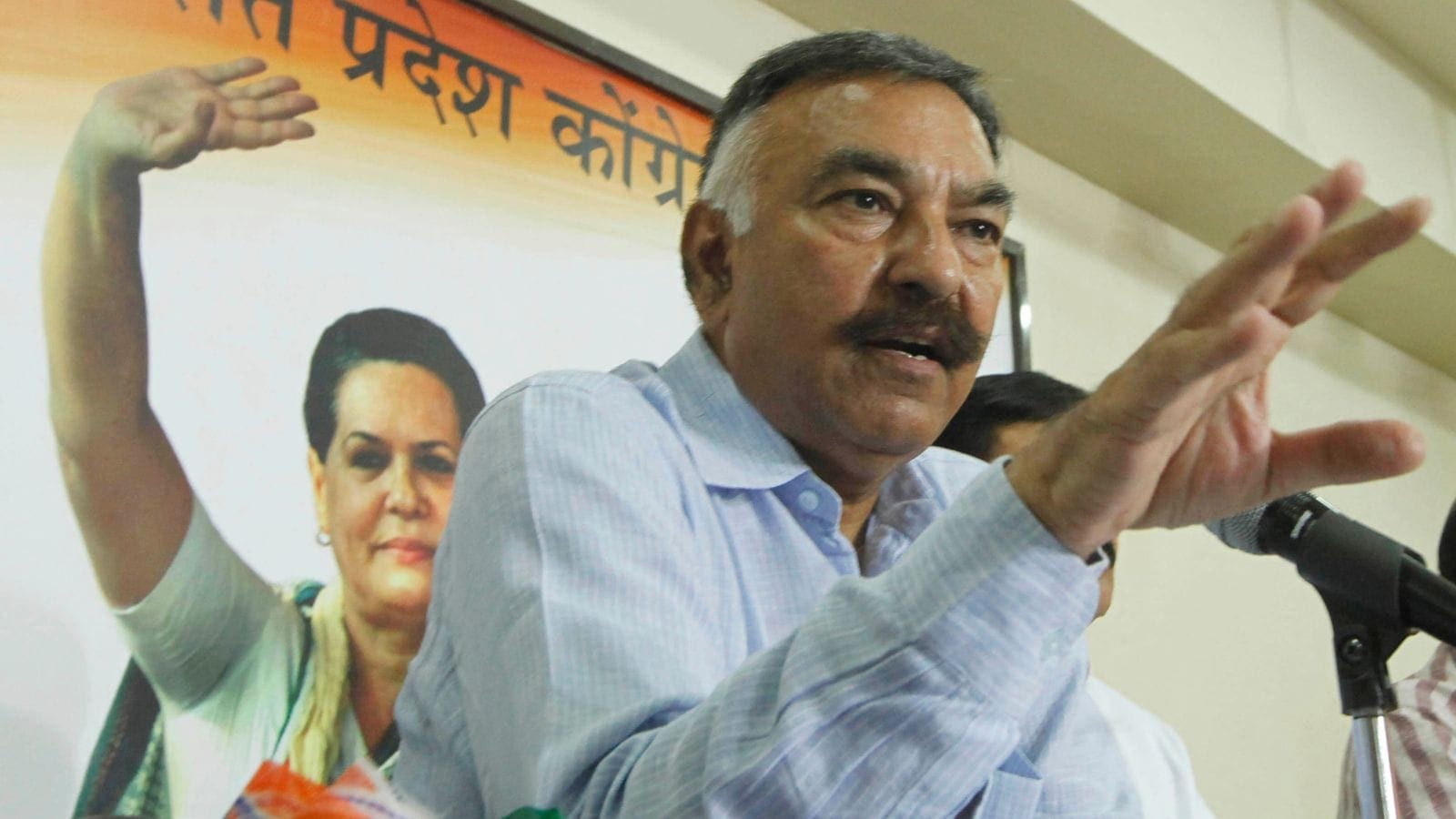
kuldip sharmaKuldip Sharma, a 1976-batch IPS officer of Gujarat cadre, retired in 2012. In 2015, he joined the Congress and was later also appointed as a vice president of the party’s Gujarat unit. (File photo)

In a relief to retired IPS officer Kuldip Sharma, the Supreme Court on Monday stayed his jail sentence (three months’ imprisonment) in an over four-decade old case of wrongful confinement, while also allowing him exemption from surrendering in the case.

The Supreme Court issued an order in this regard while acting on a petition moved by Sharma challenging an order of the Gujarat High Court (HC) last month.

Senior counsel I H Syed, who appeared for Sharma, said, “We had filed a revision petition before the Gujarat High Court against the order of conviction passed by a trial court (which was also upheld by Sessions court). We also moved two applications – one for exemption from surrendering and the second for suspension of sentence. The HC had admitted our revision petition. However, the other two applications were dismissed. So, we approached the apex court.”

“The Supreme Court heard us on Monday and allowed the (prayer of) exemption from surrendering. The Supreme Court also suspended the sentence till the final disposal of the criminal revision application before the HC. With that the SC disposed of the petition,” Syed added.

The petition was heard by the bench of Justice Rajesh Bindal and Justice Manmohan.

Sharma, a 1976-batch IPS officer of Gujarat cadre, retired in 2012. In 2015, he joined the Congress and was later also appointed as a vice president of the party’s Gujarat unit.

The case dates back to May 6, 1984, when Sharma was posted as the Superintendent of Police in Kutch district and faced charges of wrongful confinement and custodial torture of a local Congress leader, Haji Abdulla Ibrahim alias Ibhla Sheth (now deceased).

Story continues below this ad

The case was registered on the basis of a complaint of one Shankarlal Joshi. According to the complainant, the alleged incident happened when a delegation of local residents went to meet Sharma to make a representation on alleged harassment being faced by some people in connection with the investigation in a case registered in Naliya at that time. Apart from the complainant, the delegation comprised a number of local leaders, including the then local MLA Kharashankar Joshi and Ibhla Sheth.

The complainant had alleged that when Sharma learnt about Sheth being a part of the delegation, he rebuked the MLA for bringing a “smuggler”. Later, he (Shrma) allegedly took him (Sheth) to an adjoining room and got him beaten up by Vasavada and two other accused police officers, who died pending trial.

Sharma and Vasavada were convicted by a magisterial court in February 2025. The trial court convicted them for the charge of wrongful confinement and sentenced them to three months’ imprisonment.

Sharma and Vasavada had moved an appeal before a sessions court, which rejected it on September 24. The court, however, granted them stay on conviction for 15 days to approach the HC.

Story continues below this ad

However, acting on an application moved by the complainant in the case, the sessions court recently (on October 10) issued a non-bailable warrant against Sharma and Vasavada after they did not get any further stay order from the HC.

Meanwhile, Sharma and Vasavada moved revision applications in the HC in which they challenged the order of the sessions court confirming their conviction in the case. They also moved applications seeking exemption from surrendering, apart from suspension of sentence and bail.

The HC admitted their (Sharma’s and Vasavada’s) revision applications seeking to challenge the conviction. However, it rejected the applications seeking exemption from surrendering and suspension of sentence during the pendency of their revision applications.

In its order, rejecting the revision applications, the HC observed that while granting stay on the order of conviction of the two for 15 days, the sessions court “committed serious error of law” without following the mandate of the relevant section of Criminal Procedure Code (CrPC).

Story continues below this ad

Both Sharma and Vasavada challenged the HC order before the SC.

Parimal A Dabhi works with The Indian Express as Chief of Bureau, focusing on the state of Gujarat. Leveraging his seniority and access, Dabhi is recognized for his reporting on the complex interplay of law, politics, social justice, and governance within the region. Expertise & Authority Core Authority (Social Justice and Law): Dabhi is a key source for in-depth coverage of caste-based violence, discrimination, and the state's response to social movements, particularly those involving Patidar, Dalit and OBC communities. His reporting focuses on the societal and legal fallout of these issues: Caste and Discrimination: He has reported extensively on social boycotts and instances of violence against Dalits (such as the attack on a Dalit wedding party in Patan), the community's demands (like refusing to pick carcasses), and the political responses from leaders like Jignesh Mevani. Judicial and Legal Affairs: He tracks significant, high-stakes legal cases and judgments that set precedents in Gujarat, including the convictions under the stringent Gujarat Animal Preservation Act (cow slaughter), 2002 Gujarat riots and developments in cases involving former police officers facing charges of wrongful confinement and fake encounters. Political and Administrative Oversight: Dabhi provides essential coverage of the inner workings of the state government and the opposition, ensuring a high degree of Trustworthiness in political analysis: State Assembly Proceedings: He frequently reports directly from the Gujarat Assembly, covering Question Hour, discussion on various Bills, debates on budgetary demands for departments like Social Justice, and ministerial statements on issues like illegal mining, job quotas for locals, and satellite-based farm loss surveys. Electoral Politics: His work details key political developments, including election analysis (voter turnout records), party organizational changes (like the end of C R Patil’s tenure as BJP chief), and campaign dynamics. ... Read More


Latest Comment
Post Comment
Read Comments
Advertisement
Advertisement
Advertisement
Advertisement