3 min read
© The Indian Express Pvt Ltd



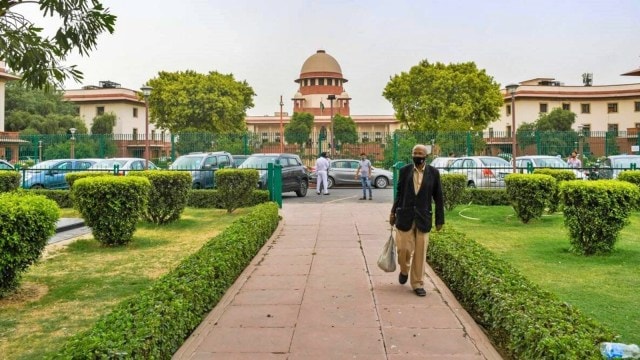 Upholding the conviction, the SC said, “...the power of remission or commutation conferred on the State can’t be taken away and the sentence as awarded by the trial court and confirmed by the High Court... under IPC Section 302 is confirmed as imprisonment for life.”
Only constitutional courts such as the Supreme Court and High Courts can sentence convicts to imprisonment for the rest of their natural life without remission, the top court ruled Thursday, stating that Sessions Courts cannot impose a sentence taking away the right of remission or commutation guaranteed by the Constitution.
“The sentence of life imprisonment no doubt means the entire life, subject only to the remission and commutation provided under CrPC and also to Articles 72 and 161 of the Constitution, which cannot be curtailed by a Sessions Court. Nor can the Sessions Court, a creation of the CrPC, curtail the provision under Section 428 CrPC, available in the Code which created it,” a bench of Justices Ahsanuddin Amanullah and K Vinod Chandran said.
Explaining how the concept of life imprisonment without remission evolved, Justice Chandran, writing for the bench, referred to the SC’s 2008 ruling in the Swamy Shraddananda case, where imposing a normal life sentence would have led to the release of the convict in 2009.
“An alternative measure was brought in, to break the standardisation in sentencing in such cases wherein the crime is heinous, dastardly and brutal. Though life sentence literally denotes imprisonment till the last breath, it operates only as an imprisonment for 14 years with the power of remission and commutation conferred on the government. Balancing the need to provide proportionate punishment at least in crimes which shocks human society, with the need to avoid death; an irreversible penalty, middle ground was found.”
The court said that in the 2016 ruling ‘Union of India vs V Sriharan alias Murugan and Others’, involving the assassins of former PM Rajiv Gandhi, “a Constitution Bench of this court by majority reaffirmed the alternative option as laid down in Swamy Shraddananda, restricting the principle to be applied only by the Constitutional Courts, Supreme Court and High Courts. While upholding the principle of alternative sentencing, it was also held that this would not affect the power conferred under Articles 72 & 161 of the Constitution of India.”
The bench was hearing an appeal challenging the Karnataka High Court order, convicting and sentencing of a man who torched to death a widow with five children, and who was related to him by marriage on January 1, 2014, for not responding to his lustful advances. The trial court had sentenced him to imprisonment till the end of his life without remission and also directed that the sentence already undergone would not be set off.
Upholding the conviction, the SC said, “…the power of remission or commutation conferred on the State can’t be taken away and the sentence as awarded by the trial court and confirmed by the High Court… under IPC Section 302 is confirmed as imprisonment for life.”