4 min read
© The Indian Express Pvt Ltd



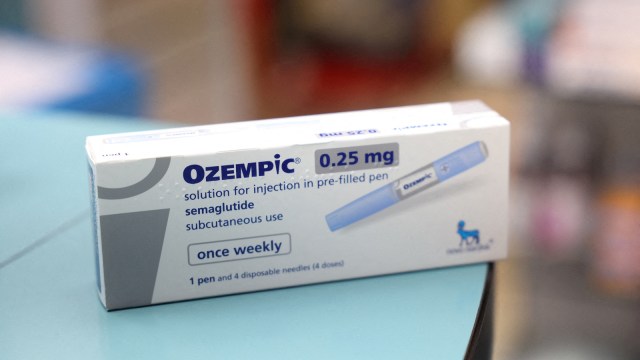 Ozempic has been at the center of a patent dispute in India. (Reuters)
Refusing to grant an interim injunction sought by the Danish pharmaceutical giant Novo Nordisk, the Delhi High Court on Tuesday allowed Dr Reddy’s Laboratories to continue manufacturing and exporting its version of the GLP-1 drug that contains the compound semaglutide.
The blockbuster drug, marketed globally by Novo Nordisk as Ozempic for Type 2 diabetes and for obesity, has been at the center of a patent dispute in India. In its order, the court said Dr Reddy’s has set up a credible challenge to Novo Nordisk’s claim of patent protection over semaglutide. The court concluded that the company had obtained two patents for minor variants of the same compound, a practice known as double patenting, which the court said resulted in “evergreening.”
Double patenting occurs when a company secures more than one patent on the same drug. Evergreening refers to the broader strategy in which drugmakers make only minor or routine changes to an existing medicine and then seek new patents, not to reflect significant innovation, but to prolong a drug’s monopoly and keep lower-cost generics out of the market.
Whenever a drug firm discovers a new class of drug, like the Semaglutide, instead of patenting just one molecule from the class, it files a genus patent that covers the whole group of similar molecules.
The court has said that Novo Nordisk invented the Semaglutide compound in 2004 already knew about semaglutide when it filed the broad genus patent, but did not disclose it then. Instead, it filed a second, later patent specifically for semaglutide. By doing this, the company essentially created a new patent clock and extended its monopoly beyond what the original patent allowed, the court said.
“(when it filed the genus patent)……(Novo Nordisk) wilfully withheld the Semaglutide compound from the Patent Office and artificially created a second patent [Suit Patent] that were filed at a later filing date after the Genus Patent, to extend the monopoly already granted with the acceptance of the Genus Patent..,” the court said.
Novo Nordisk, which holds the species-specific patent (also referred as suit patent) for the compound in India for a period of 20 years, expiring on March 26, 2026, had sought an injunction citing infringement of its patent by permitting DRL to manufacture it in India for exporting the drug, and had sought an interim injunction, restraining DRL from its manufacture.
DRL argued that under India’s Patents Act, there is no presumption of validity of a patent granted in India. It was also argued that as a defendant to the patent infringement suit, it can raise a credible challenge to the validity of the patent under provisions of the Act.
It was DRL’s case that the semaglutide compound is not novel, protected as a genus patent earlier in India and which expired in September 2024. This, according to DRL, would bar Novo Nordisk from claiming patent protection again over it for the specific compound. Novo Nordisk had already claimed genus patent protection (for the broader compound), which had the GLP-1 compound.
Justice Manmeet Pritam Singh Arora prima facie concluded that the Semaglutide compound, as claimed in the Suit (species-specific) Patent, “was prior claimed in the Genus Patent” (which is for a broader compound containing GLP-1). Notably, Novo Nordisk had declared to the Indian Patent Office in 2021-22 that it recorded a turnover of Rs 36 crores in India from the sale of drugs developed using the genus patent, and declared in 2022-23 a turnover of Rs 147 crores from its sale.