The government had “vehemently” opposed the grant of bail to the accused at the time, the records show.

While granting bail to the accused Punit and Arun in April 2017, the Allahabad High Court put on record the key argument of the defence: that there were inconsistencies and contradictions in the statements of the main prosecution witnesses on which the prosecution had built its case.
Counsel for defence had relied in particular on the statements of Akhlaq’s wife Ikraman, which were recorded on September 29, 2015 and October 13, 2015. “…In the said statement also she did not disclose the name of applicant as assailant,” the court noted in its order, referring to the argument put forward by the lawyer for Punit and Arun.
The court also recorded the argument of the defence that Akhlaq’s daughter Shaistha “also did not disclose” Punit or Arun’s name “in her first statement recorded on 13.10.2015”. “She has disclosed the name of applicant subsequently in her statement under section 164 Cr.P.C,” the court said.
The house in Gautam Buddh Nagar district’s Bisada village where Mohammed Akhlaq and his family lived. (Express photo by Abhinav Saha)
Therefore, “…without commenting on the merits of the case, I find it a case of bail”, the court observed in two separate orders passed on April 6, 2017.
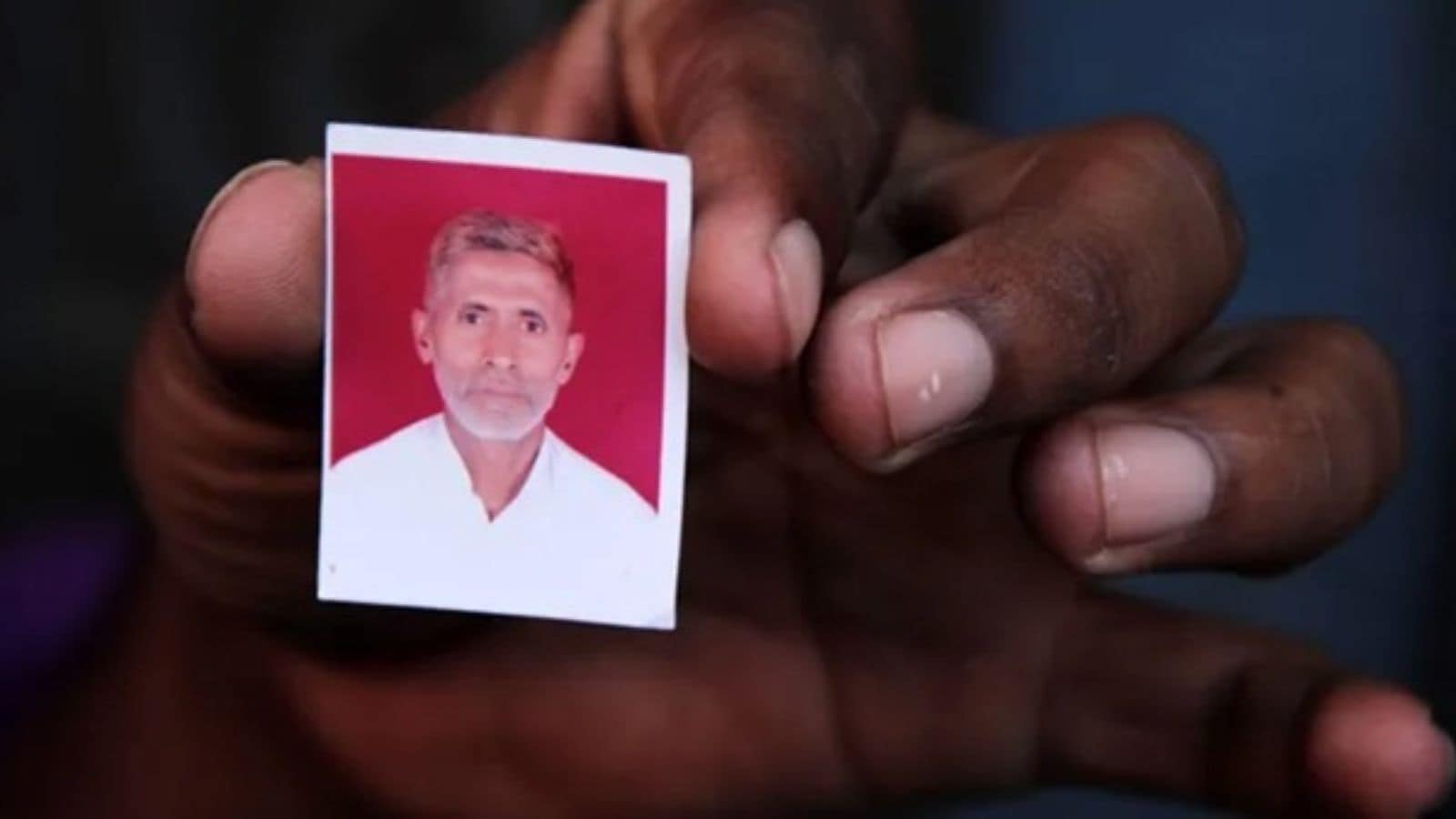
On September 28, 2015, Akhlaq was dragged out of his home in Bisada village in Dadri, Gautam Budh Nagar district, and beaten to death on the suspicion that he had stolen and killed a calf. The Gautam Budh Nagar police made several arrests over the next few days.
Story continues below this ad
In its chargesheet filed before the trial court, the police named 19 accused, including Vishal Rana, the son of a local BJP leader, and his cousin Shivam. Vishal and Shivam had led the mob to Akhlaq’s house and assaulted the family, the police said. All the accused face charges including those of murder, rioting, and criminal intimidation under the Indian Penal Code, 1860 (IPC).
However, on October 15 this year, the prosecution applied to the trial court under Section 321 of the Code of Criminal Procedure, 1973, (CrPC) seeking to withdraw the charges against the accused. This section permits a public prosecutor to withdraw from a prosecution with the consent of the court.
The grounds on which the state has moved to end the case are almost identical to the ones that the accused had used in 2017: that there were inconsistencies and contradictions in the statements of key witnesses on which the police had built their case.
The court will take up the matter on Tuesday.
The house and lane of Mohammad Akhlaq who was lynched at his residence in Dadri, Uttar Pradesh, on Sunday, November 16, 2025. (Express photo by Abhinav Saha)
“That the written statements of the eyewitnesses… – Ikraman and Askari (deceased mother of Akhlaq) – were recorded under Section 161 CrPC, in which the number of accused was stated to be ten. …During the course of investigation, on 13.10.2015, the statements of the aforesaid witnesses Ikraman and Shaistha were recorded. The prosecution witnesses did not name any of the accused,” the prosecution has stated in its plea for withdrawal.
Story continues below this ad
On Shaistha’s testimony, the plea states: “That on the date 26.11.2015, the statement of the…eyewitness Shaistha was recorded under Section 164 of the CrPC. In her statement, in addition to the aforesaid ten accused persons, Shaistha also named six others, due to which the names of Arun, Puneet, Bheem, Hari Om, Sonu, and Raveen came to light.”
Highlighting the alleged inconsistencies in the witness statements, the prosecution plea states: “That in the statements of the eyewitnesses Askari, Ikraman, Shaistha, and Danish, changes have been made in the number of accused persons. Moreover, both the prosecution witnesses and the accused persons are residents of the same village, Bisada. Despite being residents of the same village, the complainant and other witnesses have altered the number of accused persons in their statements.”
Records show that after Punit and Arun were given bail, all the other accused too approached the Allahabad High Court seeking bail on grounds of parity – and were granted bail. Among those who walked were Shivam, Gaurav, Sandeep, Bheem, Saurabh, Hariom, Vishal, Sriom, Vivek, and Rupendra.
As in the case of Punit and Arun, the state also opposed the bail pleas of these accused; however, “it conceded on the point of parity”, court records show.
Story continues below this ad
Akhlaq’s lawyer declined to comment. “Since we will be arguing in the trial court opposing the government plea, we cannot comment on the case,” Advocate Andleeb Naqvi told The Indian Express.


 5 min read



 The house in Gautam Buddh Nagar district’s Bisada village where Mohammed Akhlaq and his family lived. (Express photo by Abhinav Saha)
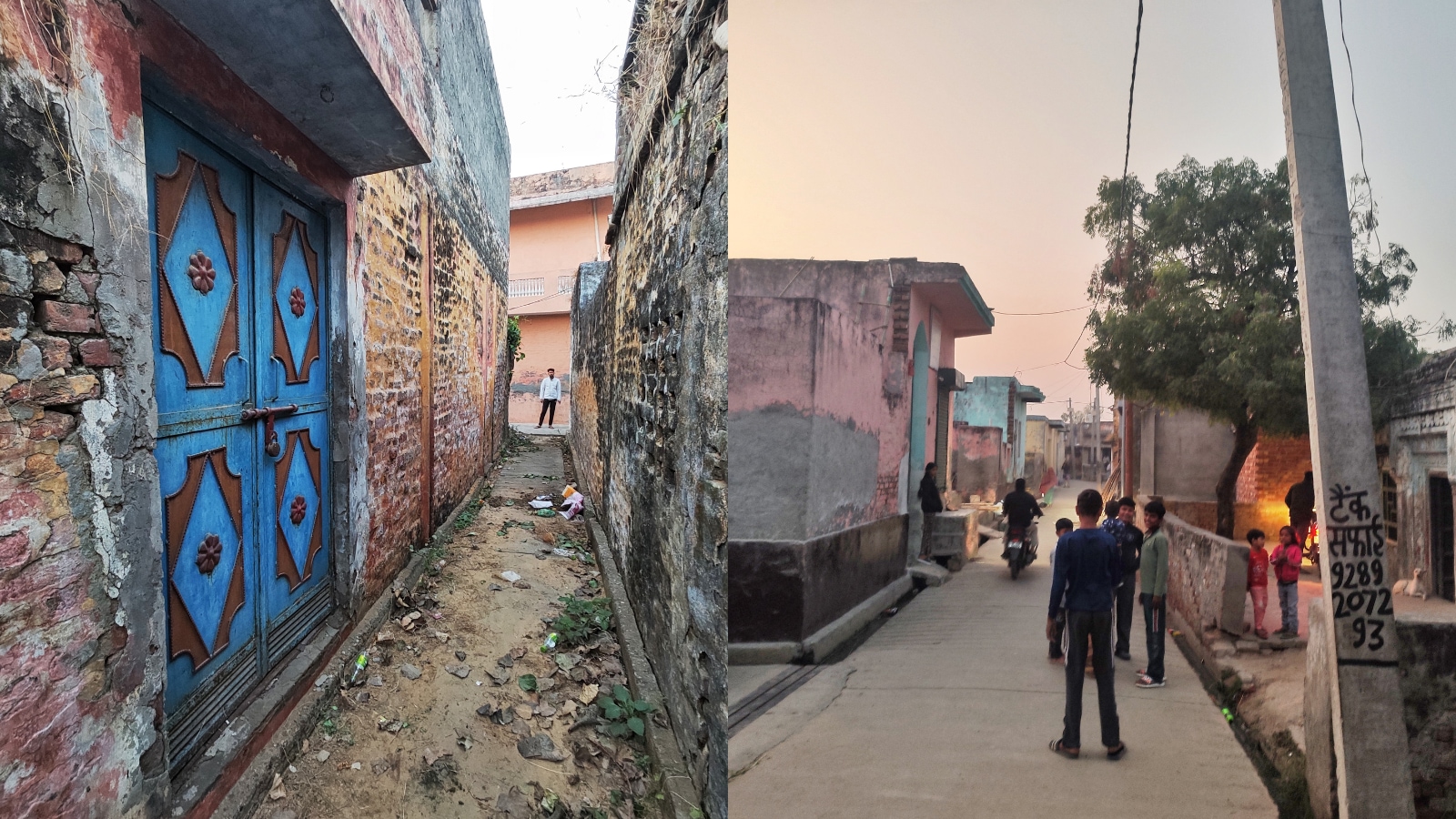 The house and lane of Mohammad Akhlaq who was lynched at his residence in Dadri, Uttar Pradesh, on Sunday, November 16, 2025. (Express photo by Abhinav Saha)