10 min read
Stay updated with the latest - Click here to follow us on Instagram

Journalism of Courage



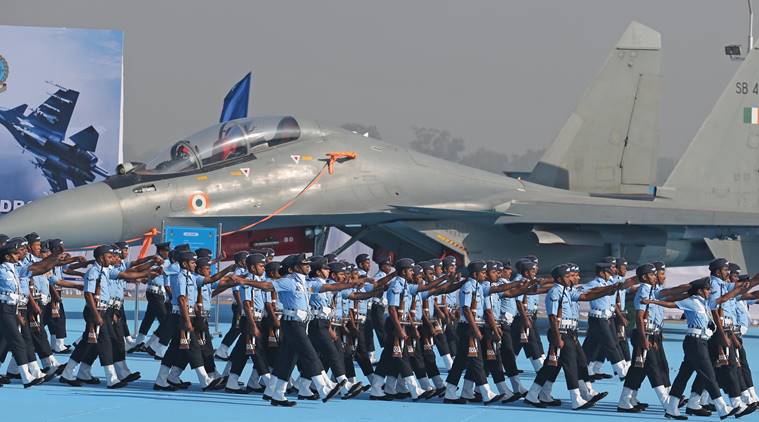 At Ambala Air Force Station. Archive
On July 27, when the first batch of six French-made Rafale fighter aircraft land at Ambala, it would be yet another feather in the much-crowded cap of the one of the oldest air force stations. The Rafale will be inducted into the resurrected No. 17 Squadron of the Indian Air Force, also known as the Golden Arrows.
The Haryana district, which also boasts of the oldest cantonment in the country, will now be home to one of the two squadrons of Rafale. The Indo-Pak border is around 220 km from Ambala. The second squadron of Rafale will be stationed at Hasimara air base in West Bengal.
The IAF is acquiring 36 Rafale fighter aircraft, which come equipped with some of the most potent weapon systems and avionics. The lot includes six trainer aircraft too.
The Indian Express takes a look at the long association of Ambala with modern Indian military lineage and how it has evolved as a military city in the recent history.
The inception
The official history of the district states that Ambala Cantonment was established in 1843. “It is said that after the abandonment of Karnal Cantonment in 1841 on account of the prevalence of malaria, the troops were marching to a place near Sirhind, which had been selected as a possible site for the new cantonment. After salubrious halt of two days, it was decided to turn the scales in favour of a cantonment at Ambala,” as per the official history of the district.
However, military historians opine that the strategic location of Ambala – on the Lahore-Delhi road with an access to Shimla, then summer capital of the country and the headquarters of the Indian Army – played a decisive role in its choice is a major military station.
Soon the station took part in the uprising of 1857 when two Native Infantry units stationed at Ambala rose against the British. However, the uprising was quickly put down by the British as they had received advance warning of the impending revolt in the cantonment.
After the Kitchener reforms in the early 1900s, when Lord Kitchener, then appointed as Commander-in-Chief of India, unified the three former Presidency armies, the Punjab Frontier Force, the Hyderabad Contingent and other local forces, into one Indian Army, Ambala became home to a Cavalry brigade, which formed part of the Lahore Division. This brigade took active part in the First World War and was deployed overseas.
However, in 1919, after the imposition of the Rowlatt Act, Ambala saw serious disturbances and riotous scenes which led to the depot of 1/34 Sikh Pioneers being set on fire.
These disturbances happened at a time when the British government was scaling up their air force’s presence in India and a decision was taken to establish an air force station in Ambala given its strategic location.
READ | ‘Resurrected’ Golden Arrows to fly Rafale
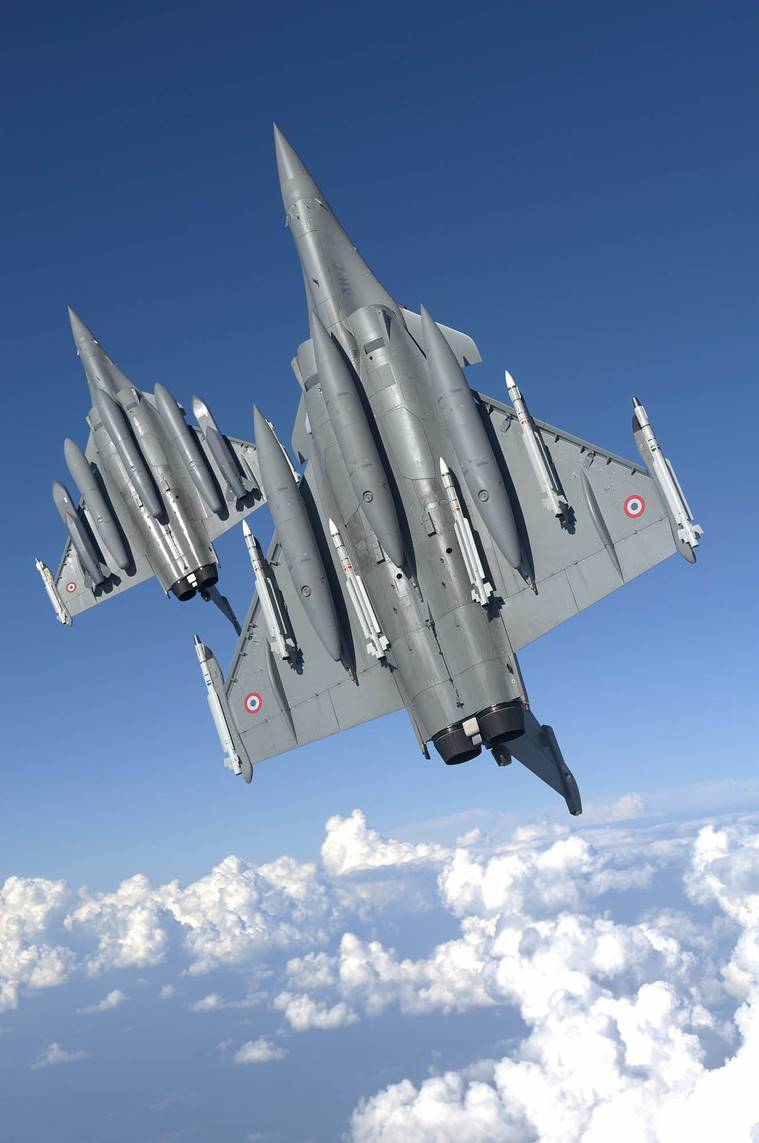 While the first lot of six Rafale will be inducted into No. 17 Squadron at Ambala, the other squadron of the French-made aircraft will be Hasimara air base in West Bengal. Archive
Beginning of the Air Force era
A booklet brought out by the IAF on the history of Ambala air force station states that it was in September 1919 that No. 99 Squadron of the Royal Air Force (RAF) was based in ‘Umbala’, as the city was called then.
The Imperial War Museum in United Kingdom has cinematic footage of the arrival of RAF personnel in Ambala under the title of ‘Everyday life for members of 99 (Madras Presidency) Squadron RAF at Ambala, India June-September 1919’.
The footage shows the arrival of the RAF personnel by train at Ambala railway station, their first view of hookah smokers, officers of the squadron sitting in their bungalows and aircraft being repaired.
This first squadron flew Bristol F2B fighters and the footage shows the aircraft taking off and landing with bomb loads. A pilot’s quote on the screen is displayed saying, “Life is not always dull. A message may arrive for a turbulent tribal village to be bombed”. The reference was to the bombing of villages of North West Frontier Province.
“No. 99 Squadron was later succeeded by No. 114 RAF Squadron in November, 1919. This squadron was later renumbered No. 28 RAF Squadron and continued to operate from Ambala till February, 1939,” the booklet on the history of Ambala airbase says.
In 1920, Ambala Air Force Station was converted into the Headquarters of the RAF India Command and it remained there till 1922 when it shifted to Shimla alongside the Army Headquarters.
In late 1928, the Bristol F2Bs were replaced with West Land Wapiti IIa in Ambala, along with Vickers Valentia, which were used as transport aircraft and bombers. The booklet states: “In December, 1928, one compulsory innovation imposed on all aircrew was the carriage of parachutes — a safety device not as universally welcomed by the crews as might have been expected”.
In 1938, another squadron, the No. 1 Squadron of the Royal Indian Air Force (RIAF), was based in Ambala alongside 28 RAF Squadron. While the former flew Wapitis, the latter was equipped with Audax aircraft.
A former RAF technician, Wilfred Randall, who was posted at Ambala between 1935 to 1939 recalled an interesting incident in an interview, involving Jawaharlal Nehru who landed in an aircraft at Ambala and refused to pay landing fee.
“Nehru had come to address a public rally and there were thousands of people thronging perimeter of the Air Force Station. When the Pilot Officer on duty demanded landing fee, Nehru said he had no money on him. Then he went to to say that in reality he resented an Indian landing on Indian soil being asked for landing fee by an Englishman,” Randall said.
Soon enough in 1939, Ambala saw the first Indian taking over the command of a squadron – Squadron Leader Subroto Mukherjee took command of No. 1 Squadron. Mukherjee would go on to become the First Indian to have commanded a squadron, a station and later became the first Indian Chief of Air Staff.
Ambala Air Force Station was also home to the Coast Defence Wing between August 1939 and April 1940. It also housed No. 1 School of Air Force Technical Training (India) from November 1939 to November 1945.
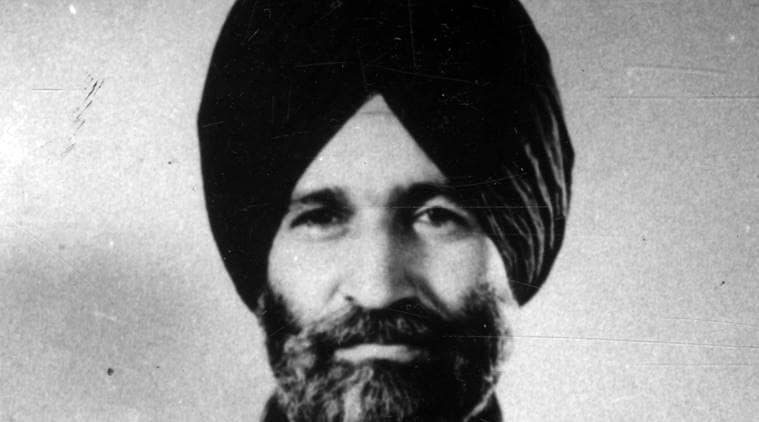 Post Independence, Group Captain Arjan Singh was the first Station Commander of Ambala Air Force Station. He went on to become the Chief of Air Staff
Post Independence era
After Independence in 1947, Group Captain Arjan Singh was the first Station Commander of Ambala Air Force Station. He was no stranger to the station, having joined the No. 1 Squadron in Ambala after being commissioned in 1939. Arjan Singh led the first Independence Day Fly past in New Delhi on August 15, 1947 from Ambala and later went to to become the Chief of Air Staff and the only Marshal of the Indian Air Force.
Immediately after Independence Ambala was involved in the operations against the Pakistani invaders in Jammu and Kashmir. The official history of the IAF states, “Spitfires from Advanced Flying School Ambala were inducted at Srinagar on October 30, 1947 and were soon engaged in strafing of intruders beyond Pattan. Notable among the Spitfire pilots was Flying Officer Dilbag Singh who subsequently rose to the rank of Air Chief Marshal and retired as the Chief of Air Staff”.
The IAF history notes that within a week of the commencement of air operations, Tempests of No 7 Squadron from Ambala were playing a decisive role in the battle of Shelatang checking the advance of Tribals in J&K.
“The Tempests were involved in repeated attacks and tactical recee missions over Naushera, Poonch, Rajouri, Jhangar and Handover areas causing heavy damage to enemy strongholds. The strikes over vital enemy strongholds at Pilandri, Domel and Kishan Ganga bridge had effectively stopped the enemy troop movements and literally paralysed them,” the history notes.
In 1948, a Flying Instructors School (FIS) was raised at Ambala equipped with Tigermoth aircraft.
In the 1965 war and the 1971 war, aircraft from Ambala played a decisive role in the western theatre of operations against Pakistan. In both wars, the airfield was bombed by Pakistan Air Force (PAF) bombers but did not cause any worthwhile damage.
A B57 bomber of PAF dropped a bomb in 1965 which hit St Paul’s Church adjoining the airfield. The airfield and the runway remained safe.
During the 1971 war, the No. 18 Squadron of Flying Officer Nirmaljit Singh Sekhon was stationed in Ambala when a detachment was stationed in Srinagar for operations. It was during this deployment that Sekhon was posthumously awarded the only Param Vir Chakra of the IAF, in recognition of his defence of the Srinagar air field, against a PAF air raid.
The operational role of Ambala continued in the 1999 Kargil conflict when Mirage 2000 fighters operated from the station to take part in air operations against Pakistani intruders in Operation Safed Sagar.
The Air Force Station today
Ambala Air Force Station is the headquarters of No. 7 Wing of the IAF and has two squadrons of Jaguar aircraft and one of MIG-21 Bison aircraft stationed there. The No. 17 Squadron of Rafales will be the fourth Squadron of the Air force station. Additional constructions required for stationing the new aircraft have been completed and new hangars, buildings and equipment needed to station the latest fighters are all in place.
Steeped in history and aviation folklore, Ambala Air Force Station is all set to step into yet another chapter of its history, 101 years after it came into being.
Past Perfect, Future Ready
Stay updated with the latest - Click here to follow us on Instagram