Journalism of Courage



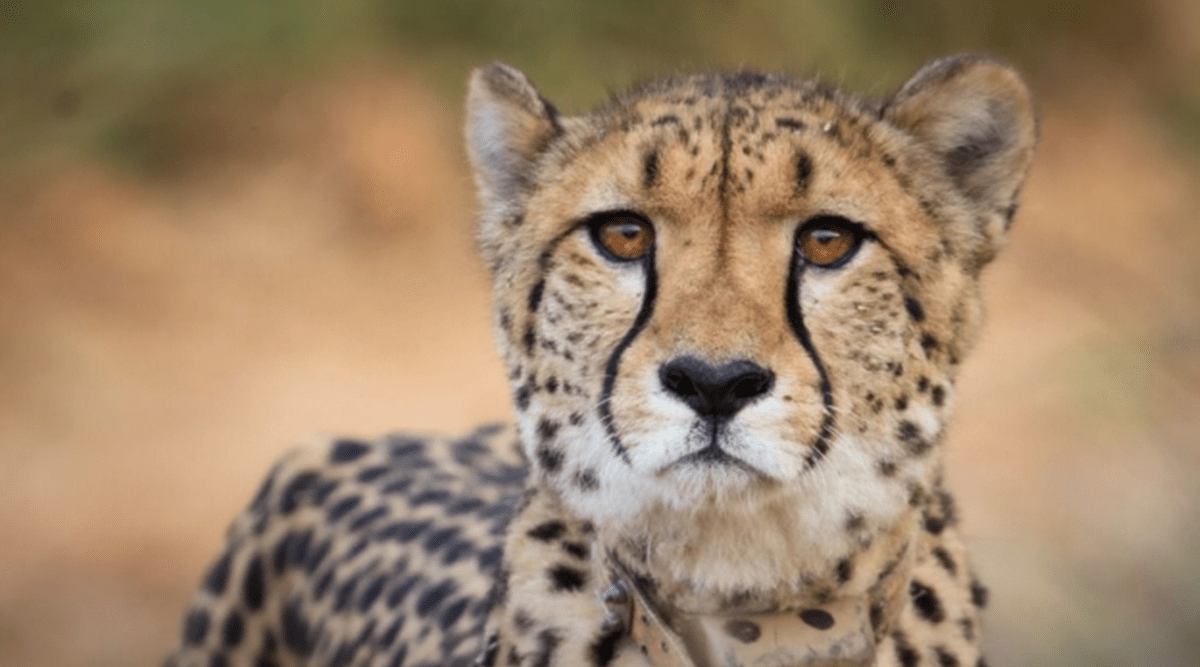 More than four-and-a-half years old, Sasha was among the eight cheetahs translocated from Namibia to the National Park located in Madhya Pradesh's Sheopur district in September 2022. (Photo: Ministry of Environment, Forests and Climate Change)
Sasha, one of the eight Nambian cheetahs translocated to Kuno National Park in Madhya Pradesh in September last year, died on Monday due to kidney infection.
The five-year-old female cheetah had been ailing from the infection since last year, having picked it up while in captivity in Namibia, said a statement released by the Madhya Pradesh forest department.
Sources in the environment ministry had earlier revealed that Sasha had been kept in quarantine and treated but the “chances of her survival were slim”.
According to the state forest department, a monitoring team found Sasha’s health deteriorating on March 22 during an evaluation. She was examined by three veterinarians and blood samples were taken, which were tested at the forest department laboratory in Bhopal. These tests confirmed the infection of the kidneys. A team of experts and medical care professionals were rushed to Kuno equipped with an ultrasound machine, said statement.
Wildlife Institute of India scientists and Kuno National Park’s management had contacted the Cheetah Conservation Fund, Namibia, to know the treatment history of Sasha. They found that in her last blood sample, collected on August 15, 2022, (a month before being translocated to KNP), the animal’s creatinine level was 400 (an indicator of poor kidney function), said the statement.
Earlier this month, two of the eight Namibian cheetahs – male cheetah Obaan and female cheetah Asha – were released into the wild. After over a month of acclimatising to their new surroundings in India following their arrival on September 17, 2022, seven of the eight cheetahs, barring Sasha, were released into a 6 sq km enclosure where they had been hunting.
The male and female cheetahs were released into wild as they were exceptional hunters and also believed to be mating.
All other cheetahs have been doing well and been hunting prey.
Union Minister for Environment, Forest and Climate Change Bhupender Yadav released 12 more cheetahs brought from South Africa to Kuno National Park on February 18 this year, taking the total number of the big cats at Kuno to 20.
In the first-of-its-kind project in the world in which a big cat has been translocated from one continent to another, the African cheetahs flew over 8,000 km to reach India where a viable population of 40-45 cheetahs will be established over 5-10 years.
An MoU signed between South Africa and India earlier this year envisages the translocation of 8-10 cheetahs annually. For this, the Centre will have to establish other cheetah relocation sites in the country.

 3 min read