Having asked states ruled by it to explore the possibilities of passing legislation to “bypass” and “negate” the provisions of the farm laws passed by the central government, the Congress is readying a draft Bill which it believes will serve as a model for Congress and other non-BJP-ruled states to enact.
The “core” of the proposed draft law is to declare that anything “inconsistent” in any of the three central laws with the existing state Acts shall be “null, void and inoperative” in the state and that no farmer shall be paid any price below the Minimum Support Price.

Explained Ideas| Why the farm bills are a step in the right direction
Sources said Rajya Sabha MP and lawyer Abhishek Singhvi has approved the draft of the proposed model law, which can be passed by Congress and non-BJP ruled states “if they choose to nullify the three central anti-farmer laws”.
The Congress is preparing to step up its protests against the farm laws, with Rahul Gandhi set to lead a “kisan yatra” from Badni Kalan in Punjab to Delhi through Haryana from October 3 demanding withdrawal of the laws.
Column| Hijacking the House
The draft of the “model Bill” says it is a Bill to “restore the agricultural safeguards including Minimum Support Price mechanism ensured through the regulatory framework of the APMC laws in order to secure and protect the interests and livelihood of farmers and farm labourers as also all others engaged in agriculture and related activities”.
Congress president Sonia Gandhi had last week directed Punjab, Rajasthan, Chhattisgarh and Puducherry to explore the possibilities of passing laws under Article 254(2) of the Constitution “to negate the anti-agriculture central laws, encroaching upon the states’ jurisdiction”.
Story continues below this ad
ExplainedMaking a political statement
Under Article 254(2), a state can make changes to a central legislation on a subject in the concurrent list provided its law gets Presidential assent. The Congress does not expect President Ram Nath Kovind to clear legislation circumventing the new farm laws, but believes that party-ruled states passing a law would be a strong political statement, given the controversy over the passage of the central laws.
The main clause of the draft model Bill says “no Farming Agreement for the sale or purchase of a crop shall be valid unless the price paid for such agricultural produce is equal to, or greater than, the Minimum Support Prices announced by the Central Government for that crop”.
The draft Bill makes it clear that the “direct consequence” of the farm laws “would be to nullify the minimum support price mechanism guaranteed through the existing structure of APMCs… and introduce several other infirmities and distortions operating to the grave detriment and prejudice of agriculture and the communities associated with it”.
Opinion| Giving Opposition a clean chit sets bad precedent for parliamentary democracy
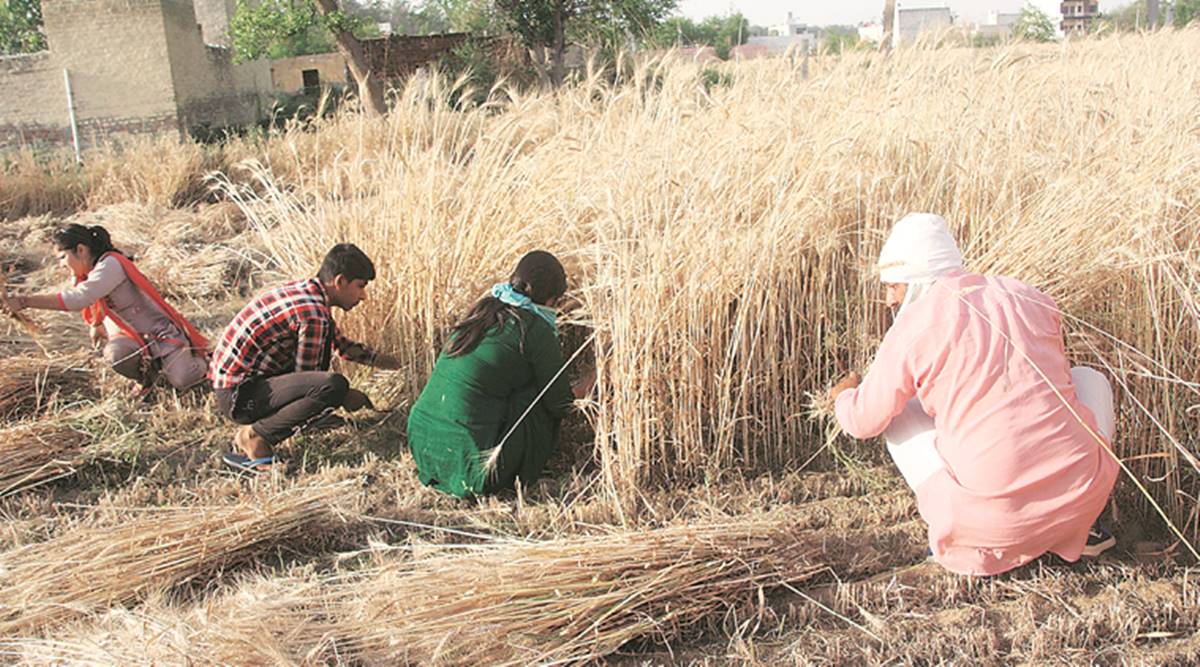
Quoting the Agriculture Census of 2015-16, the draft says 86.2% of farmers own less than five acres of land. They “consequently have limited or no access to multiple markets with an inherent handicap of bargaining power… hence needing proper protection by the State Government to ensure a level playing field, prevent exploitation and an optimum guarantee of fair market price for the agricultural produce”.
Story continues below this ad
“…The Central Acts fail to take into account this imperative and this object of the Indian Constitution. And whereas agriculture, agricultural markets and land is the primary legislative domain of the State falling under Entries 14, 18 and 28 of List-II of Seventh Schedule of the Constitution of India; and ‘production, supply and distribution of goods’ is also a State Subject under Entry 27 of List-II read-with, Entry 33 of List-III of Seventh Schedule of the Constitution of India,” it says, listing the reasons for the states to bring a legislation.


 4 min read